


£29–£350: What UK Home STI Tests Cost and When NHS Kits Are Free
If you’re sexually active and wondering what a home STI test will actually cost you, here’s the short version. Many people qualify for free kits through the NHS or NHS-linked services, so that’s worth checking before you spend a penny. If you do go private, expect to pay somewhere between £29 and £350 depending on how many infections you’re screening for.
TL;DR:
- Free NHS home testing kits are available for asymptomatic users in many areas, but eligibility depends on location, age, and absence of symptoms.
- Private STI testing kits typically cost between £29 and £350, with prices varying based on infection coverage and whether samples are self-tested or lab-analyzed.
- Be aware of additional costs such as consultation fees, postage, lab surcharges, and follow-up testing, which are often not included in the headline price.
- Choosing the right test depends on your exposure type and anatomy, not just selecting the broadest panel available, and symptomatic individuals should consult a clinic instead.
- Timing matters greatly; testing too soon after exposure can lead to false negatives, requiring repeat testing after an appropriate window period to ensure accuracy.
Table of Contents
- How NHS and NHS-linked free home testing works in the UK
- Private at-home kit price bands and what you get for the money
- Hidden costs and extras to check before you buy
- How to choose the right test: sampling sites, exposure and BASHH guidance
- Timing, window periods and accuracy: avoid false negatives and repeat purchases
- Rapidtest: where an at-home rapid route fits and what Rapidtest offers
- Practical summary and action checklist
- A discreet, affordable way to test from home
- Sources
- FAQ
How NHS and NHS-linked free home testing works in the UK
Let’s be real: most people assume free healthcare means a trip to a clinic and an awkward wait in a waiting room. That’s not always true for STI testing.
The NHS offers free testing through sexual health clinics, and in many parts of the country, you can order a free home kit through an NHS-linked online service instead. Two of the main ones are SH.UK and Sexual Health Wales. Both let you complete a short, confidential online assessment, then post a kit to your door in plain packaging.
Here’s how the process usually works:
- You fill in an online form covering your age, location and symptoms (or lack of them).
- If you’re eligible, a kit is posted to you discreetly, often with free return postage included.
- You take your sample at home following the instructions provided.
- You post it back and wait for your results, usually delivered by text or through an online portal.
Sh advertises this as a genuinely free service in eligible areas, with kits costing £0.00 and delivery included. But eligibility depends on where you live and, crucially, whether you have symptoms. If you’re symptomatic, free home testing generally isn’t the right route. Most NHS-linked services will point you towards a sexual health clinic or your GP instead, since symptoms can need a physical examination or same-day treatment that a postal kit can’t provide.
So the free route is brilliant if you’re asymptomatic and just want peace of mind. If something feels off, though, skip the kit and get seen.
Private at-home kit price bands and what you get for the money

If NHS-linked free testing isn’t available where you live, or you’d rather just get on with it privately, you’ll find prices vary a fair bit depending on what’s included.
Based on independent UK price comparisons, home STI kits generally fall into three bands:
- Single tests: around £29 to £70, covering one infection such as chlamydia or gonorrhoea.
- Basic multi-infection screens: around £69 to £149, typically covering the most common infections together.
- Broad panels: around £149 to £350 or more, covering a wider range including blood-borne viruses and less common infections.
These are planning ranges rather than guarantees, since providers price things differently and what’s bundled in varies too.
A big part of what you’re paying for comes down to whether the kit is a self-test or a self-sample. A self-test gives you a result at home, usually within minutes, using a method similar to a lateral flow test. A self-sample kit means you collect your sample at home but post it to a laboratory, then wait for the result. Lab-based self-sample kits tend to sit at the higher end of the price scale because they include the cost of laboratory analysis, which is generally more sensitive for detecting infections early.
Certain infections push prices up more than others. HIV testing that includes laboratory confirmation costs more than a rapid fingerprick result alone, since fourth-generation lab tests are clinically preferred for early detection. Extended blood-borne virus panels covering hepatitis B and C, along with HPV testing, also tend to add to the total because they require more thorough lab processing.
Hidden costs and extras to check before you buy
This is where a lot of people get caught out. The headline price on a home testing kit rarely tells the whole story.
Watch out for these common add-ons:
- Consultation fees: some providers charge extra if you want a clinician to review your results or discuss next steps.
- Return postage: not every kit includes prepaid postage, so check before you order.
- Lab processing surcharges: some services add a fee for expedited or specialist lab analysis.
- Confirmatory testing: a positive result on a rapid test sometimes needs a follow-up lab test, which may carry its own cost.
- Partner notification or treatment: if you test positive, some providers charge separately for prescriptions or support with telling partners.
Before you buy, it’s worth reading the fine print. Check what happens if your result is positive, whether treatment or a prescription is included, and what the provider’s refund policy looks like if something goes wrong with your sample. BASHH standards note that a price tag alone tells you nothing about clinical coverage or whether follow-up care is actually included, so don’t assume the cheapest kit gets you the same support as a pricier one.
Pro Tip: Favour providers who spell out exactly what’s included and how follow-up care works, rather than ones who just list a price and leave the rest vague.
How to choose the right test: sampling sites, exposure and BASHH guidance
Buying the biggest, most comprehensive panel might feel like the safest option, but it’s not always the smartest one clinically or financially. BASHH guidance recommends choosing tests based on your actual exposure and anatomy, not just picking the biggest bundle available.
Here’s a simple way to think it through:
- Consider your anatomy first. First-void urine samples are recommended for people with a penile urethra, while vaginal swabs are recommended for people with a vagina.
- Match your panel to your exposures. If you’ve had oral or anal sex, throat and rectal swabs may be relevant, and a standard urine or vaginal swab kit alone might miss an infection in those areas.
- Choose clinic testing over a home kit if you have symptoms, a complex exposure history, or need treatment straight away. Home kits are built for screening, not for diagnosing or treating an active infection.
In other words, the “right” kit isn’t the one with the most infections listed on the box. It’s the one that actually reflects how you’ve been exposed. Buying a broad panel when you’ve only had one type of exposure just means paying more for tests you probably don’t need.
Timing, window periods and accuracy: avoid false negatives and repeat purchases
Testing too early is one of the most common (and costly) mistakes people make with home STI kits. Every infection has a window period, the gap between exposure and when a test can reliably detect it.
Chlamydia and gonorrhoea generally have shorter window periods than HIV. HIV detection depends heavily on the type of test and sample used: BASHH’s HIV testing guidance notes that lab-based fourth-generation tests can detect infection earlier than some rapid assays, which matters if you’ve had a recent exposure and want an accurate answer straight away rather than a false reassurance.
Postal handling matters too. Sexual Health Wales reports that kits typically arrive within 3 to 5 working days, and results can take up to three weeks after you post your sample back. Delays or poor sample handling in the post can affect accuracy, so following the return instructions carefully isn’t optional if you want a reliable result.
If you test too soon after an exposure, you may need to repeat the test later to be sure, effectively doubling your cost. Building the right timing into your plan from the start saves you money and stress.

Rapidtest: where an at-home rapid route fits and what Rapidtest offers
Some providers offer affordable, proactive private healthcare through at-home rapid testing kits, with results delivered in around 15 minutes. Kits typically come with educational guides and instructions, plus discreet delivery so packaging does not reveal contents.
Rapid self-tests like these are genuinely useful for convenience and speed, particularly if you want an immediate answer without waiting for a lab. Their trade-off is that some infections, particularly those needing very early detection, are better picked up by laboratory sampling. That’s not a flaw specific to Rapidtest, it’s simply how rapid testing technology works across the board. For straightforward screening without symptoms, a rapid kit can be a practical, private option that sits comfortably alongside NHS routes rather than replacing them entirely.
Practical summary and action checklist
Here’s what I’d actually do. Check whether your local NHS or an NHS-linked service like SH.UK offers free kits before spending anything, especially if you’re asymptomatic. If you do pay, choose a kit that matches your actual exposures rather than the biggest panel on offer, and confirm postage and follow-up support are included. If you have symptoms or an uncertain exposure, book in with a clinic or your GP instead of relying on a postal kit.
— Jack
A discreet, affordable way to test from home
If NHS routes aren’t available where you are, or you’d simply rather sort things out privately and quickly, Rapidtest gives you results in 15 minutes with no lab wait and no awkward appointment. Kits ship in plain, unmarked packaging.
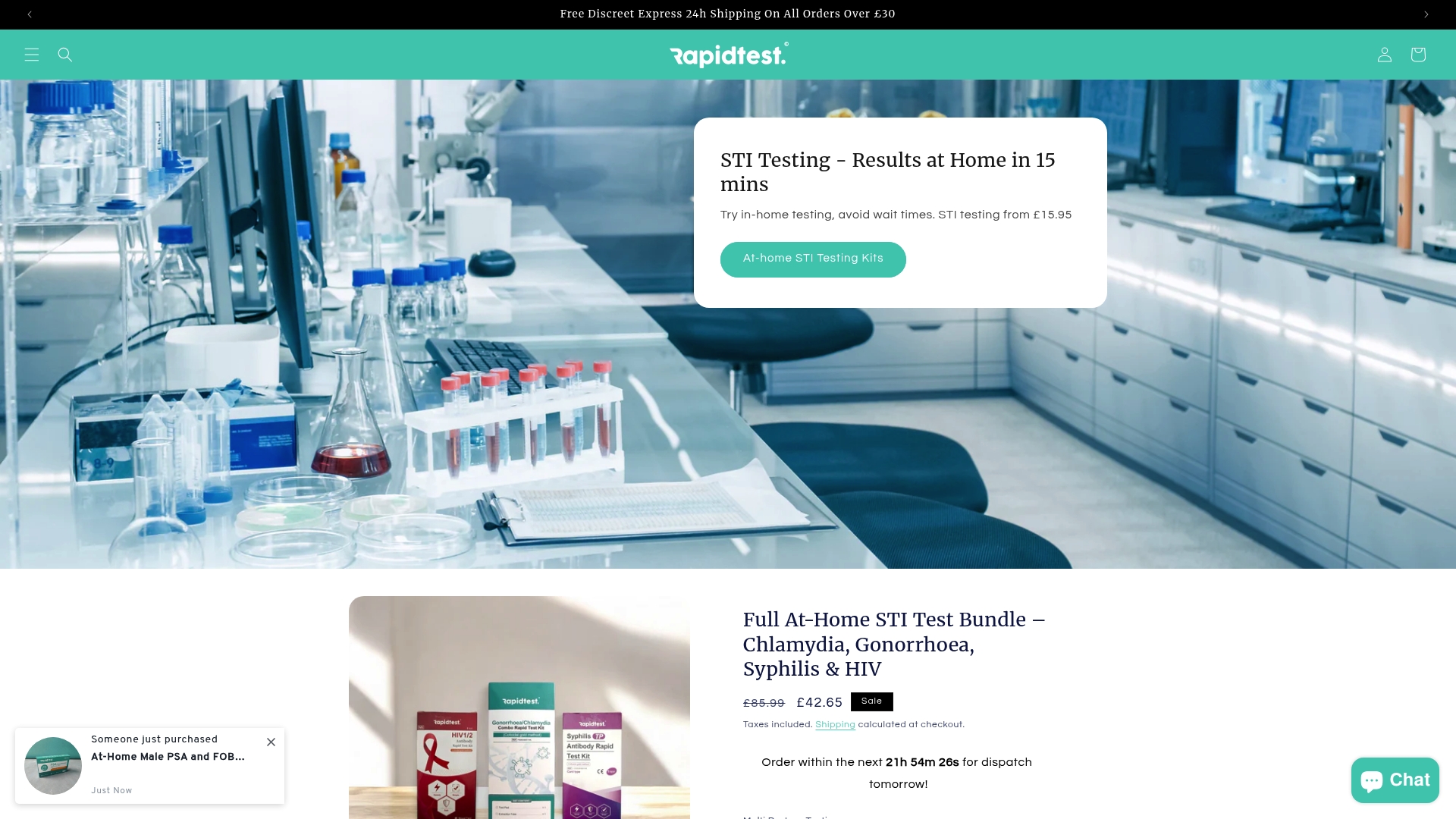
This works best for asymptomatic screening. If you have symptoms, please see a clinic or your GP rather than relying on a home kit. Browse the full range of at-home STI kits to find the right option for your situation.
This article is general information, not a substitute for advice from a qualified doctor. Consult a qualified healthcare professional about your own circumstances before acting on anything here.
Sources
FAQ
How much does an STD test cost in the UK?
Costs range from free through NHS and NHS-linked services to £29 to £350 or more for private kits, depending on how many infections are covered. Single tests sit at the lower end, while broad panels covering blood-borne viruses and HPV cost more.
Can I get a free STI test from Boots?
Not automatically. NHS guidance notes that some pharmacies offer chlamydia self-test kits, but availability varies by branch and is often limited to specific groups such as under-25s, so it isn’t a nationwide free service.
Does the NHS offer free home STI testing kits?
Yes, in many areas. NHS-linked services such as SH.UK and Sexual Health Wales provide free home kits with free return postage, though eligibility depends on your location, age and whether you have symptoms.
Can I go to my GP if I think I have an STD?
Yes, your GP can assess symptoms and arrange testing or referral to a sexual health clinic. This route is generally recommended over a home kit if you have symptoms or a complex exposure, since a clinic can offer same-day treatment where needed.