


6–8 Weeks or 3 Months: Hepatitis B Window Period in the UK
Most people become detectable by standard hepatitis B tests within 6 to 8 weeks of exposure, but a reliable “all clear” often needs a follow-up test at 3 months. HBsAg and HBV DNA can appear earlier, sometimes within a week or two, which is why doctors recommend triple-panel testing (HBsAg, anti-HBs, total anti-HBc) rather than a single marker. If you’ve had a high-risk exposure or you’re already feeling unwell, test now, but don’t treat an early negative as the final word.
TL;DR:
- Testing at 6 to 8 weeks after exposure can miss early infections, so a follow-up test at 3 months provides more reliable results.
- HBsAg usually appears within 4 weeks, but incubation and detection timing vary widely depending on immune response and lab sensitivity.
- Relying on a single marker or a single test risks false negatives; a full triple panel or HBV DNA testing is essential for accurate diagnosis.
- Negative early tests do not guarantee absence of infection, especially if exposure was recent or high-risk, so repeated testing is advised.
- At-home rapid tests are useful for initial screening once the window period has passed but should not replace laboratory testing for high-risk or recent exposures.
Table of Contents
- Understanding the hepatitis B window period
- How long does the window period actually last?
- Which tests detect hepatitis B, and when
- When to test after a possible exposure
- Why tests can come back negative too early
- Incubation and symptoms: what your body might (or might not) show
- What your result actually means, and what to do next
- At-home rapid testing versus laboratory testing
- The safety-first takeaway on test timing
- Private hepatitis B screening with RapidTest
- Sources
- FAQ
Understanding the hepatitis B window period
The window period is the stretch of time after infection when the virus is present in your body but hasn’t yet produced a marker your test can pick up. It exists because your immune system responds in stages, not all at once.
Here’s the typical sequence: HBsAg (the surface antigen) usually shows up first, followed by IgM anti-HBc, then anti-HBs as your body starts clearing the virus or responding to vaccination. Each marker tells a different part of the story. A positive HBsAg early on means active infection. A positive IgM anti-HBc with a negative HBsAg can mean you’re in that awkward middle stretch, the window period explained further in relation to hepatitis C, where infection is present but the usual flag hasn’t gone up yet.
Get the sequence wrong, or test with only one marker, and you can walk away with a false sense of security.
How long does the window period actually last?
Published ranges vary more than most people expect, and that’s not because anyone is guessing. HBsAg typically becomes detectable within 4 weeks of infection, with a documented range of 1 to 9 weeks. Incubation itself, the time from exposure to measurable liver changes, averages around 60 days, ranging from 40 to 90 days, according to the CDC, while symptom onset averages closer to 90 days.
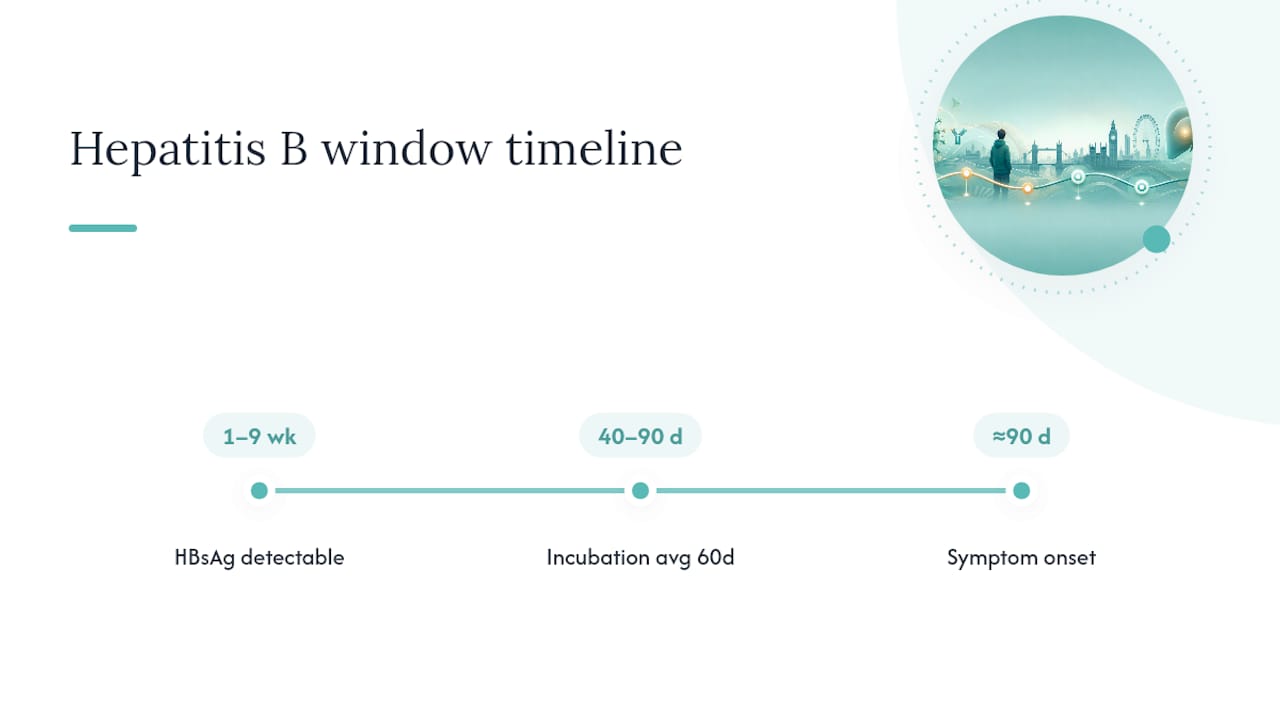
Why the spread? It comes down to what’s being measured, how sensitive the lab assay is, and how your own immune system behaves. WHO-cited guidance notes the window depends heavily on assay sensitivity and host factors, which is a polite way of saying two people exposed on the same day can test differently at the same point in time.
The practical takeaway: a negative result at 6 to 8 weeks is reassuring but not final. A negative result at 3 months, using the full triple panel, is far more trustworthy.
Which tests detect hepatitis B, and when
Different markers switch on at different points, which is exactly why relying on one blood draw and one marker is a gamble. Here’s how the main tests line up against typical detection windows.
| Marker | What it shows | Typical detection window |
|---|---|---|
| HBsAg | Active infection, current or chronic | 1–9 weeks after exposure, often around 4 weeks |
| IgM anti-HBc | Recent acute infection | Can appear during the window period, sometimes the only positive marker |
| Anti-HBs | Immunity, from recovery or vaccination | Weeks to months after HBsAg clears or after vaccination |
| HBV DNA (PCR) | Direct viral genetic material | Often the earliest detectable marker, ahead of HBsAg in some cases |
HBsAg is the workhorse test, but its main limitation is timing. IgM anti-HBc matters most in that grey zone, when it can be the only marker present. Anti-HBs tells you about protection, not active infection, which is why it appears later. HBV DNA testing via PCR is the most sensitive option and the one specialist’s reach for when someone needs an answer sooner than serology alone can give.
When to test after a possible exposure
The CDC recommends screening every adult at least once with the full triple panel, and testing again if your risk continues. After a specific exposure, timing your tests properly matters more than testing early and often.
A sensible schedule looks like this:
- Test at 6 to 8 weeks after exposure using the triple panel (HBsAg, anti-HBs, total anti-HBc).
- Repeat at 3 months to confirm a negative result, since many clinical protocols build in a 3 to 6 month follow-up window precisely because one early test can miss infection.
- Consider a 6-month check if your risk exposure was ongoing, or if earlier results were ambiguous.
- If symptoms appear at any point, test immediately and ask for HBV DNA alongside the panel if your clinician thinks it’s warranted.
Ask specifically for the triple panel rather than a single HBsAg test. It’s the difference between checking one door and checking the whole house.
Why tests can come back negative too early
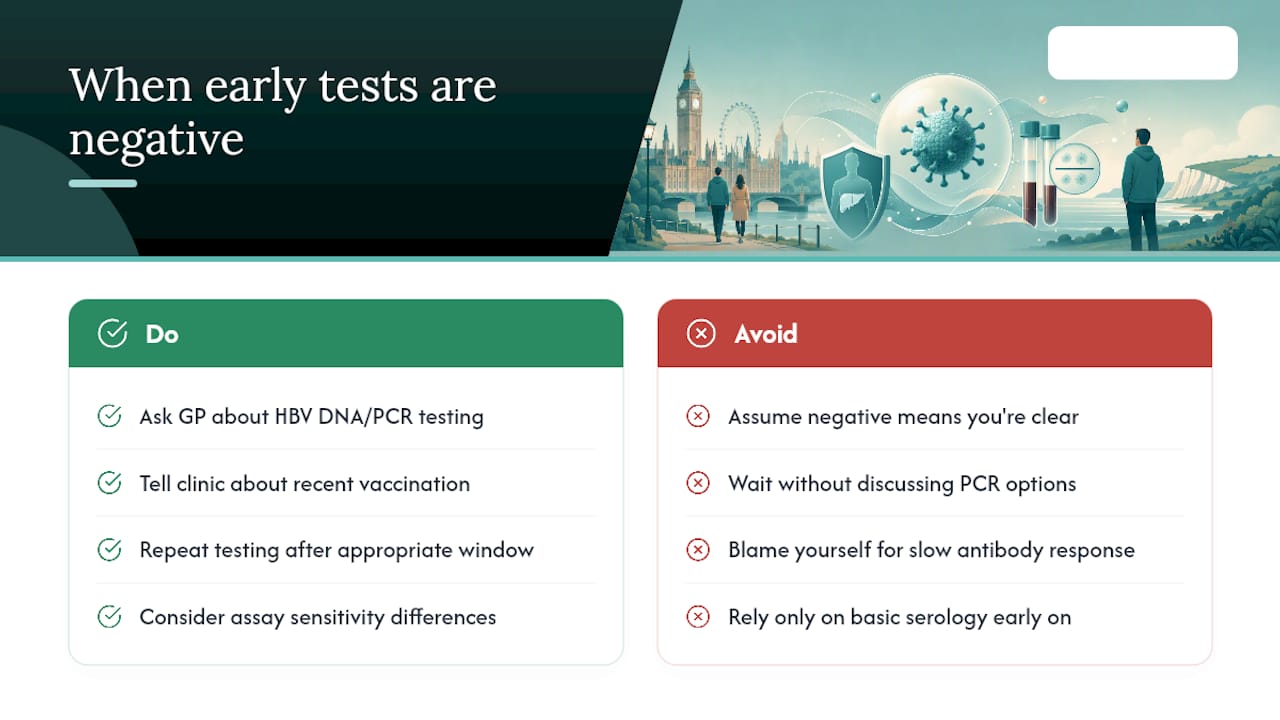
A negative result early on doesn’t always mean you’re clear. It sometimes just means the test hasn’t caught up with the infection yet.
Assay sensitivity varies between labs, and some detect lower viral loads than others. Your own immune response speed plays a role too. Someone with a slower antibody response can test negative for longer even with the same exposure and the same test. Detection times depend on assay sensitivity, immune competence, and viral kinetics, which is a fairly clinical way of saying biology doesn’t run on a fixed clock.
Recent vaccination can also muddy results temporarily, since vaccine-induced markers can appear in ways that look similar to early infection markers on a basic panel.
Pro Tip: If your risk exposure was significant, ask your GP or clinic directly whether HBV DNA testing is appropriate rather than waiting for HBsAg to catch up. It closes the gap PCR can reach that standard serology sometimes can’t.
Incubation and symptoms: what your body might (or might not) show
Symptom timing follows a wide arc. Average incubation runs around 60 days for liver enzyme changes and closer to 90 days for symptom onset, with a broader range of 60 to 150 days.
When symptoms do show up, they can include:
- Fatigue that doesn’t lift with rest.
- Nausea, loss of appetite, or abdominal discomfort.
- Dark urine or yellowing of the skin and eyes (jaundice).
- Joint pain in the early acute phase.
Here’s the part people underestimate: most adults with acute hepatitis B feel nothing at all. Absence of symptoms tells you very little, which is exactly why testing on a schedule matters more than testing on a hunch.
What your result actually means, and what to do next
A result only tells you something useful once you know what to do with it. Broadly, there are three paths:
- Positive HBsAg: this needs confirmatory HBV DNA testing, liver enzyme monitoring, and a referral for ongoing care. It’s not a moment to self-manage.
- Isolated anti-HBc or IgM anti-HBc positive with negative HBsAg: this can reflect the window period itself, so follow-up testing is needed to see whether HBsAg appears or clears.
- Negative across the panel with no ongoing risk: consider vaccination if you’re not already immune, since a clean result now is the ideal time to protect yourself going forward.
If anything looks indeterminate, that’s the point to involve a specialist rather than guess your way through it.
At-home rapid testing versus laboratory testing
At-home Hep B rapid kits, including RapidTest’s hepatitis B rapid test kit, give you a result in around 15 minutes and work well as a private first check, particularly once you’re past the earliest weeks of the window period. They’re not built to match the sensitivity of laboratory PCR or full serology during that very early stretch, though. If your exposure was recent, high-risk, or you’re symptomatic, a lab-based triple panel or HBV DNA test remains the more reliable route.
The safety-first takeaway on test timing
The biggest mistake I see repeated is treating one early negative test as permission to stop worrying. It isn’t. If your exposure was recent, ask explicitly for the triple panel, and don’t be shy about requesting HBV DNA testing if your risk was significant. Testing again at 3 months isn’t overcautious, it’s how you actually get a trustworthy answer. When in doubt, a GP or sexual health clinic can guide the next step properly.
— Jack
Private hepatitis B screening with RapidTest
If you’d rather check your status privately before deciding whether a GP visit or lab panel is your next step, Home testing kits give you a discreet starting point without a clinic waiting room. The hepatitis B rapid kit delivers a result in around 15 minutes, which makes it a sensible option once you’re past the earliest, most unreliable weeks of the window period, though it isn’t a replacement for laboratory confirmation if your exposure was recent or high risk.
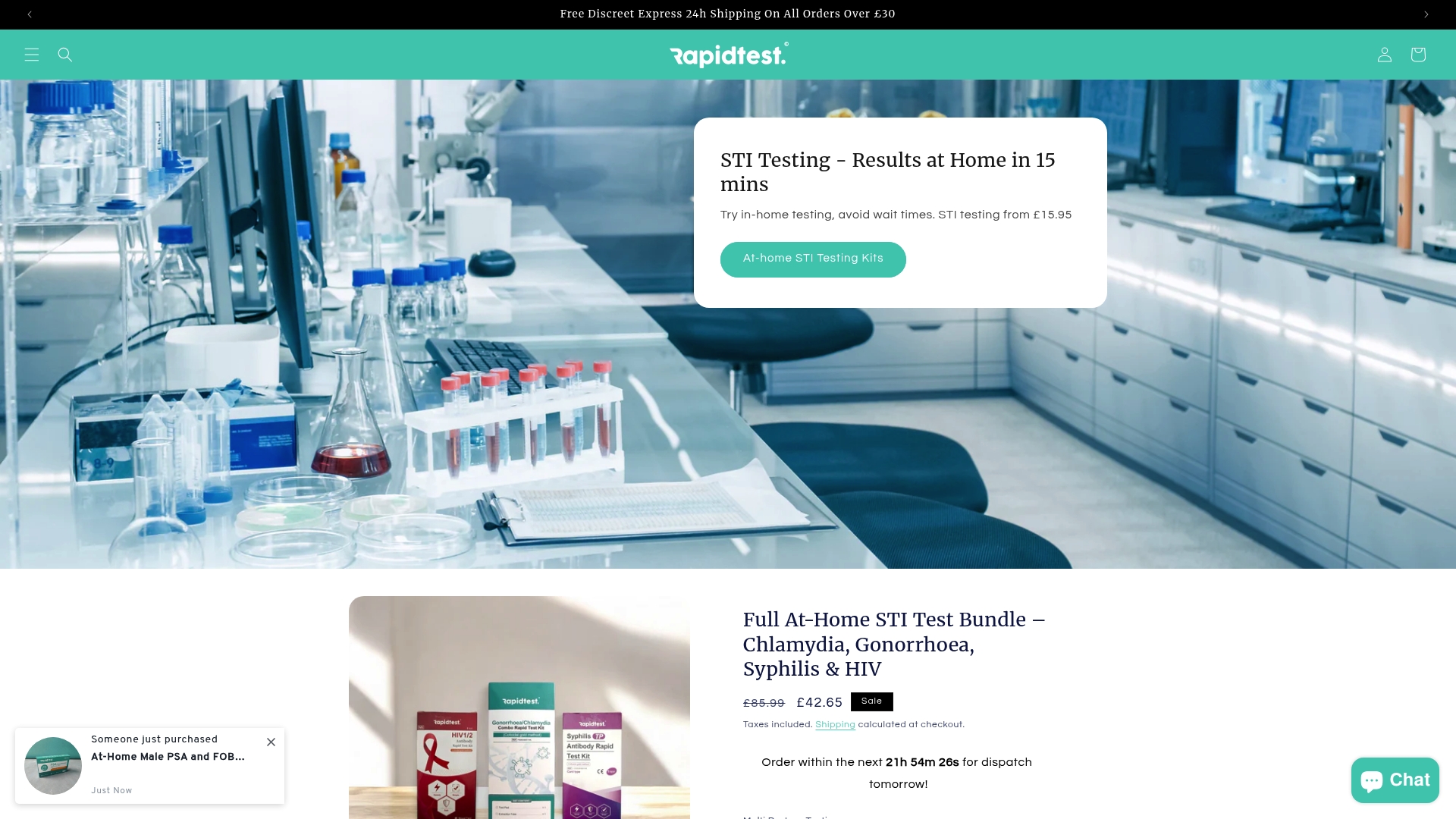
For a wider check alongside hepatitis B, RapidTest’s at-home STI testing kits cover several markers in one order, so you’re not guessing which single test to buy. If you’ve had a recent exposure and want a private first read while you plan a follow-up lab test, order your kit and get a result at home tonight rather than waiting on an appointment.
This article is general information, not a substitute for advice from a qualified doctor. Consult a qualified healthcare professional about your own circumstances before acting on anything here.
Sources
- Core Concepts - HBV Screening, Testing, and Diagnosis - Hepatitis B Online
- Clinical overview of hepatitis B — CDC
- What blood tests are important to diagnose and evaluate my hepatitis B infection? — Hepatitis B Foundation
- WHO guidelines on hepatitis B testing — NCBI Bookshelf
FAQ
How soon can hepatitis B be detected by a blood test?
HBsAg, the earliest common marker, is typically detectable from around 4 weeks after exposure, with a documented range of 1 to 9 weeks; HBV DNA testing can sometimes catch infection even earlier.
Is a hepatitis B test conclusive after 3 months?
A triple-panel test at 3 months is considered far more reliable than an earlier check, though some protocols still recommend a 6-month follow-up if risk exposure was ongoing or earlier results were unclear.
Can hepatitis B survive outside the body for several days?
Hepatitis B is a bloodborne virus that primarily spreads through contact with infected blood or body fluids; if you’ve had a specific exposure incident, the relevant question is testing timing, not surface survival, so focus on booking a test at the 6 to 8 week mark.
Can a 40-year-old still get the hepatitis B vaccine?
Yes, the hepatitis B vaccine is not restricted by age, and adults who missed vaccination earlier in life can still receive it; a GP or pharmacy can confirm the appropriate schedule for someone starting later.