


FIT test false positive: what it means and what to do
A positive FIT result means the test has found blood in your stool. It doesn’t mean you have cancer. Most people who test positive go on to have a colonoscopy, and most of those colonoscopies do not find cancer at all.
Here’s what usually happens next:
- Your GP or the screening programme will contact you to explain the result
- You’ll be referred for a colonoscopy, which is the standard next step
- The colonoscopy will look for the source of the bleeding, which is very often something other than cancer
Large-scale data backs this up. Research on factors associated with false FIT results shows that a substantial proportion of positive tests are not linked to advanced neoplasia at all. A positive FIT is a prompt to look closer, not a verdict.
Key Takeaways
A positive FIT test signals blood in stool that requires colonoscopy to investigate, but most positive results do not turn out to be colorectal cancer.
| Point | Details |
|---|---|
| Positive doesn’t mean cancer | Most people with a positive FIT have no advanced neoplasia found at colonoscopy. |
| Non-cancer causes are common | Haemorrhoids, ulcers, IBD, and swallowed blood can all trigger a true positive result. |
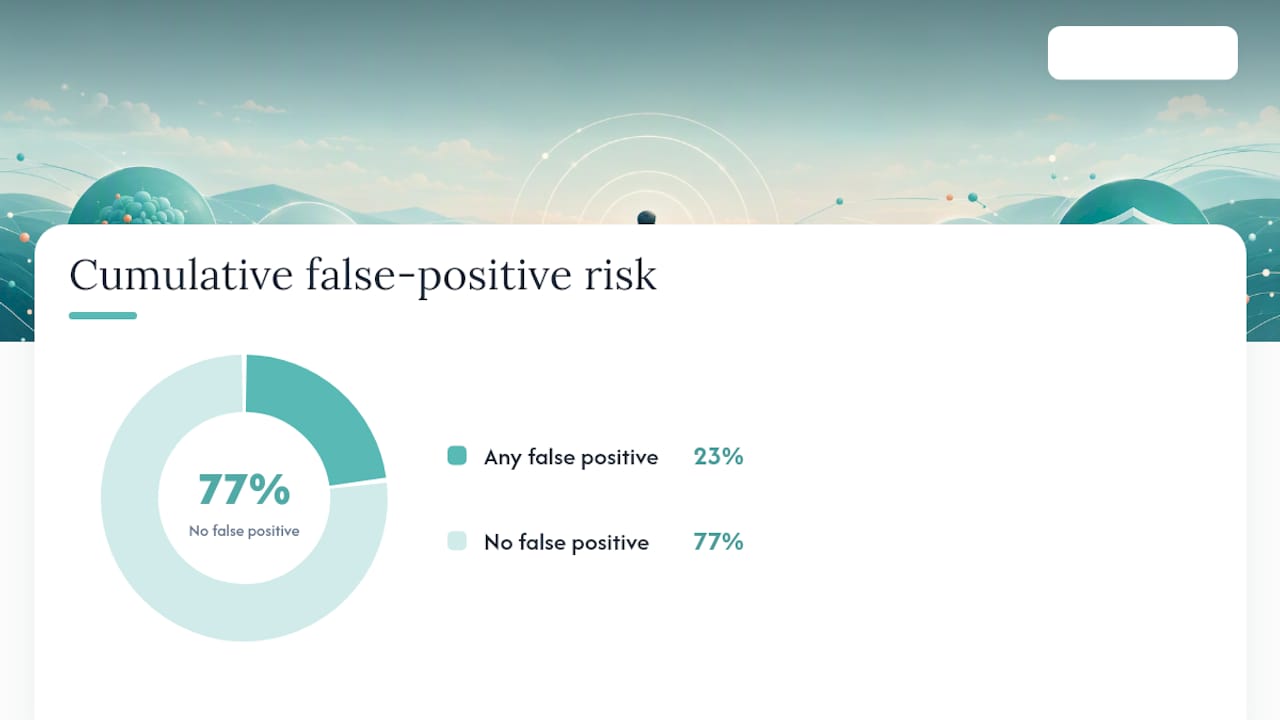
| Repeated testing raises cumulative odds | Annual FOBT testing carried roughly a 23% chance of at least one false positive over ten years. |
| Colonoscopy is the standard next step | It examines the full colon lining and can remove polyps in the same procedure. |
| Preparation reduces avoidable errors | Follow collection instructions closely and never stop medication without medical advice. |
| Rapidtest supports private checks | Rapidtest’s at-home FOB kit offers 15-minute results as a private adjunct, not a replacement for screening or colonoscopy. |
Table of Contents
- Understanding a FIT test false positive
- How common are false-positive FIT results?
- What causes a false-positive FIT test?
- What happens after a positive FIT result?
- How doctors interpret a positive FIT result
- Why FIT results vary between labs and kits
- How to reduce avoidable false results before you test
- Rapidtest’s role in bowel health screening
- Sources
- FAQ
Understanding a FIT test false positive
A FIT (faecal immunochemical test) works by using antibodies that bind specifically to human haemoglobin, the protein in red blood cells. If there’s blood in your stool sample, however small the amount, the antibodies pick it up and the test flags as positive. This is different from the older guaiac-based FOBT, which detects blood chemically and is more easily thrown off by certain foods and medications, according to Mayo Clinic’s guidance on FOBT.
A false-positive FIT has a specific clinical definition. It’s when the test comes back positive, but a follow-up colonoscopy finds no colorectal cancer and no advanced adenoma (a large or high-risk polyp). The blood was real. The cancer risk it was screening for wasn’t there.
This distinction matters more than it might seem:
- The test detected something true: there was blood in your sample.
- What it couldn’t tell you is where that blood came from.
- “False positive” refers to the screening target missing, not the test lying to you.
Blood in stool has plenty of ordinary explanations, and Mayo Clinic notes that haemorrhoids, stomach ulcers, inflammatory bowel disease, and even swallowed blood from a nosebleed can all trigger a positive result. The test did its job. It just wasn’t cancer doing the bleeding.
How common are false-positive FIT results?
False positives aren’t rare, and that’s worth knowing before you spiral. Per-test rates vary considerably depending on the laboratory’s cut-off threshold and the population being screened, but a meaningful share of everyone who tests positive turns out, at colonoscopy, to have no advanced neoplasia.
Three numbers explain why FIT results need context:
- Sensitivity — how well the test catches true cases of cancer or advanced polyps
- Specificity — how well it correctly identifies people who don’t have them
- Positive predictive value (PPV) — of everyone who tests positive, what proportion actually has the disease
Even a highly accurate test produces a fair number of false alarms when the underlying disease is relatively uncommon in the screened population, which is exactly the situation with bowel cancer screening.
There’s also a cumulative effect worth understanding if you’re screening annually or every two years. Older research on repeated FOBT screening estimated a roughly 23% chance of at least one false positive over ten years of annual testing. FIT tends to produce fewer false positives per test than guaiac FOBT, but the same logic applies: test enough times, and the odds of one flagged result that turns out to be nothing rise. That’s not a flaw in the programme. It’s simple probability, and it’s exactly why a single positive result shouldn’t feel catastrophic.
What causes a false-positive FIT test?
Blood can enter your stool from dozens of places along your digestive tract that have nothing to do with cancer. Understanding the common causes tends to bring real relief once you see the list.
Medical sources of non-cancer bleeding:
- Haemorrhoids, one of the most frequently cited causes in screening studies
- Diverticular disease (small bulges in the bowel wall that can bleed intermittently)
- Inflammatory bowel disease, such as Crohn’s or ulcerative colitis
- Gastric or duodenal ulcers, where blood from higher up the digestive tract works its way down
- Small, non-advanced polyps that bleed a little but carry low cancer risk
Interfering factors that can trigger a misleading result:
- Aspirin or other NSAIDs, which can irritate the gut lining and cause minor bleeding
- A digital rectal examination performed shortly before sample collection
- Contaminated or poorly timed sample collection
Large cohort studies examining factors linked to false-positive results also point to demographic patterns. Data from a large retrospective screening analysis associates higher odds of a false positive with older age, smoking, higher alcohol intake, and higher BMI, alongside haemorrhoids as a recurring finding. These associations shift somewhat between studies and populations, so none of them function as a guarantee. They’re patterns, not verdicts.
Pro Tip: If you smoke, drink regularly, or carry extra weight, don’t assume a positive result is more “suspicious” for you specifically. It simply means your background odds of a non-cancer cause are somewhat higher, which is genuinely reassuring news, not a red flag.
What happens after a positive FIT result?
Once you’ve had a positive result, the pathway is fairly standardised, and knowing the steps in advance makes the wait far less stressful.
- Colonoscopy is booked as the default next step. A specialist examines the entire lining of your colon and rectum using a thin, flexible camera, looking directly for the source of the bleeding, whether that’s a polyp, inflammation, haemorrhoids, or nothing at all.
- The doctor may remove polyps during the same procedure. Most polyps found this way are non-advanced and are simply removed and sent for analysis, closing the loop in one visit.
- In uncommon cases, other tests get added. If you have symptoms suggesting bleeding higher up the digestive tract, a doctor might request an upper endoscopy. CT colonography or a repeat FIT occasionally comes into play too, though these are conditional add-ons rather than routine steps.
- Timing matters for screening effectiveness. Prompt follow-up after a positive FIT is strongly recommended; delays reduce the benefit of catching things early, which is the entire point of the screening programme.
Most people wait somewhere between a few weeks and a couple of months from positive result to colonoscopy, depending on local capacity. If you haven’t heard anything within that window, it’s entirely reasonable to contact your GP or the screening service to check progress.
How doctors interpret a positive FIT result
Clinicians read “false positive” quite differently to how it sounds. It doesn’t mean the test malfunctioned. It means the specific target of the screening programme, advanced neoplasia, wasn’t found, even though the underlying signal (blood) was genuine.
A colonoscopy that comes back clear of cancer after a positive FIT still isn’t a wasted procedure. It can uncover inflammation, haemorrhoids, diverticular disease, or small polyps, all conditions worth knowing about and, in some cases, worth treating even though they weren’t what the screening programme was hunting for.
This also feeds into future screening decisions. A clear colonoscopy after a positive FIT generally means you return to your normal screening interval rather than needing more frequent checks, though findings like inflammatory bowel disease might prompt closer monitoring separately from the cancer screening pathway.
Why FIT results vary between labs and kits
Not every positive FIT carries identical weight, because the test isn’t run to a single universal standard. Screening programmes make deliberate trade-offs in how they calibrate it.
- Analytical cut-offs differ. A lower haemoglobin threshold catches more true cancers but also flags more non-cancer bleeding as positive; a higher threshold does the opposite.
- One-sample versus two-sample kits change the odds. Testing two separate bowel movements, as some programmes require, tends to shift both sensitivity and the overall positive rate compared with a single sample.
- Capacity shapes the threshold, not just biology. According to analysis of false-positive factors, programmes explicitly weigh the benefit of catching more cancers against the strain of sending more people for colonoscopy, since endoscopy capacity is finite everywhere.
None of this is arbitrary. It’s a genuine balancing act between missing something serious and overwhelming diagnostic services with investigations that mostly turn out clear.
How to reduce avoidable false results before you test
A surprising share of misleading results trace back to timing and handling rather than biology. A few careful habits before you collect your sample can cut your odds of an avoidable false alarm.
- Never stop taking aspirin or another prescribed medication without speaking to your clinician first, even if you suspect it might affect your result.
- Avoid collecting your sample immediately after a digital rectal examination, or during a flare of visible rectal bleeding from a known cause like haemorrhoids.
- Follow the collection instructions precisely. Research on FOBT reliability in hospital settings found that timing and handling materially affect results, and the same logic applies to home collection.
- Keep the sample away from water, urine, or toilet cleaning chemicals, all of which can contaminate it.
Pro Tip: If you’ve had a recent bout of piles, a stomach bug, or a course of ibuprofen, it’s worth mentioning this to whoever explains your result. It won’t stop your colonoscopy, but it gives your doctor useful context from day one.
Rapidtest’s step-by-step sample collection guide walks through the practical side of this in more detail if you want a refresher before you collect.
Rapidtest’s role in bowel health screening
Rapidtest builds at-home FOB (faecal occult blood) test kits alongside educational resources on sample collection and result accuracy, and understanding the mechanics of FIT and FOB testing sits at the centre of what we do every day.
A private FOB kit is a genuinely useful tool, but it plays a different role to your national screening programme’s FIT test:
- Rapidtest’s at-home FOB kit gives you a rapid read on whether blood is present in your stool, with results in 15 minutes.
- It is not a substitute for your screening programme’s official FIT test or for a colonoscopy if either is recommended to you.
- It’s most useful for people who want more regular reassurance between official screening rounds, or who want to build confidence with sample collection before their formal test.
If you’re curious how testing accuracy actually works in practice, Rapidtest’s guide on FIT stool test accuracy breaks down sensitivity and specificity in plainer terms.
A short word on staying calm and taking action
You’ve read enough now to know the shape of what usually happens: a positive result, an investigation, and in most cases a reassuring outcome or something manageable found and treated early. That’s the system working as intended, not a sign that something’s gone catastrophically wrong.
What actually helps is preparation. Write down your current medications before your GP appointment, ask when your colonoscopy is likely to be scheduled, and don’t sit on questions out of politeness. Every clinician handling a positive FIT expects those questions. Support resources exist precisely because this moment is stressful for almost everyone who goes through it, and there’s no reward for pretending otherwise.
Rapidtest’s at-home FOB kits for ongoing peace of mind
Rapidtest is the option for people who want a private check on bowel health between official screening rounds, without booking a GP appointment or waiting on a postal lab kit.
Our at-home FOB kit gives you a result in 15 minutes, tested from home, with full instructions included and nothing sent away for analysis. It’s built for reassurance and confidence with sample collection, not as a replacement for your national screening programme’s FIT test or for a colonoscopy if one’s been recommended to you. If you’ve had a false-positive result before and want a private way to keep an eye on things going forward, or you simply want to feel more prepared before your official screening kit arrives, Rapidtest’s PSA and FOB combined kit covers both bowel and prostate health checks in one order. Order one today and you’ll have a result before the kettle’s finished boiling.
Sources
- Fecal immunochemical test (FIT) — Mayo Clinic
- Factors associated with false fecal immunochemical test results in colorectal cancer screening — PMC
- Cumulative false-positive risk after repeated FOBT screening — PMC
- Factors associated with false fecal immunochemical test results in colorectal cancer screening — PubMed
FAQ
What can cause a false-positive FIT stool test?
Haemorrhoids, diverticular disease, inflammatory bowel disease, stomach ulcers, and swallowed blood from the nose or mouth can all trigger a positive FIT without cancer being present.
Can you have a positive FIT test and not have cancer?
Yes, and it’s common. Most people who test positive on a FIT go on to have a colonoscopy that finds no cancer, often revealing a benign cause like haemorrhoids instead.
What percentage of FIT tests are false positives?
Rates vary by cut-off threshold and population screened, but a meaningful share of positive results are not linked to advanced neoplasia. Repeated annual testing over ten years carried roughly a 23% cumulative chance of at least one false positive with older FOBT methods.
How common is a false positive for colon cancer screening?
False positives happen regularly enough that screening programmes build follow-up colonoscopy into the pathway as standard practice, precisely because a positive result alone can’t confirm or rule out cancer.
Should I use an at-home FOB kit if I’ve had a false-positive FIT before?
A private kit like Rapidtest’s at-home FOB test can offer reassurance between screening rounds, but it doesn’t replace the colonoscopy or official screening your doctor recommends after a positive result.