


Chlamydia test false positive: what to know
A positive chlamydia result is rarely wrong. Modern lab tests, known as NAATs, are highly specific, so false positives are uncommon, though not impossible. If your result feels unexpected, the right move is simple: talk to a clinician about confirmatory testing rather than panicking or ignoring it.
- NHS guidance confirms NAATs are the standard test used in clinics across the country.
- Evidence reviews from bodies like the USPSTF put false-positive rates in screening at roughly 0-2% across most anatomical sites.
- A single reactive result doesn’t always mean a repeat infection; it means it’s time to check, not panic.
Pro Tip: If your result doesn’t match your recent sexual history (no new partners, consistent condom use), mention that explicitly to your clinician. It changes how they’ll interpret the result and what they’ll recommend next.
Key Takeaways
Modern NAATs are highly specific, so a chlamydia test false positive is uncommon, but confirmatory testing remains the sensible response to an unexpected result.
| Point | Details |
|---|---|
| False positives are rare | Screening studies report false-positive rates of roughly 0-2% across most anatomical sites. |
| Prevalence shapes PPV | The same test is less reliable in low-risk populations than in higher-risk ones, even with high specificity. |
| Older assays were riskier | Antigen tests like Chlamydiazyme showed cross-reactivity with bacteria such as E. coli and Klebsiella. |
| Low lab signal values warrant a repeat | Borderline RLU readings on some NAAT platforms correlate with a higher share of false positives. |
| Quick reassurance is available | Rapidtest’s at-home chlamydia kit gives a private 15 minute result while you arrange NAAT confirmation if needed. |
This article is general information, not a substitute for advice from a qualified doctor. Consult a qualified healthcare professional about your own circumstances before acting on anything here.
Table of Contents
- How common is a false positive chlamydia test result?
- Why do false positives happen at all?
- NAATs vs older tests: which is actually reliable?
- What to do after a positive chlamydia result
- When should you suspect a false positive?
- How laboratories keep false positives rare
- Research highlight: why older tests misfired so often
- Get quick clarity with an at-home chlamydia retest
- Sources
- FAQ
How common is a false positive chlamydia test result?
Short answer: uncommon, but the exact odds depend on more than just the test itself. Two numbers matter here, specificity and positive predictive value (PPV), and they answer different questions.
Specificity tells you how good a test is at correctly identifying people who don’t have chlamydia. NAATs typically score very highly here, often ≥99% specificity. PPV tells you something different: given a positive result, what’s the actual chance you’re infected? That number swings depending on how common chlamydia is in your particular group.
The maths in plain terms: in a low-prevalence population (say, 2% infection rate), even a highly specific test will produce more false positives relative to true positives than it would in a higher-prevalence group (say, 10%). The same test, wildly different real-world reliability.
USPSTF evidence summaries report false-positive rates typically sitting in the 0-2% range across the anatomical sites studied. That’s reassuring, but it also means:
- A positive from routine screening in a low-risk person deserves a second look before treatment decisions get finalised.
- A positive following clear exposure (new partner, symptoms, known contact) is far more likely to reflect a genuine infection.
Why do false positives happen at all?
No test is flawless, and understanding the failure points helps you judge your own result more sensibly.
- Laboratory error or specimen mix-up. Rare, but labs guard against it with barcoded samples, chain-of-custody tracking and repeat testing on ambiguous results.
- Sample contamination. Environmental Chlamydia trachomatis RNA has been shown to contaminate clinical samples in outbreak investigations, producing unexpected positives when collection protocols slip.
- Cross-reactivity in older assays. Enzyme immunoassays (EIAs) detected chlamydial LPS, a molecule that also appears on other bacteria, which meant they could cross-react and misfire.
- Interfering urinary infections. Certain UTIs skewed older urine-sediment tests towards false positives, something modern NAATs largely sidestep.
- Different error profiles by test generation. Rapid and antigen-based tests simply weren’t built with the same molecular precision as today’s amplification technology.
Pro Tip: If you were treated for a UTI shortly before testing, mention it. It’s one of the few genuinely documented causes of historical false positives, even though it mostly affected older test types rather than current NAATs.
NAATs vs older tests: which is actually reliable?
Nucleic Acid Amplification Tests, NAATs for short, work by detecting and amplifying the genetic material of the bacterium itself rather than relying on a surface protein reaction. That’s the technical reason they’re so much harder to fool.
- NAATs are the test type recommended in NHS clinical pathways and by public health authorities.
- Sensitivity is typically well above 90%, and specificity usually sits at 99% or higher.
- Sensitivity isn’t uniform across the body. Pharyngeal (throat) samples tend to perform worse than urogenital ones, which matters if you’ve had oral exposure.
- Older antigen and EIA tests, by contrast, detected a molecule shared across bacterial species, a design flaw that made cross-reaction more likely.
Public health guidance is consistent on this point: no diagnostic test is infallible, but the evidence overwhelmingly favours NAATs over the antigen-based methods they replaced.
What to do after a positive chlamydia result
A positive result triggers a fairly standard sequence in UK sexual health practice. Here’s how it typically unfolds.
- Don’t assume the worst immediately. One reactive result is data, not a diagnosis carved in stone, especially if it contradicts your recent history.
- Follow your clinic or NHS guidance on treatment. In many cases, treatment starts promptly because the risks of an untreated infection usually outweigh the small chance of a false positive.
- Ask about confirmatory or repeat testing if the result feels genuinely inconsistent with your exposure history, particularly for low-risk individuals caught in routine screening.
- If you tested at home with a rapid kit, treat a reactive result as a strong signal to get NAAT confirmation from a clinic or GP, and start partner conversations in parallel rather than waiting.
- Notify partners regardless of uncertainty where exposure risk is real. Chlamydia often causes no symptoms, so your partner may need testing even before your result is fully confirmed.
Pro Tip: Pregnant women, people with symptoms, and anyone with a clear high-risk exposure are usually treated immediately rather than waiting on confirmatory results. The clinical calculus shifts when the cost of delay is higher than the (small) cost of unnecessary treatment.
When should you suspect a false positive?
A few contextual clues make a false positive more plausible, though none of them rule out infection on their own.
- Low personal exposure risk. No new partners, consistent barrier protection, no known contact with an infected partner.
- Discordant partner testing. One partner positive, one negative, doesn’t automatically mean an error. Timing, sample site, and low PPV in low-risk partners can all explain it.
- Borderline lab signal values. Some platforms report semiquantitative outputs, and research on the Aptima Combo 2 assay found that low relative light unit (RLU) readings correlated with a higher share of eventual false positives.
- Recent UTI or antibiotic use. Worth flagging to your clinician, even though this mainly affected older assay types historically.
How laboratories keep false positives rare
Accredited UK labs, typically operating under UKAS oversight, run internal controls on every batch and repeat testing on anything equivocal rather than reporting borderline data at face value.
- Barcoded specimens and chain-of-custody protocols reduce mix-up risk to near zero.
- Staff training and strict specimen handling limit contamination during collection and processing.
- Equivocal results, particularly low-signal ones, often trigger a repeat run or an alternate-target assay before anything is reported to your GP.
No test, however well-run, achieves 100% certainty. What accreditation and quality control buy you is consistency, the same sample, tested the same way, should give the same answer.
Research highlight: why older tests misfired so often
One of the clearest illustrations of assay-generation differences comes from a study of the older Chlamydiazyme urine-sediment method. Escherichia coli urinary tract infections and 100% of Klebsiella pneumoniae infections](https://pmc.ncbi.nlm.nih.gov/articles/PMC270130/) triggered false positives on that older test.
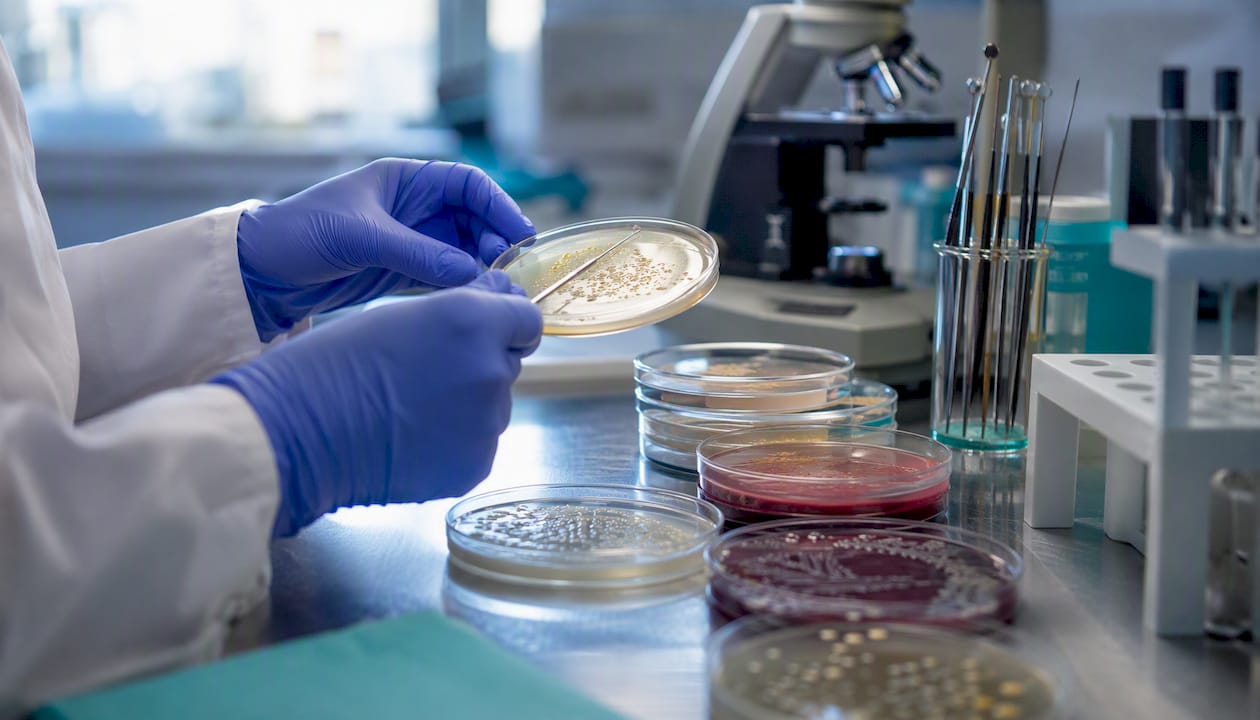
That’s a striking number, and it explains a lot of the historical anxiety around chlamydia testing accuracy. The bacteria in question shared enough molecular similarity with chlamydial antigens to fool an assay that wasn’t looking at genetic material directly.
The practical takeaway: don’t judge modern NAAT accuracy by reputation earned from decades-old antigen tests. They’re different technologies with genuinely different error profiles. Readers who want the original data can consult the full peer-reviewed study directly.
A steadier way to think about your result
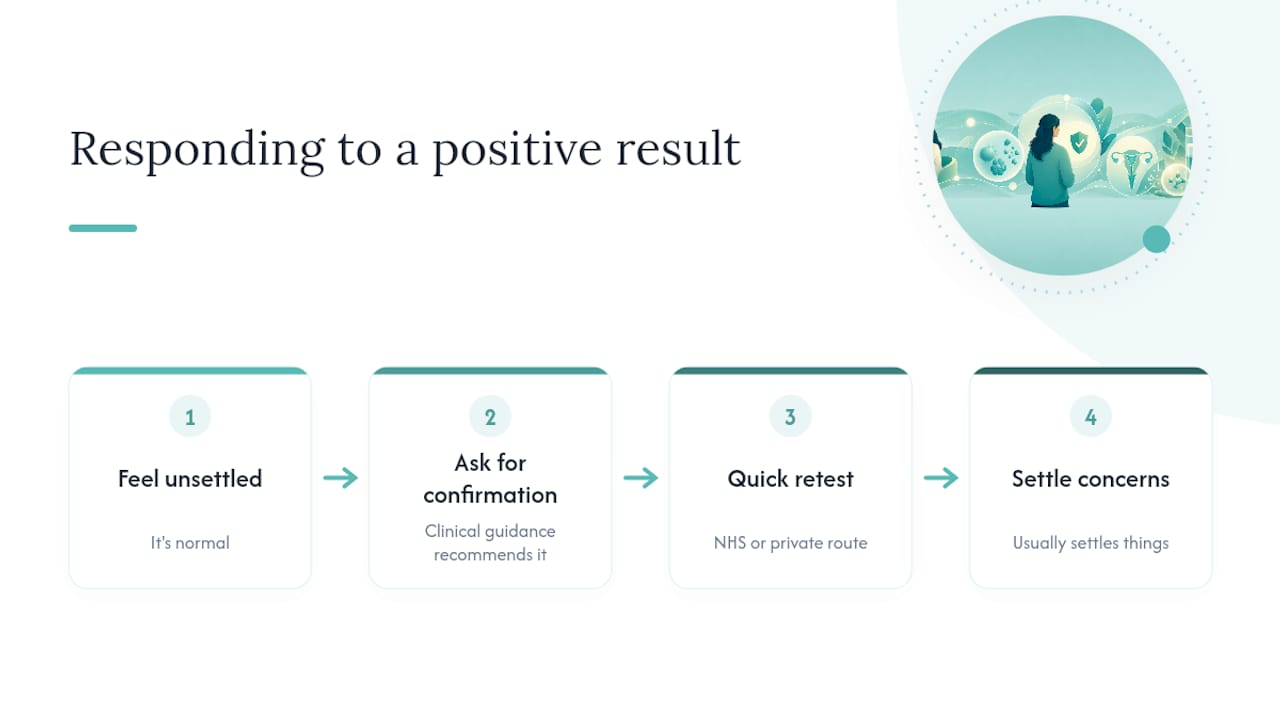
It’s completely normal to feel unsettled by a positive result, especially one that doesn’t match your own sense of risk. Modern testing is built with multiple safeguards, and asking for confirmation isn’t paranoid, it’s exactly what clinical guidance recommends when something doesn’t add up. Sexual health clinics see this question constantly, and a quick retest, whether through the NHS or a private route, is usually all it takes to settle things.
Get quick clarity with an at-home chlamydia retest
If you want reassurance before booking a clinic appointment, an at-home chlamydia rapid test kit gives you a private way to check where things stand, with results in 15 minutes and no queue, no lab return, and no awkward conversation required.
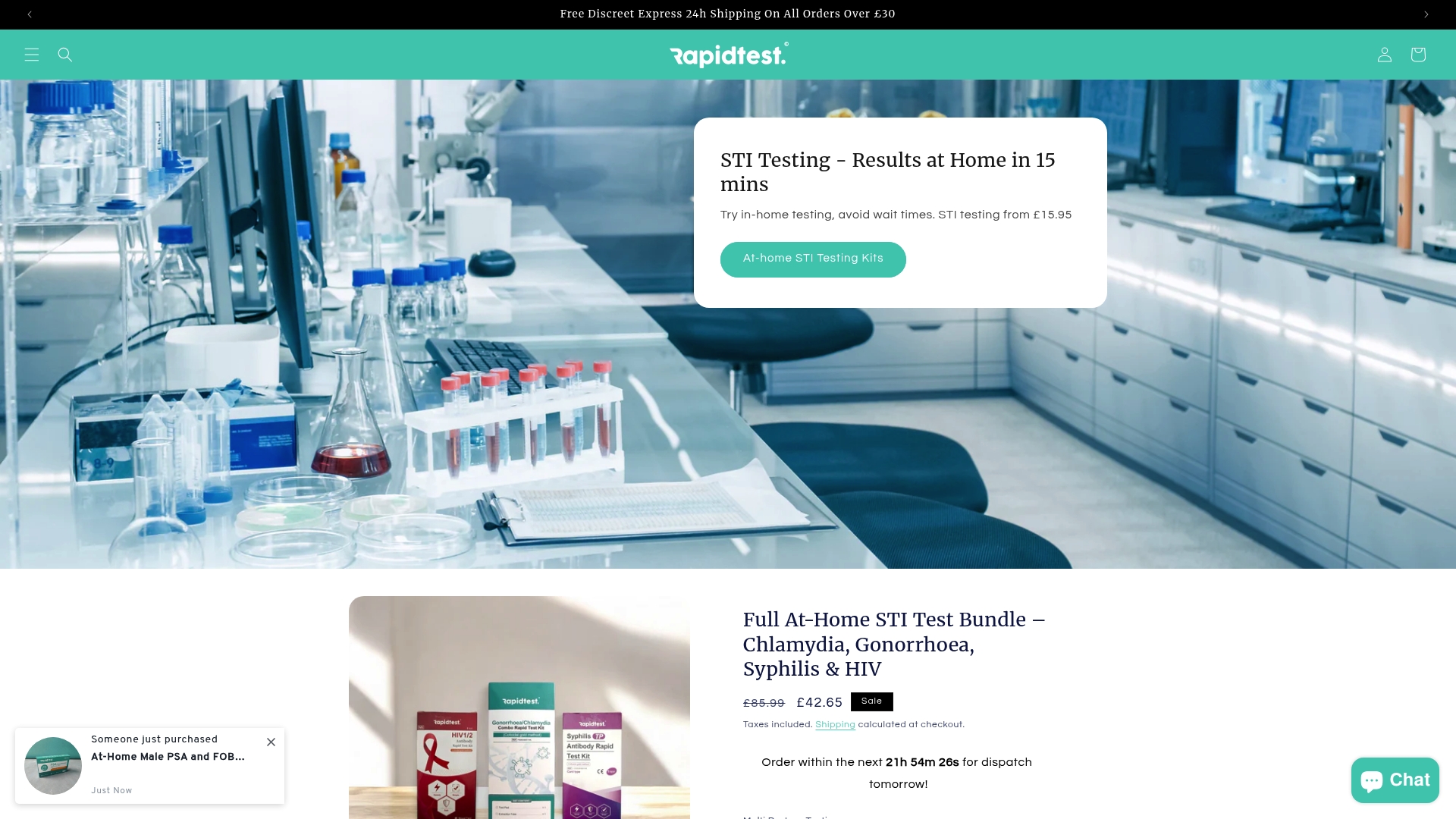
This isn’t a replacement for NAAT confirmation in every case. If your rapid result is reactive, or if you’re symptomatic, pregnant, or have had a clear high-risk exposure, a follow-up NAAT through your GP or sexual health clinic is still the right next step. But for the in-between moments, after an unexpected result, after a new partner, before you decide whether a clinic visit is even necessary, a rapid kit gives you a fast first answer in complete privacy. Rapidtest also offers bundled kits covering chlamydia and gonorrhoea together, useful given how often the two get discussed side by side. Order a kit today and get a clear first read on your status within 15 minutes.
Sources
- Chlamydia diagnosis | NHS
- Recommendations for the Laboratory-Based Detection of Chlamydia trachomatis and Neisseria gonorrhoeae — 2014
- False-positive Chlamydiazyme results during urine sediment analysis due to bacterial urinary tract infections.
- Identifying false-positive chlamydia and gonorrhea results using nonmanufacturer relative light unit cutoffs for the Aptima Combo 2 Assay
FAQ
Can I get a false positive on a chlamydia test?
Yes, though it’s uncommon with modern NAATs.
How common are false negative chlamydia tests?
Less discussed but real, false negatives can happen if you test too soon after exposure or if the sample is taken from a lower-sensitivity site such as the throat. Retesting after the recommended window improves accuracy.
What can chlamydia be misdiagnosed with?
Symptoms overlap with other infections, including gonorrhoea and some urinary tract infections, which is why clinicians sometimes test for both chlamydia and gonorrhoea together.
Can a UTI make a chlamydia test positive?
With older antigen-based assays, certain bacterial UTIs genuinely could trigger false positives. This risk is far lower with modern NAATs, which detect genetic material rather than a shared surface molecule.
Can chlamydia tests be wrong in general?
No test is completely infallible, but NAATs are considered the most reliable diagnostic method available, and an unexpected result is best handled with a quick confirmatory retest rather than assumption either way.