


How accurate is the FIT home test, really?
The FIT home test is a screening tool, not a diagnostic one, and the distinction matters. In trial and audit settings, sensitivity for detecting significant bleeding commonly sits between roughly 92% and close to 100%, depending on the threshold used. That is a strong result, but it is not the same as a “clear” answer. A negative FIT lowers your risk substantially; it does not erase it.
The headline number: a large routine clinical audit found FIT picked up around 92% of cancers at a 10 µg/g threshold, while some pilot studies using much lower thresholds report sensitivity approaching 100%, at the cost of more false alarms.
So what do you actually do with a result in your hand?
- Positive result: contact your GP or screening programme promptly. You’ll usually be referred for further investigation, typically a colonoscopy.
- Negative result: reassuring, but not a free pass. Persistent symptoms still need a GP visit.
- Urgent symptoms (rectal bleeding, unexplained weight loss, ongoing changes in bowel habit): see your GP regardless of what your last FIT said.
The NHS bowel cancer screening programme, the UK National Screening Committee, Cancer Research UK, and Bowel Cancer UK all base their guidance on this same principle: FIT sorts people by risk, it doesn’t diagnose cancer.
Key Takeaways
FIT home test accuracy depends heavily on the threshold used, sample quality, and whether it’s processed in a laboratory or read at home.
| Point | Details |
|---|---|
| High sensitivity, not certainty | Audits show around 92% sensitivity at a 10 µg/g threshold; a negative result lowers risk but doesn’t remove it. |
| Threshold shapes the result | Lower cut-offs like 2 µg/g catch more cases but raise false positives and colonoscopy demand. |
| Sampling technique matters | Multi-point sampling and prompt posting protect accuracy far more than the test itself. |
| Symptoms override a clear test | Persistent bleeding, weight loss, or anaemia need a GP visit regardless of a negative FIT. |
| Lab FIT beats home qualitative kits on evidence | Organised NHS screening uses validated, quantitative lab processing; Rapidtest’s private FOB kit offers a convenient, informational check between rounds, not a diagnostic replacement. |
Table of Contents
- FIT home test accuracy starts with understanding what the test actually measures
- How reliable is the FIT test? Sensitivity, specificity, and what changes them
- What a positive or negative FIT result actually means next
- Getting the home FIT test right: sample collection that protects your result
- Why FIT sometimes gets it wrong: false positives and false negatives
- What the evidence says about double testing and home kits versus lab FIT
- A private FOB test for extra peace of mind between screening rounds
- Sources
- FAQ
FIT home test accuracy starts with understanding what the test actually measures
The faecal immunochemical test, or FIT, uses antibodies that bind specifically to human haemoglobin, the protein in blood. If there’s hidden blood in a stool sample, the test detects it. That’s the entire mechanism: no dyes, no chemical reactions with plant compounds, just a targeted search for human blood.
This is a genuine step up from the older guaiac faecal occult blood test (gFOBT), which relies on a chemical reaction that can be triggered by red meat, certain vegetables, and some medications, leading to unreliable results. A systematic review comparing the two approaches found laboratory-based quantitative FIT consistently outperforms gFOBT, which is why FIT has effectively replaced it across NHS screening.
Key practical differences worth knowing:
- No dietary restrictions. Because FIT only reacts to human blood, you don’t need to avoid red meat or certain supplements beforehand, unlike older tests.
- One sample is usually enough, compared with the multiple samples gFOBT often required.
- Quantitative vs qualitative. NHS laboratory FIT measures an exact concentration (µg haemoglobin per gram of stool), while some consumer point-of-care kits give a simple positive or negative reading via a lateral flow strip.
- Standardised thresholds. National screening programmes use validated cut-offs and calibrated lab equipment, which isn’t always the case with over-the-counter devices.
How reliable is the FIT test? Sensitivity, specificity, and what changes them
Four numbers matter when you’re judging any screening test, and they’re worth knowing in plain terms.
Sensitivity is how well the test catches genuine cases: the percentage of people with significant bleeding who test positive. Specificity is the opposite: how well it correctly clears people without a problem. Positive predictive value (PPV) tells you, out of everyone who tests positive, how many actually have a significant finding. Negative predictive value (NPV) tells you how many people with a negative result are truly clear.
The numbers here move around depending on the cut-off used. A five-year clinical audit reported roughly 92% sensitivity at a 10 µg/g threshold in everyday practice, which is a realistic figure for how the test performs outside a controlled trial. Other cohort research using a much lower cut-off of 2 µg/g found sensitivity approaching 100%, though that comes with a trade-off.
What actually shifts the numbers:
- The cut-off threshold. Lower it, and you catch more genuine cases, but you also flag more people who don’t have cancer, pushing up colonoscopy demand.
- Single versus repeated sampling. One sample can miss intermittent bleeding; testing more than once improves detection.
- Where the lesion sits. Flat or right-sided lesions tend to bleed less than polyps, making them harder to pick up.
- Sample quality. A poorly collected sample skews results in either direction.
- Age and background risk. PPV shifts with the underlying prevalence of disease in the population being tested.
Pro Tip: A lower threshold sounds like the obvious choice, since it catches more cases. But every drop in cut-off pushes more people towards colonoscopy who don’t actually need one. NICE’s DG30 guidance uses this balance to set thresholds for primary care triage, weighing detection against unnecessary invasive follow-up.
What a positive or negative FIT result actually means next
A positive FIT doesn’t mean cancer. It means there’s blood in your stool that needs a proper look, which is why it triggers a referral for further investigation, usually a colonoscopy. That’s still the diagnostic gold standard; nothing done at home replaces it, as Mayo Clinic’s patient guidance makes clear.
A negative result usually means no immediate referral, but broader health and testing partner content can provide useful context for understanding your options. But “usually” is doing real work in that sentence. Screening bodies build in safety-netting precisely because no test catches everything.
On timing: the NHS confirms results typically arrive within about two weeks of your sample reaching the laboratory.
Contact your GP even after a negative FIT if you notice:
- Rectal bleeding that doesn’t have an obvious cause
- Persistent changes in bowel habit
- Unexplained weight loss
- Signs of iron-deficiency anaemia, such as ongoing tiredness
The NHS bowel cancer screening programme and the UK National Screening Committee set these pathways deliberately conservatively, because symptoms can outrank a single test result.
Getting the home FIT test right: sample collection that protects your result
Most inaccurate results trace back to how the sample was collected, not a flaw in the test itself. Here’s how to do it properly:
- Wash and dry your hands before you start.
- Follow your kit’s instructions for catching the stool sample without contamination from urine or toilet water.
- If asked to sample from more than one point on the stool, do it. This improves detection versus a single scrape.
- Seal the sample tube securely and label it exactly as instructed.
- Post it back the same day where possible.
Common mistakes that skew results:
- Taking a sample from just one spot when multiple are requested
- Letting the sample come into contact with water or urine
- Leaving the kit sitting in a hot car or on a windowsill before posting
- Delaying posting by several days
Pro Tip: Heat degrades the sample faster than most people expect. Post it the same day you collect it, and never leave it somewhere warm overnight. For a full walkthrough, RapidTest’s step-by-step sample collection guide covers kit-specific details worth following closely.
Why FIT sometimes gets it wrong: false positives and false negatives
No screening test is flawless, and FIT is no exception. False positives usually come from harmless sources of bleeding: haemorrhoids are the most common culprit, alongside inflammatory bowel conditions. Bleeding higher up the digestive tract can occasionally trigger a positive too, though it’s less common at typical thresholds.
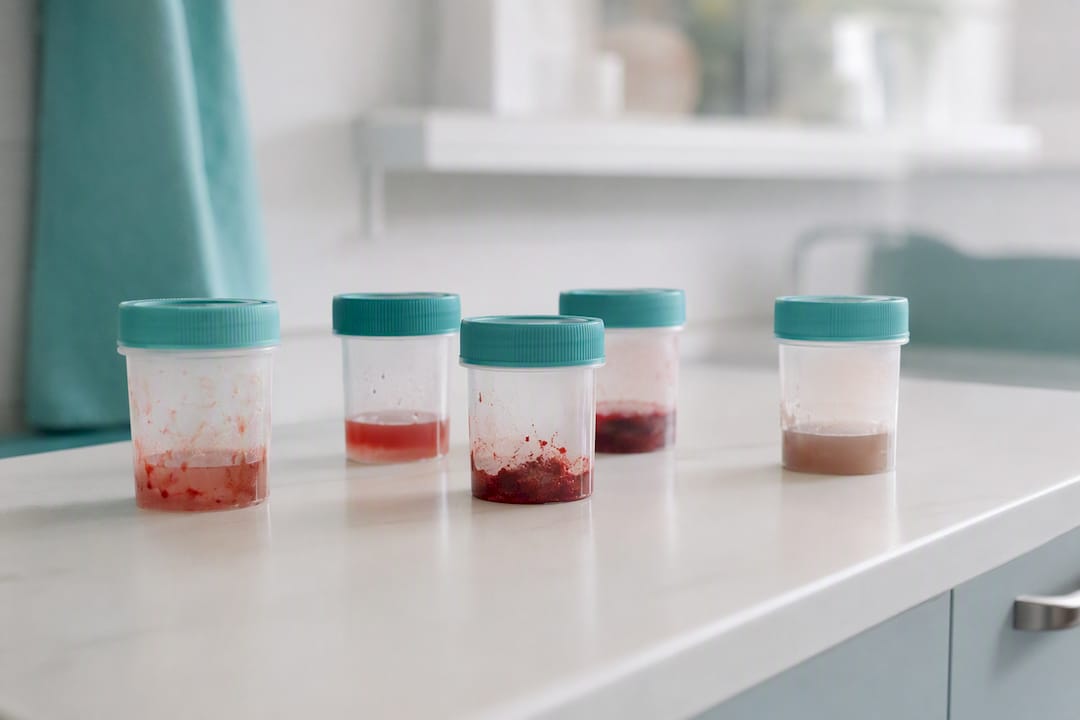
False negatives happen for different reasons. Some lesions simply don’t bleed, or bleed intermittently, so a single sample might catch a “clean” day. Poor sample collection can also mask a genuine finding.
The same five-year audit found false negatives were uncommon but did occur, a reminder that a clear result reduces risk without eliminating it entirely. This is exactly why persistent symptoms should override a reassuring test result. If something feels wrong and keeps recurring, tell your GP, regardless of what your last FIT showed.
It’s also worth being clear-eyed about kit type. Laboratory-processed quantitative FIT, the kind used in organised NHS screening, has been validated far more extensively than many consumer, rapid-read qualitative kits used at home.
What the evidence says about double testing and home kits versus lab FIT
The strongest evidence for FIT comes from laboratory-based, quantitative testing within organised screening programmes, not from consumer rapid-read kits used independently. A systematic review found FIT reliably outperforms the older gFOBT approach, but it also flagged a genuine gap: few robust studies have validated consumer home qualitative kits specifically in asymptomatic people testing themselves at home. The researchers called for more primary-care and at-home validation work.
There’s also growing interest in double testing, repeating the sample to catch bleeding that one test alone might miss, since pilot cohort data show sensitivity climbs when thresholds and sampling strategy are optimised together.
Practical takeaways from where the evidence currently stands:
- Prefer NHS screening or a clinician-requested laboratory FIT when you need a diagnostic-grade answer.
- Treat a private home FOB kit as useful, informative screening, not a replacement for clinical follow-up on any abnormal or worrying result.
- Threshold policy isn’t static: the UK National Screening Committee implemented a more sensitive threshold recently, a sign guidance keeps evolving as evidence improves.
Reading your numbers without losing your head over them
Screening maths can feel abstract until it’s your result on the screen. My honest read: FIT is one of the better tools we have precisely because it’s simple enough to use regularly, and regular use compounds its accuracy over time. A single test is a snapshot; a screening habit is closer to the full picture.
- A private kit suits people who want quicker reassurance or extra checks between NHS screening rounds, not a substitute for it.
- If a result worries you, or symptoms persist, don’t sit on it. Speak to a GP.
- RapidTest’s guide on reading at-home results with confidence is worth a look if you’re unsure what your numbers mean.
A private FOB test for extra peace of mind between screening rounds
Waiting for an NHS screening round to come around again, or wanting a quicker check before mentioning symptoms to your GP, is exactly the gap a private option fills. Rapidtest’s at-home FOB testing kit gives you a result in around 15 minutes, with no lab return and no waiting weeks for post.
Worth being clear about what this is and isn’t: a private FOB kit is a screening tool, not a diagnosis, and it doesn’t replace the NHS bowel cancer screening programme or a GP-led investigation. If your result is positive, or you’re already dealing with symptoms like rectal bleeding or unexplained weight loss, book a GP appointment regardless of what the kit shows. For a lot of people, though, it’s a useful, private way to check in on your health between screening rounds without an awkward conversation first. If that sounds like what you need, take a look at the FOB kit here and get your result today.
Sources
- Bowel cancer screening
- Systematic review and discussion of FIT accuracy (PMC)
- Faecal Immunochemical Test (FIT) sensitivity; a five‑year audit
- At‑home colon cancer tests (Mayo Clinic)
FAQ
How reliable are home FIT tests?
Reliability depends on the threshold and sample quality, but audits report around 92% sensitivity at a 10 µg/g cut-off in routine practice, which is strong for a screening tool.
How likely is bowel cancer with a positive FIT test?
A positive result means blood was detected, not that cancer is confirmed. It triggers a referral for further investigation, usually colonoscopy, since most positives have other causes like haemorrhoids.
What is the normal range for faecal immunochemical test results?
NHS and clinical thresholds commonly sit around 10 µg/g of haemoglobin per gram of stool, though some programmes use lower cut-offs to increase sensitivity, trading off against more false positives.
How accurate is the FIT test in the NHS?
NHS screening uses laboratory-processed, quantitative FIT, the format with the strongest supporting evidence, unlike many consumer qualitative kits that lack the same validation in home settings.
Can I use a private FOB kit instead of NHS bowel screening?
A private kit like Rapidtest’s FOB testing kit offers convenient, informational screening, but it shouldn’t replace NHS programme rounds or a GP review of persistent symptoms.