


72 Hours After a Broken Condom in the UK: Test at 2 & 6–12 Weeks
If your condom broke, stop sex straight away, think about emergency contraception if pregnancy is a concern, and get seen urgently if there’s any chance of HIV exposure, since PEP only works within 72 hours. Book a baseline STI test promptly, then plan repeat tests over the following weeks because early results can’t rule everything out yet.
TL;DR:
- Emergency contraception options remain effective up to 120 hours after condom failure, with levonelle working within 72 hours and ellaOne up to 120 hours.
- Urgent assessment for HIV exposure must start within 72 hours to be effective, and PEP is only available through clinics or emergency departments.
- Baseline STI testing is recommended immediately, but bacterial infections like chlamydia and gonorrhea are most reliably detected two weeks post-exposure.
- Follow-up testing for HIV and syphilis should occur at six to twelve weeks for accurate results, while at-home kits can provide quick initial insights.
- Accurate sample type and timing are crucial, with urine or swabs for bacteria and blood tests for viruses and syphilis, each requiring specific windows for reliable detection.
Table of Contents
- What to do in the next 72 hours: an action checklist
- How soon should you test? A practical testing timeline
- Which tests you may be offered and the sample types they need
- Where to get tested: clinic, GP, or an at-home kit
- Follow-up: retesting, partner notification and when to avoid sex
- A straight-talking note from the author
- How RapidTest’s at-home kits fit into your next steps
- FAQ
- Sources
What to do in the next 72 hours: an action checklist
The first three days matter most, because this is your window for emergency contraception and HIV prevention. Don’t rinse or douche. It won’t undo anything and can actually irritate tissue, making you more vulnerable to infection.
- Stop sex immediately and remove the condom carefully.
- Don’t rinse, douche or use antiseptic, it doesn’t reduce risk and may cause irritation.
- Keep the condom and packaging if you’re attending a clinic, as it can help with the assessment.
- If pregnancy is possible, act fast: Levonelle works up to 72 hours after sex, ellaOne up to 120 hours, and the copper IUD up to five days, all available through pharmacies, GPs or sexual health clinics.
- If there’s any chance of HIV exposure, call 111 or go to a sexual health clinic or emergency department now. PEP (sometimes called PEPSE) needs to start within 72 hours to have a chance of working.
- Ask about a baseline STI screen while you’re there. Clinics often offer one on the spot.
When you get seen, clinicians will usually ask when the condom broke, whether you know your partner’s STI status, and whether you’ve had symptoms. Being upfront helps them judge urgency and what to test for. Some NHS services also document specific dosing for doxycycline post-exposure prophylaxis (DoxyPEP) within 72 hours of exposure, though eligibility depends on local policy and antibiotic stewardship considerations, so it isn’t offered everywhere. For a practical walk-through of this early window, RapidTest’s guide to what to do after unprotected sex covers the same ground in more detail.
Pro Tip: Set a phone reminder for your two-week and twelve-week retest dates the moment you leave the clinic. It’s easy to forget once the initial worry fades.

How soon should you test? A practical testing timeline

“Window period” just means the gap between exposure and when a test can reliably pick up an infection. Test too early and you might get a negative result that isn’t actually true yet, which is why a single quick check right after the incident isn’t the end of the story.
A sensible schedule looks like this:
- Baseline test as soon as possible, mainly useful for catching anything you might have already been carrying before this incident.
- Some clinics offer a repeat NAAT test for chlamydia and gonorrhoea about two weeks after exposure, as these bacterial infections may be detectable by then.
- At 6 to 12 weeks, a definitive HIV and syphilis test, which is when these infections become detectable with confidence.
Early testing has real limits. Reliable screening for HIV and syphilis often needs follow-up at 6 to 12 weeks after exposure, even though a baseline test still has value for anything pre-existing.
Chlamydia and gonorrhoea tend to show up faster than viral infections, which is partly down to how the tests work and partly down to how each infection behaves in the body. For more on structuring your personal testing calendar, RapidTest’s guide on when to test after unprotected sex breaks this down further.
Which tests you may be offered and the sample types they need
Different infections need different samples, and that affects how quickly you’ll get an answer.
- Chlamydia and gonorrhoea use a NAAT test from urine or a vulvovaginal or urethral swab, usually most reliable from around 10 to 14 days after exposure.
- HIV testing comes in two main forms: a rapid fingerprick test for quick results, or a 4th-generation lab test, which detects infection earlier and is generally repeated around 8 to 12 weeks after a PEP course for a definitive answer.
- Syphilis is checked through blood serology, combining a screening test with a confirmatory one. Early infection can still return a negative result, which is why repeat testing at two weeks and again at 6 to 12 weeks may be recommended.
- Hepatitis B and C are often included in broader screening panels, usually via a blood sample, particularly when exposure risk is higher.
- At-home rapid kits typically use a fingerprick blood sample or swab and give results in around 15 minutes, useful as an early baseline check but not a replacement for clinician-led testing when symptoms or HIV risk are involved.
For the fine detail on syphilis timing specifically, the syphilis window period guide is worth a read.
Where to get tested: clinic, GP, or an at-home kit
Your choice depends mostly on urgency and what you need beyond just a result.
- Go to a sexual health clinic urgently if you have symptoms, need PEP, or have any concerns that might need documentation.
- A GP can run standard STI tests and refer you onward, which works well if you’re not in a rush and want continuity of care.
- At-home kits give you privacy and speed, letting you test on your own schedule without a waiting room.
NHS sexual health clinics and GPs offer testing and treatment free of charge, and appointments are confidential. At-home kits like RapidTest’s are a sensible baseline option when clinic access is delayed, though a positive or unclear result should always be followed up with confirmatory lab testing or a clinician.
Pro Tip: If you’re torn between options, test at home now for peace of mind, then book a clinic appointment anyway if HIV risk or symptoms are part of the picture.
Follow-up: retesting, partner notification and when to avoid sex
Getting through the initial scare is only half the job. The schedule afterwards is what actually confirms you’re clear.
- Retest at 14 days if your clinic offers early bacterial screening, then again at 6 to 12 weeks for a definitive HIV and syphilis result.
- Tell any partners who might be at risk. Clinics can help with this, including anonymous notification services, so contacts get tested without you having an awkward conversation.
- Avoid sex, or use condoms consistently, until treatment is finished or your follow-up tests come back clear.
- If symptoms appear between tests, discharge, pain, sores, don’t wait for your scheduled date. Get seen sooner.
A broader look at retesting intervals, including the 10 to 90 day testing timeline, can help you map out dates if you’re the planning type.
A straight-talking note from the author
I’ve spent time helping people make sense of testing timelines and what actually matters in the first few days after a scare. RapidTest supports this approach with at-home kits and customer support, but a clinic always comes first when HIV risk or symptoms are involved.
— Jack
How RapidTest’s at-home kits fit into your next steps
Once you’ve handled the urgent stuff, emergency contraception if needed, a PEP assessment if there’s HIV risk, an at-home kit gives you a private way to get your baseline result without booking an appointment or sitting in a waiting room.
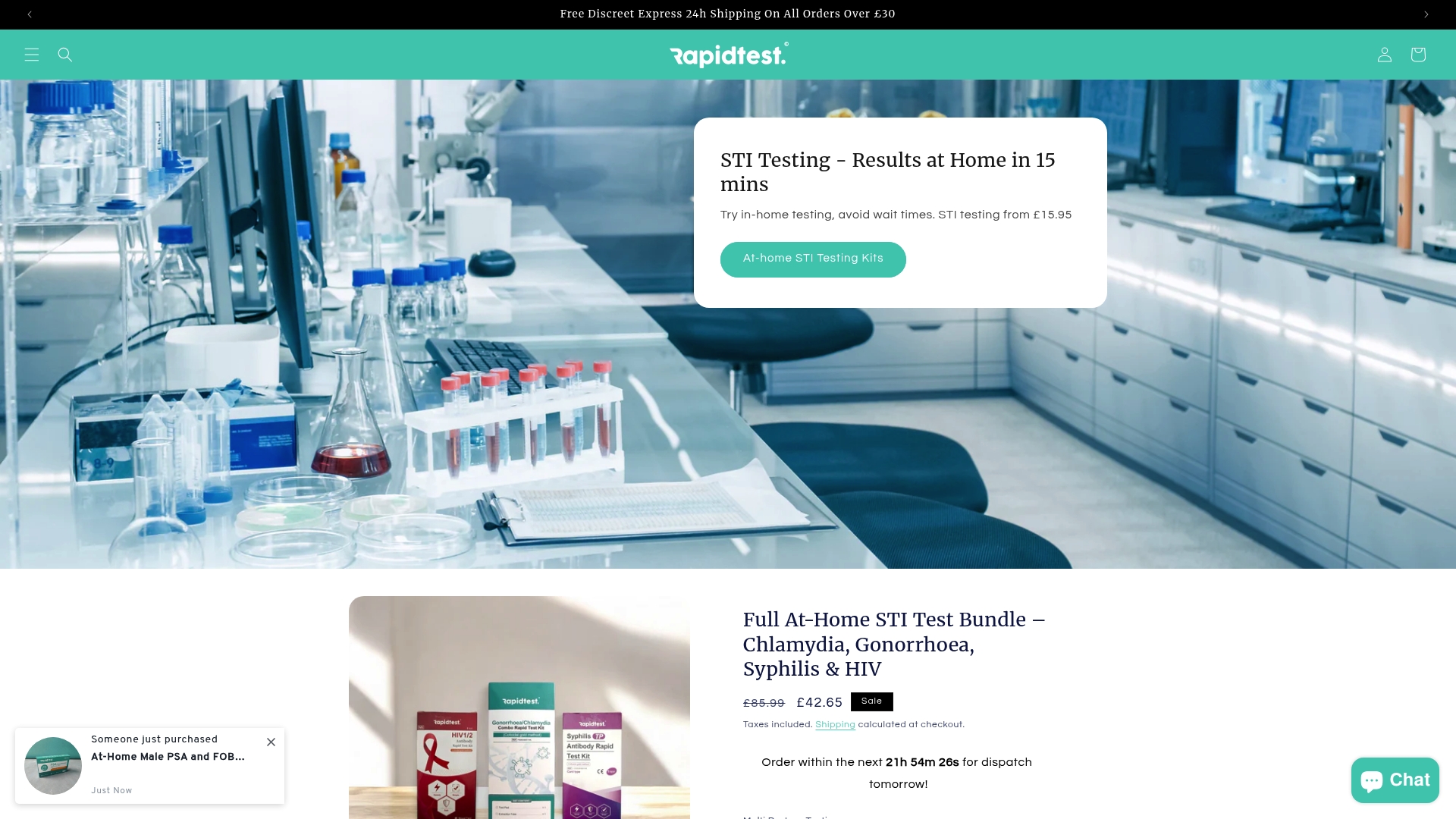
- Results land in around 15 minutes, with kits delivered discreetly to your door.
- A kit works well as a baseline or interim check, but a clinic visit still matters if you have symptoms, need PEP, or want a result that might carry legal weight.
- Browse the full range of STI test kits to find the panel that matches what you’re worried about.
If you’d rather start with a single, focused test, the at-home STI rapid test kit gives you a fast first answer while you line up any follow-up testing a clinic recommends.
This article is general information, not a substitute for advice from a qualified doctor. Consult a qualified healthcare professional about your own circumstances before acting on anything here.
FAQ
Can I get an STI if the condom breaks?
Yes, a broken condom removes the barrier that reduces transmission risk, so exposure to chlamydia, gonorrhoea, HIV, syphilis or other infections becomes possible depending on your partner’s status. Testing on a proper timeline, rather than just once immediately after, gives you a reliable answer.
My condom broke. What should I do?
Stop sex right away, consider emergency contraception if pregnancy is a concern, and seek urgent assessment for PEP if HIV exposure is possible, since it needs to start within 72 hours. Book a baseline STI test, then plan follow-up tests at 14 days and again at 6 to 12 weeks.
Can sperm pass through a condom that isn’t broken?
Intact, correctly used condoms are designed to prevent sperm and most infections from passing through, so an unbroken condom used properly shouldn’t let sperm through. Problems usually come from tearing, slipping, or expired or damaged condoms rather than the material itself failing while intact.
Should I use emergency contraception if the condom broke?
If pregnancy is a possibility, emergency contraception is worth considering quickly: levonorgestrel pills work up to 72 hours after sex, while ellaOne and the copper IUD remain effective for longer, up to 120 hours or five days respectively. The sooner you take it, the more effective it tends to be.
Sources
- Where can I get sexual health advice, now? - NHS
- DoxyPEP – how and when to take it - Bucks Healthcare (2026)