


Bad breath and stomach bacteria: what's really going on
Bad breath, clinically known as halitosis, is defined as a persistent unpleasant odour originating from the mouth or respiratory tract. Most people assume bad breath stomach bacteria are the culprit, but the science tells a different story. Halitosis is the third most common reason people seek dental care, after cavities and gum disease. The mouth is almost always where the problem starts, not the stomach. That said, certain digestive conditions do play a real, if indirect, role, and knowing the difference changes everything about how you tackle it.
How oral bacteria actually cause bad breath
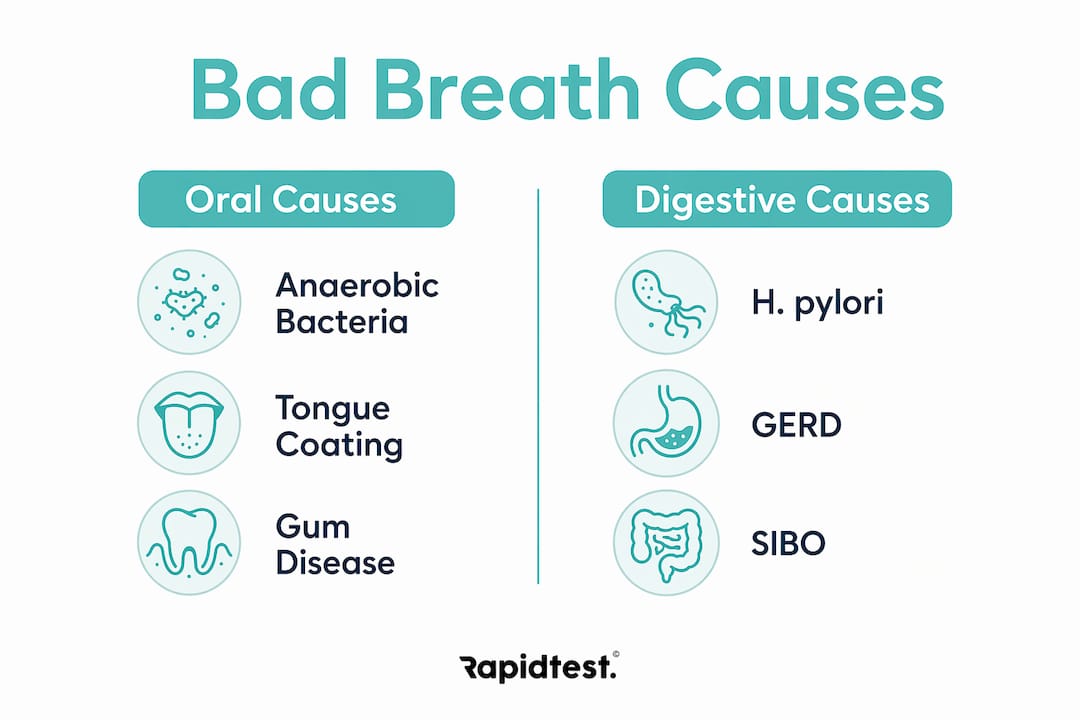
The mouth is the primary source of bad breath in the vast majority of cases. Anaerobic gram-negative bacteria break down food debris, dead cells, and proteins in the mouth, releasing volatile sulfur compounds (VSCs) as a byproduct. These VSCs are what produce that distinctive, unpleasant smell.
Two bacteria are particularly responsible: Porphyromonas gingivalis and Fusobacterium nucleatum produce hydrogen sulfide and methyl mercaptan, the gases most associated with classic bad breath odour. These bacteria thrive in low-oxygen environments. That is why the back of the tongue, periodontal pockets, and dental plaque are their favourite hiding spots.
The key locations where these bacteria build up include:
- The tongue dorsum (the back surface of the tongue), which collects the most bacteria of any oral surface
- Periodontal pockets, the spaces between teeth and gums that deepen with gum disease
- Dental plaque, the sticky film on teeth that harbours millions of bacteria
- Tonsil crypts, small crevices in the tonsils where food particles and bacteria accumulate
Systemic causes of breath odour, such as kidney disease or diabetes, are far less common. They produce distinct smells, like a fishy or sweet acetone odour, that differ from typical halitosis. If your breath has a standard “morning breath” quality, the mouth is almost certainly the source.
Pro Tip: Try the spoon-scrape test at home. Scrape the back of your tongue with a clean spoon, let it dry for ten seconds, then smell it. If the spoon smells unpleasant, oral bacteria are very likely the cause of your bad breath.
Does stomach bacteria cause bad breath? Myth versus fact
This is where a lot of confusion lives. The short answer is: stomach bacteria rarely cause bad breath directly. The oesophagus remains normally collapsed, which acts as a physical barrier preventing stomach gases from travelling up to the mouth. So under normal circumstances, whatever is happening in your stomach stays there.
Helicobacter pylori (H. pylori) is the stomach bacterium most often blamed for bad breath. The reality is more nuanced. H. pylori produces urease, an enzyme that converts urea into ammonia. Ammonia has a sharp, unpleasant smell and contributes to non-oral breath odours. H. pylori also causes gastric inflammation and ulcers, which can worsen acid reflux, and reflux does allow stomach contents to reach the mouth.
So H. pylori contributes to bad breath indirectly, through the chain of inflammation, reflux, and ammonia production, rather than by releasing gases directly into the mouth. That distinction matters clinically. If you have H. pylori symptoms such as persistent stomach pain, nausea, or bloating alongside bad breath, it is worth investigating the infection specifically.
The broader idea that general gut bacteria imbalance causes bad breath is not well supported by clinical evidence. A bidirectional oral-gut axis does exist, meaning gut health can influence oral inflammation and immune responses. But this is a slow, systemic process, not a direct pipeline of smelly gases from gut to mouth.
| Source | Mechanism | Direct cause of bad breath? |
|---|---|---|
| Oral bacteria (VSCs) | Break down food debris into hydrogen sulfide and methyl mercaptan | Yes, primary cause |
| H. pylori | Produces ammonia via urease; worsens reflux | Indirect only |
| General gut dysbiosis | May increase oral inflammation via immune pathways | Rarely, and indirectly |
| GERD | Allows stomach acid and gases to reach the mouth | Yes, when active |
How digestive conditions like GERD and SIBO worsen bad breath
When stomach issues do contribute to bad breath, it is usually through one of a handful of specific conditions. These are worth knowing, because treating the underlying condition is the only thing that actually resolves the breath problem.

GERD (gastro-oesophageal reflux disease) is the most common digestive cause of halitosis. When the lower oesophageal sphincter weakens, stomach acid and partially digested food travel back up the oesophagus. This introduces acidic, odorous gases directly into the mouth. People with GERD often notice a sour taste alongside their bad breath, which is a useful distinguishing sign.
SIBO (small intestinal bacterial overgrowth) is another condition worth knowing about. When bacteria overgrow in the small intestine, they ferment food that should not be fermented there, producing excess sulfur compounds and gases. These can contribute to bad breath, though SIBO is typically accompanied by bloating, diarrhoea, and abdominal discomfort.
Other digestive conditions linked to bad breath include:
- Gastroparesis, where the stomach empties too slowly, allowing food to ferment and produce odorous gases
- Crohn’s disease, which causes inflammation throughout the digestive tract and can alter the oral microbiome
- Irritable bowel syndrome (IBS), which shares some bacterial overgrowth mechanisms with SIBO
- Peptic ulcers, often caused by H. pylori, which can worsen reflux and breath odour
Recognising the symptoms that point to a digestive cause is important. Look for bad breath that persists despite excellent oral hygiene, combined with digestive symptoms like heartburn, bloating, or nausea. That pattern suggests the mouth is not the whole story.
Pro Tip: To manage reflux-related bad breath, avoid eating within three hours of bedtime, cut back on trigger foods like coffee, alcohol, and fatty meals, and sleep with your head slightly elevated. These lifestyle measures for reflux reduce the frequency of acid reaching the mouth.
Good gum health also plays a role here. Gum disease creates deeper pockets where bacteria thrive, and reflux acid can worsen gum tissue damage, compounding the breath problem from two directions at once.
How to work out where your bad breath is coming from
Pinpointing the source of bad breath is the first step toward fixing it. The good news is that a few simple checks can tell you a lot before you even see a professional.
-
Do the spoon-scrape test. Scrape the back of your tongue with a clean spoon, wait ten seconds, and smell it. A bad smell confirms an oral source. No smell suggests the problem may lie elsewhere.
-
Breathe through your nose, then your mouth. Ask someone you trust to smell both. If the odour comes through the nose but not the mouth, the source is likely sinonasal, such as sinusitis or post-nasal drip. If it comes through the mouth, the oral cavity or digestive tract is more likely involved.
-
Assess your oral hygiene honestly. Are you brushing twice daily, flossing, and cleaning your tongue? If not, optimise your routine for two weeks before drawing any conclusions about digestive causes.
-
Book a dental check-up. Ruling out oral causes with a professional dental exam is the recommended first step. Dentists can identify gum disease, plaque build-up, and dry mouth, all of which drive halitosis.
-
Consider a test for H. pylori if digestive symptoms persist. If your oral health is confirmed as good but bad breath continues alongside stomach discomfort, an at-home H. pylori test is a practical next step. It gives you a clear answer without a GP appointment.
-
See a gastroenterologist if needed. If H. pylori is confirmed, or if GERD or SIBO is suspected, a gastroenterologist can guide treatment. Antibiotic treatment for H. pylori and acid-suppressing medication for GERD are the evidence-based routes, not probiotic supplements.
The key principle is to work from the outside in. Start with the mouth, then move to the digestive tract if oral causes are genuinely ruled out.
Key takeaways
Bad breath originates from oral bacteria in the vast majority of cases, with stomach conditions like H. pylori and GERD contributing only indirectly through specific mechanisms.
| Point | Details |
|---|---|
| Oral bacteria are the primary cause | Anaerobic bacteria on the tongue and in gum pockets produce the sulfur compounds responsible for most bad breath. |
| Stomach bacteria act indirectly | H. pylori worsens breath through ammonia production and reflux, not by releasing gases directly into the mouth. |
| GERD and SIBO are the main digestive culprits | These conditions allow odorous gases or stomach contents to reach the mouth, causing genuine breath problems. |
| Rule out oral causes first | Optimise oral hygiene and get a dental check before investigating digestive causes. |
| Test for H. pylori if symptoms persist | Persistent bad breath with stomach discomfort warrants a specific H. pylori test, not a general gut supplement. |
Let’s be real about stomach bacteria and bad breath
I have seen a lot of people spend months trying probiotic drinks, gut-cleansing supplements, and elimination diets, all because they were convinced their bad breath was coming from their stomach. In almost every case, the real culprit was sitting right there on the back of their tongue.
The stomach bacteria narrative is compelling because it feels like a systemic explanation for a problem that feels systemic. Bad breath is embarrassing. It affects confidence, relationships, and how you show up at work. So it makes sense that people reach for a big, complex answer. But the evidence is clear: the mouth is where you need to start, every single time.
That said, I do not want to dismiss the digestive angle entirely. If you have genuinely excellent oral hygiene, you have seen a dentist, and your breath is still a problem, then yes, look at your gut. H. pylori in particular is underdiagnosed and worth testing for. The stomach bacteria test guide at Rapidtest is a good place to get your bearings before deciding whether to pursue clinical investigation.
My honest advice: do not spend money on unproven gut supplements without a diagnosis. Get tested, get a clear answer, and treat the actual cause. That is the only approach that works.
— Jack
Worried it might be H. pylori? Here is what Rapidtest offers
If you have ruled out oral causes and your bad breath is accompanied by stomach pain, bloating, or nausea, H. pylori is worth checking for.

Rapidtest offers an at-home H. pylori rapid test kit that gives you a clear result in 15 minutes, with no GP appointment, no queue, and no awkward conversation. You collect the sample at home, follow the simple instructions, and get your answer privately. If the result is positive, you have something concrete to take to your doctor, which makes the conversation much more productive. Rapidtest also offers a full range of at-home health screening kits for people who want answers without the wait.
FAQ
Can stomach bacteria directly cause bad breath?
Stomach bacteria rarely cause bad breath directly. The oesophagus stays collapsed under normal conditions, preventing stomach gases from reaching the mouth.
What is H. pylori and how does it affect breath?
H. pylori is a stomach bacterium that produces ammonia through urease activity and can worsen acid reflux, both of which contribute indirectly to bad breath.
How do I know if my bad breath is from my mouth or my stomach?
Try the spoon-scrape test on your tongue. If the spoon smells unpleasant, oral bacteria are the likely cause. Persistent bad breath with digestive symptoms points toward a stomach issue.
Does GERD cause bad breath?
Yes. GERD allows stomach acid and gases to travel back up the oesophagus into the mouth, which is a recognised cause of halitosis in people with the condition.
How do I reduce bad breath caused by stomach problems?
Treat the underlying condition. For GERD, avoid trigger foods and eat earlier in the evening. For H. pylori, antibiotic treatment prescribed by a doctor is the evidence-based solution, not gut supplements.