


Testosterone test timing: when to test for accurate results
Book a morning blood draw, aim to arrive fasting, and do it between 07:00 and 10:00. That is the short answer. According to MedlinePlus, most testosterone tests are taken during this window because levels are generally at their highest then. Get that part right and you give yourself the best chance of a result that actually means something.
Here is the quick checklist before you book:
- Arrive fasting (nothing to eat since the night before; water and usual prescribed medications are fine)
- Book a morning slot, ideally between 07:00 and 10:00, or within three hours of waking
- Avoid heavy exercise for at least 24 hours beforehand
- Skip alcohol for at least 24–48 hours before the test
- Aim for a normal night’s sleep the night before
One more thing worth knowing upfront: a single low result is rarely enough to confirm a diagnosis. Repeat morning tests on separate days are typically needed before any clinical decision is made.
The age caveat: if you are under 45, morning timing is particularly important because your testosterone levels follow a clear daily pattern, peaking early and dropping through the day. Published commentary in PubMed Central suggests that for men over 45, this diurnal variation is less pronounced, so strict early-morning testing becomes less critical, though it remains good practice.
Key takeaways
Morning fasting testosterone testing, repeated on at least two separate days, is the most reliable approach for any man investigating low testosterone symptoms.
| Point | Details |
|---|---|
| Book a morning slot | Aim for 07:00–10:00 or within three hours of waking; this is when levels are highest. |
| Arrive fasting | Food, especially glucose, causes a measurable dip in testosterone; fast from the evening before. |
| Repeat before concluding | Two successive measurements can differ by up to roughly 30%; a single borderline result is not a diagnosis. |
| Age changes the urgency | Strict morning timing matters most for men under 45; diurnal variation is blunted after mid-40s. |
| Rapidtest for screening | Rapidtest’s at-home rapid kit gives a 10-minute result for convenient screening or monitoring between clinical tests. |
Table of Contents
- Why does testosterone test timing matter so much?
- What is the recommended testing schedule and when should you repeat?
- How should you prepare for a testosterone blood test?
- What does a testosterone blood test actually measure?
- How are results interpreted and what happens next?
- Special situations: shift workers, men on TRT, and acute illness
- Why repeat tests matter: the evidence behind the protocol
- What to expect on the day and what it costs in the UK
- A practical perspective on getting this right
- Rapidtest’s at-home testosterone screening option
- Sources
- FAQ
Why does testosterone test timing matter so much?
Your body does not produce testosterone at a steady rate. It follows a circadian rhythm, with levels peaking in the early morning and declining progressively through the day. The Endotext reference on testicular function explains that recommended sampling is between 08:00 and 10:00, and that testosterone concentrations also dip after meals, particularly after a glucose load.
Laboratories derive their reference ranges from morning samples. If your blood is drawn at 3pm, your result may look lower than the lab’s reference range simply because of the time of day, not because anything is actually wrong.
The variability is bigger than most people expect. Because testosterone secretion is pulsatile, two successive measurements can naturally differ by up to roughly 30%. That is not a lab error. It is biology.
The age-dependent picture is worth understanding properly:
- Younger men (roughly under 45): the diurnal swing is pronounced. A late-afternoon draw can read significantly lower than a morning one from the same person on the same day.
- Older men (roughly 45 and above): the circadian variation flattens. Research published in PMC argues that strict early-morning testing may be essential mainly for younger men, with timing becoming less critical as the diurnal effect diminishes with age.
This does not mean older men can test at any time carelessly. It means the urgency of hitting a precise morning window is less acute, and a borderline result in a middle-aged man is less likely to be a timing artefact.
What is the recommended testing schedule and when should you repeat?
Concrete timing guidance first. Aim to have your blood drawn:
- Before 10:00, or within three hours of waking if your schedule does not allow a standard morning slot
- After an overnight fast (water is fine; avoid food from the evening before)
- On a day when your sleep–wake pattern has been stable for at least a few days
For a repeat-testing protocol, British Columbia’s clinical testosterone testing protocol recommends this approach:
- First morning fasting sample, collected before 10:00
- If the result is low or borderline, repeat with a second morning fasting sample on a separate day
- Space the two tests by at least a few days, ideally a week or more, to account for pulsatile variability
- If you are on stable testosterone replacement therapy (TRT), test at the appropriate trough or peak time for your formulation (covered in the special cases section below)
- If two low results are confirmed alongside symptoms, discuss referral to a GP or endocrinologist
A synthesis review on accurate testosterone measurement recommends two or more morning fasting measurements in symptomatic men before any treatment decision is made.
Pro Tip: Test during a stable period in your routine. If you have just returned from a long-haul flight, switched shift patterns, or had a run of poor sleep, wait until your sleep–wake cycle has settled before booking. Disrupted sleep markedly suppresses testosterone, and a result taken during that window will not reflect your true baseline.
How should you prepare for a testosterone blood test?
Preparation is straightforward, but skipping any of these steps can shift your result enough to matter.
What to do:
- Fast from the evening before (water is fine; black coffee without sugar is generally acceptable but check with your clinic)
- Get a normal night’s sleep the night before
- Take your usual prescribed medications unless your doctor has told you otherwise
- Arrive relaxed; avoid rushing or strenuous activity on the morning of the test
What to avoid:
- Heavy exercise in the 24–48 hours before the draw (intense training temporarily raises or suppresses testosterone depending on timing and intensity)
- Alcohol for at least 24–48 hours beforehand
- Testing during an acute illness, infection, or immediately after surgery
- Testing within a few days of a major shift change or long-haul travel
Medications and supplements to flag to your clinician:
- Anabolic steroids or exogenous testosterone (obviously suppresses endogenous production)
- Opioid pain medicines (suppress the hypothalamic–pituitary axis)
- Glucocorticoids (e.g. prednisolone)
- Certain antifungals (e.g. ketoconazole)
- High-dose zinc or DHEA supplements
If you genuinely cannot test in the morning, for example because of a fixed night-shift pattern, document your sleep–wake cycle and test within three hours of waking, whatever time that is. Note the timing on your request form so the clinician can interpret the result in context.
What does a testosterone blood test actually measure?
The standard test measures total testosterone: the combined amount of testosterone circulating in your blood, both bound to proteins and free. Most of it is bound to sex hormone-binding globulin (SHBG) and albumin; only a small fraction is unbound and biologically active.
When free testosterone matters:
Total testosterone alone can be misleading if your SHBG levels are abnormal. Men with high SHBG (common in older men, liver disease, or hyperthyroidism) may have a normal total testosterone but low free testosterone, meaning less active hormone is actually available to tissues. In these cases, a calculated or directly measured free testosterone gives a clearer picture.
Additional tests your clinician may request alongside testosterone:
- SHBG (sex hormone-binding globulin): needed to calculate free testosterone accurately
- LH and FSH (luteinising hormone and follicle-stimulating hormone): distinguish between primary testicular failure and secondary (pituitary/hypothalamic) causes
- Prolactin: elevated prolactin can suppress testosterone and may indicate a pituitary adenoma
- Full blood count and metabolic panel: assess for comorbidities that affect hormone levels
A note on assay quality: not all testosterone tests are equally accurate. Research on accurate testosterone measurement recommends LC-MS/MS (liquid chromatography-tandem mass spectrometry) as the preferred method for clinical diagnosis when available, rather than standard immunoassays, which can be less precise at low concentrations. If you are being investigated for a borderline result, it is worth asking whether your lab uses LC-MS/MS or whether a referral to a specialist centre is appropriate.
How are results interpreted and what happens next?
A testosterone result does not exist in isolation. Harvard Health guidance is clear that a single low measurement may not confirm deficiency, and that borderline values in middle-aged and older men often normalise on repeat testing. Symptoms matter as much as numbers.
Clinician-style next steps after a low or borderline result:
- Repeat the test: a second morning fasting sample on a separate day before any treatment decision
- Check supporting hormones: LH, FSH, SHBG, and prolactin to understand the cause
- Assess comorbidities: obesity, type 2 diabetes, sleep apnoea, and thyroid disorders all suppress testosterone
- Review medications: opioids, glucocorticoids, and several other drugs lower levels
- Consider endocrine referral: if two confirmed low results are paired with symptoms, a referral to an endocrinologist or urologist is appropriate
On thresholds: reference ranges vary between laboratories and assay methods, so a number that looks low on one lab’s report may sit within range on another’s. Most UK clinicians use a combination of clinical symptoms and biochemical results rather than a single cut-off. Symptoms of low testosterone, including fatigue, reduced libido, low mood, and reduced muscle mass, carry real weight in the assessment. A result that is borderline but accompanied by clear symptoms warrants more investigation than a similarly borderline result in a man who feels well.
Special situations: shift workers, men on TRT, and acute illness
Night-shift workers and recent travellers
Your testosterone rhythm is tied to your sleep–wake cycle, not the clock on the wall. If you work nights, test within three hours of waking, regardless of what time that is, and note your sleep pattern on the request form. The British Columbia protocol advises avoiding testing when your sleep–wake pattern is unstable, so if you have recently switched shifts or returned from a long-haul flight, wait until your routine has settled for several days before booking.

Men on testosterone replacement therapy
Timing depends on your formulation:
- Daily topical gel or cream: test in the morning before applying that day’s dose to capture the trough level, or as directed by your prescribing clinician
- Injectable testosterone (e.g. Sustanon or Nebido): trough testing is typically done immediately before the next injection; peak testing (if needed) is done a few days after injection
- Test during a stable period: at least two to three cycles into therapy, not during dose adjustments
Acute illness, surgery, or significant stress
Acute illness, infection, surgery, and psychological stress all suppress testosterone, sometimes substantially. Testing during these periods produces results that reflect the stress response, not your underlying hormone status. Postpone testing until you have been well and back to your normal routine for at least two to four weeks.
Why repeat tests matter: the evidence behind the protocol
Testosterone secretion is pulsatile. Even within a single morning, levels fluctuate moment to moment as the pituitary releases bursts of LH, each triggering a brief spike in testosterone. Endotext’s laboratory assessment of testicular function quantifies this: two successive measurements can differ by up to roughly 30%. That is a substantial swing, and it explains why a single borderline result is genuinely unreliable.
What this means in practice: if your first morning result comes back low but you feel reasonably well, do not panic. Book a second morning fasting test on a separate day. Harvard Health notes that borderline results in middle-aged and older men frequently normalise on repeat testing.
A practical evidence-backed protocol:
- Two morning fasting samples on separate days, spaced at least a week apart
- Both drawn before 10:00 or within three hours of waking
- Both from the same laboratory where possible, using the same assay
Pro Tip: Using the same laboratory for repeat tests removes inter-lab variation from the equation. Different labs use different assays with different reference ranges. If your GP sends one sample to one lab and the repeat to another, comparing the two numbers directly can be misleading. Ask for consistency.
What to expect on the day and what it costs in the UK
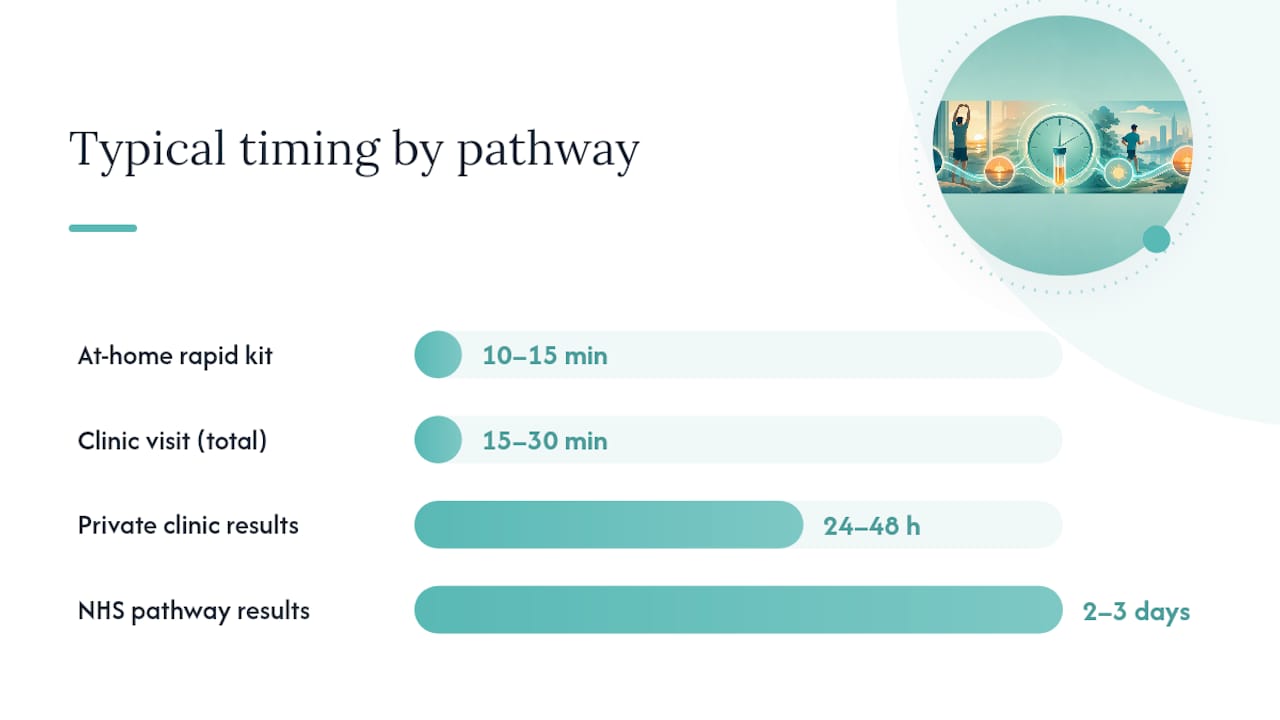
The blood draw itself is brief, typically just a few minutes, and many patients prefer the convenience of prostate cancer screening with a blood test at Your Family Walk In Clinic for clinical venous sampling. A clinician or phlebotomist takes a venous sample from a vein in your arm, usually at the elbow. The whole clinic visit, including registration and waiting, typically runs 15–30 minutes.
Turnaround times:
- NHS pathway: results are usually returned to your GP within 2–3 working days for a standard testosterone panel, though this varies by trust and lab workload
- Private clinic: many return results within 24–48 hours; some offer same-day results for an additional fee
- At-home rapid tests: results in as little as 10–15 minutes, though these use lateral flow technology rather than laboratory venous sampling and are best used for screening or monitoring rather than formal diagnosis
Broad UK cost guidance (prices vary; check current rates locally):
- NHS: free via GP referral if clinically indicated
- Private clinic venous blood test: broadly in the range of £50–£150 for a testosterone panel, depending on the clinic and whether additional markers (SHBG, LH, FSH) are included
- At-home rapid kit: typically the most affordable entry point for a quick screening check
Booking tips:
- Request a morning appointment specifically; many phlebotomy services open early for fasting patients
- Tell the booking team you need a fasting morning slot for a hormone test so they can allocate the right time
- If morning slots are fully booked, ask whether a community phlebotomy service or walk-in clinic offers earlier availability
A practical perspective on getting this right
There is a tendency to treat testosterone testing as a one-and-done exercise: get the number, compare it to a reference range, draw a conclusion. The evidence does not support that approach.
The most useful thing you can do is treat the first test as a starting point, not a verdict. Testosterone is a moving target, pulsatile by nature and sensitive to sleep, food, stress, and the time of day. Getting the timing right, arriving fasted, and repeating when a result is borderline are not bureaucratic hoops. They are the difference between a result that reflects your actual hormone status and one that reflects what you ate for breakfast or how badly you slept.
Pairing clinical testing with at-home screening, such as Rapidtest’s at-home hormone testing options, can help you track trends between formal tests and decide when a GP visit is genuinely warranted. At-home rapid tests will not replace a venous laboratory sample for diagnosis, but they are a practical way to stay engaged with your health without booking a clinic appointment every time. For men who want to understand when to time fertility and hormone tests at home, that guidance applies here too.
Testing is one part of clinical assessment. Symptoms, function, and context matter just as much as the number on the report.
Rapidtest’s at-home testosterone screening option
Getting a venous blood draw at the right time is not always straightforward, especially if morning clinic slots are scarce or you just want a quick read before committing to a GP appointment.
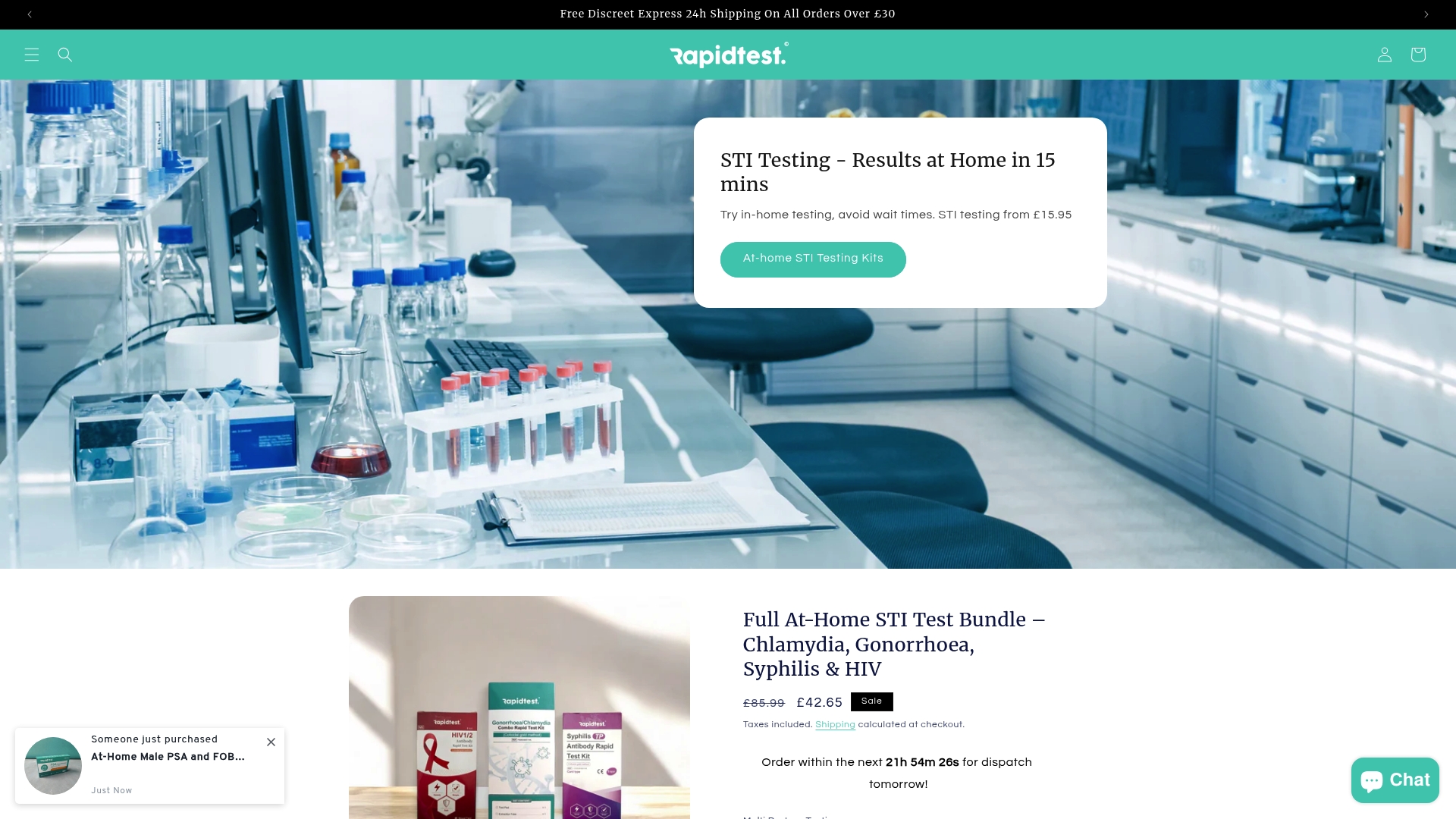
Rapidtest’s at-home low testosterone rapid test kit gives you a result in around 10 minutes, no clinic, no queue, and no waiting days for a lab report. It is designed as a screening and monitoring tool: useful for checking whether your levels look low enough to warrant a formal venous test, or for keeping an eye on things between clinical appointments. Discreet packaging, full instructions included, and results you can act on the same morning.
For a broader picture of your health, the Men’s 35+ Full Health MOT Bundle covers multiple markers at home in one go. When a formal diagnosis is needed, a venous laboratory sample with LC-MS/MS assay and clinician review remains the gold standard. Rapidtest sits alongside that pathway, not in place of it.
Sources
These are the primary references used in this article, all worth bookmarking if you want to go deeper or share with a clinician:
- Laboratory Assessment of Testicular Function - Endotext - NCBI Bookshelf
- Testosterone Levels Test - MedlinePlus
- What’s the best way to test for low testosterone? - Harvard Health
- PURLs: It’s time to reconsider early-morning testosterone tests
- Testosterone Testing - Protocol - Province of British Columbia
- Accurate measurement of total and free testosterone levels for the diagnosis of androgen disorders
This article is general information, not a substitute for advice from a qualified doctor. Consult a qualified healthcare professional about your own circumstances before acting on anything here.
FAQ
What is the best time to get a testosterone test?
The best time is between 07:00 and 10:00, after an overnight fast. Testosterone is generally at its highest in the early morning, and laboratory reference ranges are derived from morning samples.
Why test testosterone before 10am?
Testosterone follows a circadian rhythm, peaking in the early morning and declining through the day. Testing after 10:00 risks a result that looks low simply because of the time, not because of an underlying problem.
What should you avoid before a testosterone test?
Avoid food from the evening before, heavy exercise in the 24–48 hours prior, and alcohol for at least 24–48 hours beforehand. Also postpone testing during acute illness or after major sleep disruption.
Does not ejaculating for several days increase testosterone?
The evidence on this is limited and inconsistent. Short-term abstinence may produce a modest, temporary rise in some studies, but the effect is not large or reliable enough to meaningfully influence a clinical testosterone result. Standard preparation guidance (fasting, morning timing, avoiding exercise and alcohol) has a far greater impact on result accuracy.
How many testosterone tests do you need for a reliable result?
At least two morning fasting samples on separate days are recommended before any clinical decision is made.