


Foetal health test types: a guide for expectant parents
Foetal health tests are medical assessments performed during pregnancy to monitor your baby’s development and detect potential health issues early. From routine blood tests and ultrasound scans to advanced genetic screenings, the range of foetal health test types available in 2026 is broader than ever. Antenatal screening covers everything from infections like HIV and hepatitis B to chromosomal conditions, giving you and your care team the information needed to make confident decisions. The key thing to remember is that testing is always your choice.
What are the main foetal health test types?
Foetal health assessment methods fall into two broad categories: screening tests and diagnostic tests. Screening tests estimate the probability of a condition. Diagnostic tests confirm or rule it out with near certainty. Understanding that difference is the single most important thing you can take from this article. A screening result that flags a higher risk does not mean your baby has a condition. It means further investigation may help.
Routine antenatal screening begins before 14 weeks and covers blood tests for infections, blood type, and inherited blood disorders. Ultrasound scans run alongside these blood tests throughout pregnancy. Genetic screenings, including non-invasive prenatal testing (NIPT) and the newer non-invasive fetal sequencing (NIFS), add another layer of detail. Together, these tests build a picture of your baby’s health without you ever needing to make a single difficult decision all at once.

1. Routine blood tests in early pregnancy
Routine blood tests are the starting point for every pregnancy. They happen before 14 weeks and check for conditions that could affect both you and your baby if left undetected.
The standard panel covers:
- HIV and hepatitis B, which can be passed to the baby during pregnancy or birth
- Syphilis, which is treatable but harmful if missed
- Blood type and rhesus factor, which determines whether you need anti-D injections
- Sickle cell disease and thalassaemia, inherited blood disorders that affect red blood cells
These tests are quick, low risk, and give your midwife a clear baseline. If any result comes back positive, treatment can begin straight away, which significantly improves outcomes for both you and your baby.
2. Non-invasive prenatal testing (NIPT)
NIPT is a blood test that analyses fragments of your baby’s DNA circulating in your bloodstream. It can be done from around 10 weeks of pregnancy and screens for chromosomal conditions like Down’s syndrome (trisomy 21), Edwards’ syndrome (trisomy 18), and Patau’s syndrome (trisomy 13).
NIPT is not yet universally offered on the NHS, though it is available privately. It is more accurate than traditional first-trimester blood screening for the conditions it covers. NIPT as a first-tier screening tool reduces the need for invasive diagnostic procedures by 97.4% compared to traditional serum screening. That figure tells you something important: when NIPT is used well, far fewer parents face the anxiety and risk of invasive follow-up tests.
NIPT does have limits. It screens for a defined set of chromosomal abnormalities and cannot assess the full range of genetic conditions. That is where newer technologies are beginning to change the picture.
Pro Tip: If you have a family history of a specific genetic condition, ask your midwife or GP whether NIPT covers it before booking privately. It may not, and a more targeted test could be more appropriate.
3. Non-invasive fetal sequencing (NIFS)
NIFS is the most advanced form of non-invasive foetal testing currently available. Where NIPT looks at a handful of chromosomal conditions, NIFS sequences nearly 23,000 genes using a maternal blood sample. That is essentially the entire human exome, analysed without any risk to the pregnancy.
The accuracy figures are striking. NIFS detects 97.2% of clinically important genetic variants and can be performed from as early as 10 weeks. This puts it in a different league from conventional NIPT in terms of scope, while keeping the safety profile of a simple blood draw.
NIFS is not yet widely available in routine clinical settings, but research published in 2026 suggests it is moving towards broader rollout. If you are considering private prenatal testing, it is worth asking your provider whether NIFS is an option.
4. Nuchal translucency ultrasound
The nuchal translucency (NT) scan is a specific ultrasound performed between 11 and 14 weeks. It measures the fluid at the back of your baby’s neck. A thicker measurement can indicate a higher chance of chromosomal conditions, including Down’s syndrome.
The NT scan is almost always combined with a blood test measuring two hormones: PAPP-A and free beta-hCG. Together, these form the combined first-trimester screening test, which gives a more accurate risk estimate than either test alone. The result is expressed as a ratio, such as 1 in 500 or 1 in 50, not as a yes or no answer.
This scan also checks your baby’s heartbeat, confirms the number of babies, and helps establish an accurate due date. It is a genuinely useful appointment that does a lot of work in a short time.
5. The anomaly scan at 18–20 weeks
The anomaly scan, sometimes called the mid-pregnancy scan, is offered to all pregnant women on the NHS between 18 and 20 weeks. It is a detailed ultrasound for foetal health that checks your baby’s physical development from head to toe.
The sonographer looks at the brain, spine, heart, kidneys, limbs, and face. Conditions like spina bifida, heart defects, and cleft lip can often be identified at this stage. The scan does not check for chromosomal conditions directly, but physical markers can sometimes prompt further investigation.
| Scan | Timing | Primary purpose |
|---|---|---|
| Dating and viability scan | 11–14 weeks | Confirm pregnancy, heartbeat, due date, multiples |
| Nuchal translucency scan | 11–14 weeks | Assess chromosomal risk, measure neck fluid |
| Anomaly scan | 18–20 weeks | Detailed physical development assessment |
| Growth scan | 28–36 weeks | Monitor growth, fluid levels, position |
Ultrasound is excellent for physical assessment but cannot diagnose genetic conditions on its own. Think of it as the visual complement to blood and genetic tests.
6. Chorionic villus sampling (CVS)
Chorionic villus sampling is a diagnostic test, not a screening test. It provides a definitive answer about your baby’s chromosomes and certain genetic conditions. CVS is performed between 11 and 13 weeks, making it the earliest available diagnostic option.
During CVS, a small sample of placental tissue is taken, either through the abdomen or the cervix, using a fine needle or tube guided by ultrasound. The sample contains the same genetic material as your baby, so it can be tested for conditions like Down’s syndrome, cystic fibrosis, and sickle cell disease with high accuracy.
CVS carries a small risk of miscarriage, estimated at around 1 in 200 procedures. That risk is why CVS is typically only recommended when screening tests have indicated a higher probability of a condition, or when there is a known family history. Genetic counselling before and after CVS is strongly advisable.
Pro Tip: Ask your consultant to walk you through the specific risk figure for your situation, not just the population average. Individual factors like placental position and gestational age can affect the procedure’s complexity.
7. Amniocentesis
Amniocentesis is the other main diagnostic test and is performed slightly later, between 16 and 20 weeks. A fine needle is inserted through the abdomen into the amniotic sac, and a small amount of fluid is withdrawn. That fluid contains cells shed by your baby, which are then analysed for chromosomal and genetic conditions.
Like CVS, amniocentesis carries a miscarriage risk of approximately 1 in 200. The results are highly accurate and can diagnose a wide range of conditions. The later timing compared to CVS means results arrive further into the pregnancy, which is worth factoring into your decision-making.
| Test | Type | Timing | Miscarriage risk | What it diagnoses |
|---|---|---|---|---|
| NIPT | Screening | From 10 weeks | None | Selected chromosomal conditions |
| CVS | Diagnostic | 11–13 weeks | ~1 in 200 | Chromosomal and genetic conditions |
| Amniocentesis | Diagnostic | 16–20 weeks | ~1 in 200 | Chromosomal and genetic conditions |
The choice between CVS and amniocentesis usually comes down to timing and your specific clinical situation. Your consultant will guide you, but knowing the difference helps you ask the right questions.
8. Maternal serum screening
Maternal serum screening refers to blood tests that measure specific proteins and hormones in your blood to estimate the risk of certain conditions in your baby. The most common form is the combined test in the first trimester, but a second-trimester version called the quadruple test is also available.
The quadruple test measures four markers: AFP, hCG, inhibin A, and oestriol. It is typically offered between 14 and 20 weeks and is most useful for parents who miss the first-trimester combined test window. It screens primarily for Down’s syndrome and neural tube defects like spina bifida.
Maternal serum screening is non-invasive and carries no physical risk. The results are probabilistic, not diagnostic. A higher-risk result means the chance of a condition is elevated compared to the general population, not that a condition is confirmed.
9. Emerging technologies: what is coming next?
The pace of change in prenatal genetics is genuinely remarkable. NIFS represents a paradigm shift because it brings near-diagnostic accuracy to a non-invasive format. Researchers and clinicians are now asking whether the traditional pathway from screening to invasive diagnosis could be largely replaced for many families.
“Non-invasive fetal sequencing offers the scope of whole-exome analysis through a maternal blood draw, detecting clinically important variants across nearly 23,000 genes with accuracy comparable to invasive methods. This technology has the potential to significantly reduce the number of families who need to face the risks of amniocentesis or CVS.”
Medicalxpress, june 2026
The population-level impact of NIPT adoption already shows a 97.4% reduction in invasive procedures where it has been implemented as a first-tier screen. NIFS could push that figure even further. For expectant parents today, the practical advice is to ask your provider about the latest options available, because the answer in 2026 is genuinely different from what it was even two years ago. You can also read about AI in pregnancy monitoring to understand how digital tools are beginning to complement clinical testing.
Key takeaways
The most reliable approach to foetal health assessment combines non-invasive screening tests first, with diagnostic tests reserved for higher-risk cases where definitive answers are needed.
| Point | Details |
|---|---|
| Start with screening | Routine blood tests and ultrasound scans are the first step for every pregnancy before 14 weeks. |
| NIPT reduces invasive tests | NIPT as a first-tier screen cuts invasive diagnostic procedures by 97.4%, lowering risk for most parents. |
| Diagnostic tests give certainty | CVS and amniocentesis provide definitive diagnoses but carry a miscarriage risk of around 1 in 200. |
| NIFS is the next frontier | Non-invasive fetal sequencing screens nearly 23,000 genes from a blood draw with 97.2% accuracy for key variants. |
| Testing is your choice | Informed consent and personal values should guide every testing decision, not pressure or assumption. |
What I have learnt about choosing foetal tests
Expectant parents often come to me having read everything they can find and still feeling unsure. That is completely understandable. The range of tests is genuinely wide, and the stakes feel enormous.
My honest view is this: the anxiety around foetal testing often comes from confusing screening with diagnosis. A screening result is not a verdict. It is a probability, and probabilities shift constantly as more information comes in. Informed parental choice is the foundation of good antenatal care, and no healthcare provider should pressure you into or away from any test.
The arrival of NIFS is genuinely exciting because it offers a path to much more detailed genetic information without the procedural risks of amniocentesis or CVS. But it is not right for everyone, and it does not replace the conversation with your midwife or consultant. Technology gives you better data. It does not make the decision for you.
My advice: go into each appointment knowing what the test can and cannot tell you. Ask what a higher-risk result would mean in practice. Ask what the next step would be. That way, no result, whatever it is, will catch you completely off guard.
— Jack
Rapidtest and your pregnancy health journey
Planning a pregnancy or monitoring your reproductive health involves more than just the tests your midwife orders. Rapidtest offers a range of at-home fertility test kits for both men and women, giving you clear results in 15 minutes from the comfort of home. No queues, no waiting rooms, no awkward conversations.
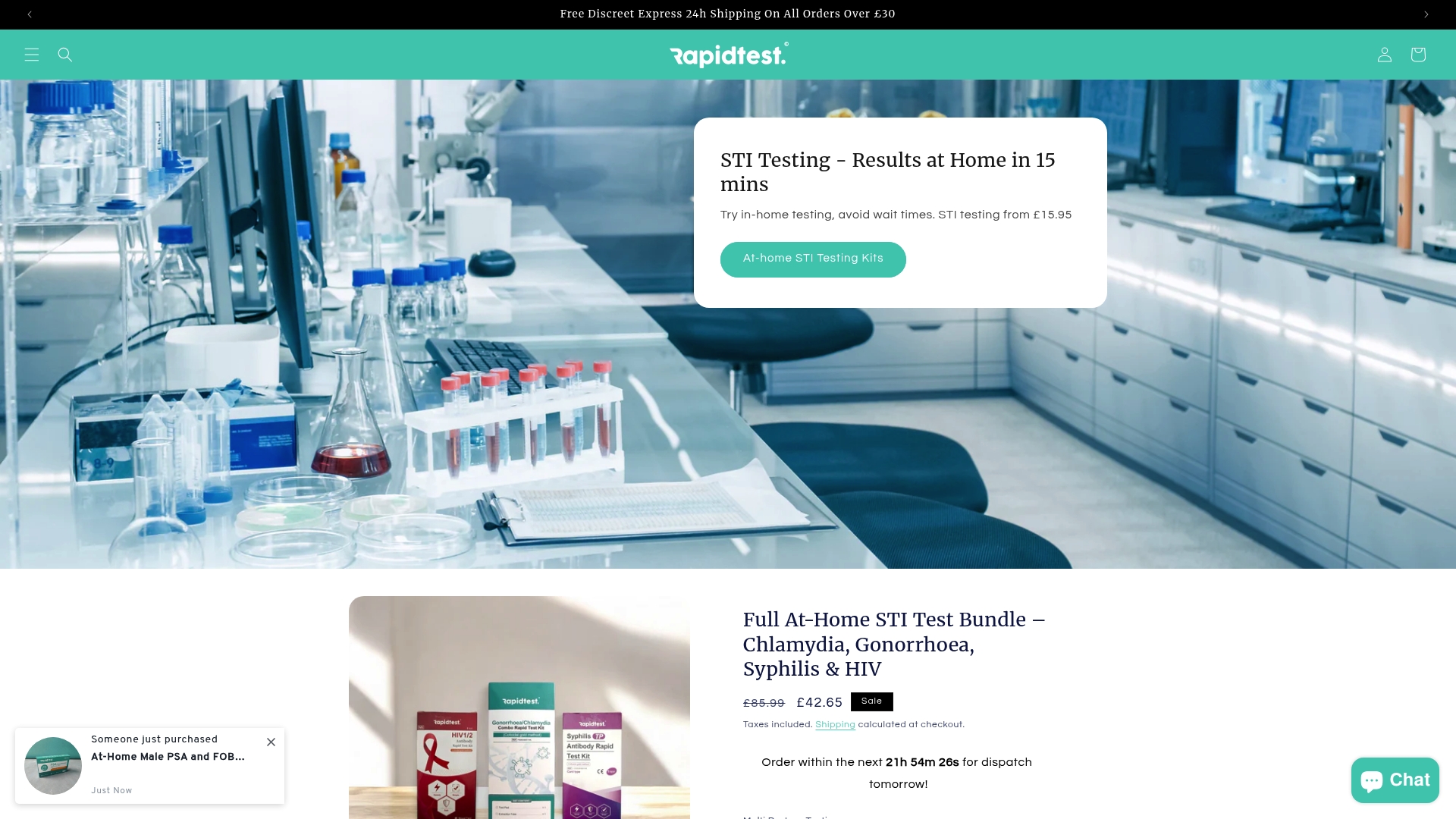
Whether you are checking hormone levels, sperm health, or early pregnancy markers, Rapidtest kits are designed to fit around your life. You can also explore STI screening as part of your early pregnancy preparation, since routine antenatal blood tests screen for infections that are worth knowing about before your first midwife appointment. Fast, private, and straightforward.
FAQ
What is the difference between a screening test and a diagnostic test?
A screening test estimates the probability of a condition but cannot confirm it. A diagnostic test, such as amniocentesis or CVS, provides a definitive result with high accuracy.
When is NIPT carried out in pregnancy?
NIPT can be performed from around 10 weeks of pregnancy. It analyses fragments of your baby’s DNA found in your blood and screens for selected chromosomal conditions without any risk to the pregnancy.
What are the risks of amniocentesis?
Amniocentesis carries an estimated miscarriage risk of around 1 in 200. It is typically recommended only when screening tests indicate a higher probability of a condition, or when there is a known family history of a genetic disorder.
What does the anomaly scan check for?
The anomaly scan, offered between 18 and 20 weeks, checks your baby’s physical development including the brain, spine, heart, kidneys, and limbs. It can detect structural conditions like spina bifida and heart defects but does not diagnose chromosomal conditions directly.
What is NIFS and how is it different from NIPT?
NIFS (non-invasive fetal sequencing) sequences nearly 23,000 genes from a maternal blood sample, compared to NIPT which screens for a limited number of chromosomal conditions. NIFS detects 97.2% of clinically important genetic variants and is performed from 10 weeks with no procedural risk.