


ED Testosterone Test in the UK: What Below 8 nmol/L Suggests
A testosterone test helps a man with erectile dysfunction mainly when other signs of low testosterone are also present, or when ED treatments like PDE5 inhibitors aren’t working well. The usual first step is a morning total testosterone reading, and a low or borderline result needs repeating before anything is diagnosed. Because treatment carries fertility and prostate safety considerations, a doctor should be involved once results come back low.
TL;DR:
- Testosterone tests are most useful when combined with other symptoms such as low libido, small testicles, or breast tenderness, especially in higher-risk groups like men with diabetes or obesity.
- A morning blood draw between 8 and 11 am, on an empty stomach, and after avoiding illness or stress is essential for accurate testing, with repeat testing needed if results are borderline or low.
- Total testosterone is the primary initial test, but free testosterone, SHBG, LH, FSH, and prolactin help clarify the cause and guide treatment decisions.
- Abnormal results should lead to further checks for pituitary or testicular causes, fertility considerations, and prostate health before starting hormone therapy.
- At-home rapid tests serve as preliminary screening tools but require confirmation through full laboratory panels and clinical review before diagnosis or treatment.
Table of Contents
- When to consider a testosterone test: symptoms and guideline triggers
- Which hormone tests are used and what they show
- How and when to take the sample: morning timing, fasting and repeat testing
- Interpreting results: UK guideline thresholds and clinical context
- After abnormal results: further investigations, fertility and safety checks before treatment
- Laboratory blood tests versus at-home or rapid testing: benefits and limitations
- Rapidtest’s at-home testosterone screening and what it can and can’t tell you
- Clinician viewpoint: combine symptoms, tests and caution
- Authoritative guideline and patient resources to consult next
- Screening your testosterone from home with Rapidtest
- Sources
- FAQ
When to consider a testosterone test: symptoms and guideline triggers
ED on its own doesn’t automatically mean your testosterone is low. Erections rely on healthy blood flow, nerve signals and psychological state as much as hormones, so a single symptom rarely tells the full story. What tips the balance towards testing is a cluster of symptoms alongside the erectile difficulty.
Look out for:
- Reduced sex drive or interest that’s noticeably lower than it used to be
- Loss of the erections you’d normally get first thing in the morning
- Persistent tiredness or low energy that isn’t explained by sleep or stress
- Smaller or softer testicles than usual
- Breast tissue growth or tenderness (gynaecomastia)
- Thinning body or facial hair
Guidance from NICE/CKS on ED assessment treats a baseline testosterone measurement as a standard part of working up erectile dysfunction, not something reserved for men with obvious hormone symptoms. So even without a long symptom list, most men presenting with ED will be offered this test as a starting point.
Some groups get flagged as higher priority because low testosterone is more common in their case: men with type 2 diabetes, those carrying significant excess weight, and men managing chronic conditions such as kidney disease or COPD. If you fall into one of those categories and you’re also dealing with ED, that’s a reasonable prompt to bring testosterone up with your GP rather than waiting to see if things settle on their own.
Poor response to a PDE5 inhibitor such as sildenafil is another trigger clinicians watch for. Testosterone plays a supporting role in how well these medicines work, so if the usual treatments aren’t doing much, checking hormone levels is a sensible next move before trying something else.
Which hormone tests are used and what they show
A testosterone test isn’t one single number. Depending on what your first result shows, a clinician may order a small panel to build a clearer picture.
- Total testosterone: the standard first-line test, measuring all the testosterone circulating in your blood, both bound and free.
- Free and bioavailable testosterone: the portion that’s actually active and available to tissues, useful when total testosterone sits in a grey zone.
- SHBG (sex hormone-binding globulin): a protein that binds most testosterone in the blood; levels of it affect how much total testosterone actually translates into usable hormone.
- LH and FSH: pituitary hormones that show whether low testosterone originates in the testes (primary hypogonadism) or in the brain’s signalling to them (secondary hypogonadism).
- Prolactin: checked because an elevated level can itself suppress testosterone and point towards a pituitary issue needing separate investigation.
Total testosterone is the first test for a practical reason: it’s cheap, reliable and captures most cases of deficiency on its own. But it doesn’t tell the whole story for every man. Someone with high SHBG might have a total testosterone reading that looks fine while their free, usable testosterone is actually low. That’s where calculated free testosterone comes in, worked out from total testosterone, SHBG and albumin using an equation such as the Vermeulen formula rather than measured directly, since direct free testosterone assays are notoriously unreliable.
LH and FSH matter because they change the diagnosis, not just confirm it. High LH and FSH alongside low testosterone points to a testicular problem: the pituitary is shouting at the testes to produce more, but they can’t respond. Low or normal LH and FSH alongside low testosterone suggests the signal from the pituitary itself is weak, which is a different condition with different causes and sometimes a different specialist. Prolactin gets checked in the same round of blood tests because an unexplained rise can be the actual driver behind low testosterone, sometimes linked to a small pituitary growth that needs its own workup.
How and when to take the sample: morning timing, fasting and repeat testing
Testosterone follows a daily rhythm, running highest in the morning and drifting down as the day goes on. Test at 4pm and you could get a misleadingly low result even if your hormone levels are perfectly normal.
- Book the blood draw for the morning. Guidance from Severn Pathology and NICE/CKS both point to sampling windows around 8 to 11am, sometimes tightened to 9 to 11am, to catch testosterone at its natural peak.
- Fast beforehand where you can. Food, and particularly a sugar or glucose load, can temporarily pull testosterone down, so an empty stomach gives a cleaner reading.
- Avoid testing during acute illness. A cold, infection or recent stressful event can knock testosterone levels around and skew the result.
- Repeat a low or borderline result on a separate morning. One low number isn’t a diagnosis; it’s a prompt to check again.
Pro Tip: Book your retest around the same time of day as the first one, ideally two to four weeks later, so you’re comparing like with like rather than morning against afternoon.
Our own guide to testosterone test timing walks through the preparation side in more detail if you want a step-by-step before your appointment.
Interpreting results: UK guideline thresholds and clinical context
Numbers alone don’t diagnose testosterone deficiency; they need to line up with your symptoms and hold steady on a repeat test.
A commonly used UK reference points: total testosterone below roughly 8 nmol/L is generally treated as consistent with deficiency, 8 to 12 nmol/L as borderline, and above 12 nmol/L as making deficiency unlikely, though exact cutoffs vary between local pathways and laboratories, so always read your result against the reference range printed on your own report.

Borderline results are where free testosterone and SHBG earn their place. If your total testosterone sits in that 8 to 12 nmol/L zone, a clinician may ask for calculated free testosterone to see whether the active, usable hormone is actually adequate despite the borderline headline number. A supportive free testosterone reading in that scenario can mean no further action is needed, while a low one strengthens the case for deficiency.
None of this happens on one blood draw. Guidance from the British Society for Sexual Medicine recommends repeating a low or borderline morning testosterone before diagnosing hypogonadism, and NICE/CKS echoes that by pairing the repeat test with a fuller hormone profile including LH, FSH, SHBG and prolactin. A diagnosis of testosterone deficiency, in other words, rests on compatible symptoms plus a result that stays low on more than one occasion, not a single number on a printout.
After abnormal results: further investigations, fertility and safety checks before treatment
A confirmed low reading doesn’t lead straight to a prescription. There’s a sequence of checks clinicians work through first, partly to rule out other causes and partly to keep any future treatment safe.
- Repeat total testosterone alongside SHBG, LH, FSH and prolactin to pin down whether the problem sits in the testes or higher up the signalling chain.
- Consider pituitary imaging or specialist endocrine referral when prolactin is raised or when LH and FSH patterns suggest a pituitary cause.
- Check baseline blood counts and, where clinically indicated, PSA before starting testosterone therapy, since testosterone can affect both.
Fertility is the check that catches men off guard. NICE guidance on male-factor fertility is clear that exogenous testosterone suppresses the pituitary hormones that drive sperm production, so a man hoping to have children shouldn’t start testosterone replacement without specialist fertility input first. For men in that position with hypogonadotropic hypogonadism, gonadotrophin therapy is the route that preserves fertility rather than shutting it down.
Prostate safety follows a similar logic of checking before you start rather than after. BSSM guidance suggests PSA should be considered as part of the baseline workup, with monitoring continuing at roughly three, six and twelve months into treatment where clinically indicated. If ejaculation or recent activity might affect a PSA reading around the same time, it’s worth reading our note on avoiding ejaculation before a PSA test so the two tests don’t interfere with each other.
Laboratory blood tests versus at-home or rapid testing: benefits and limitations
Not every testosterone test looks the same, and the right choice depends on what you’re trying to find out.
- Venous laboratory testing draws blood from a vein and can run the full panel, total testosterone plus SHBG, LH, FSH and prolactin if needed, giving a clinician everything required for an actual diagnosis.
- Send-off finger-prick kits offer more convenience but still route through a lab, so turnaround takes days rather than minutes.
- At-home rapid tests give a same-day indication of whether testosterone looks low, useful as a first look but limited in scope compared with a full venous panel.
MedlinePlus describes three main testosterone tests, total, free and bioavailable, and notes that home kits exist alongside standard lab testing, while still recommending that any abnormal home result gets discussed with a clinician rather than acted on alone.
An at-home test earns its place as a reasonable first screen when you want a quick read before committing to a GP appointment, or when privacy matters more than a full diagnostic panel right away. Where it falls short is depth: it can’t run SHBG, LH, FSH or prolactin, and it can’t diagnose hypogonadism outright. Anyone with an abnormal at-home result should treat it as a reason to book a full lab test and a conversation with a doctor, not as the end of the process.
Rapidtest’s at-home testosterone screening and what it can and can’t tell you
Rapidtest sells an At-Home Low Testosterone Rapid Test Kit alongside educational content on test timing, built for men who want a quick, private first look at their testosterone before deciding whether to see a doctor.
A rapid test like this suits the screening stage. It is fast, it is private, and it sidesteps the wait for a GP appointment when you just want an early read. What it isn’t is a diagnostic tool. A low reading on an at-home kit should be treated the same way as a low laboratory result: something to repeat and confirm through a full venous blood panel, ideally with a clinician reviewing the picture alongside your symptoms. Testosterone deficiency is diagnosed on repeated, lab-confirmed results interpreted against your history, not on any single test taken at home or in a clinic.
Clinician viewpoint: combine symptoms, tests and caution
The temptation with any hormone test is to treat the number as the whole answer. It isn’t. A testosterone reading only means something when it’s read alongside your actual symptoms and confirmed on a second morning sample, and that’s true whether the first test came from a lab or a kit on your kitchen table.
What tends to get skipped in the rush to “just check my testosterone” is the safety work that should happen before treatment, not after. Fertility and prostate checks aren’t bureaucratic hoops; they exist because testosterone therapy changes both, sometimes in ways that are hard to reverse.
If you’re dealing with ED and wondering about your hormones, the sensible order is: note your symptoms honestly, get a morning test, repeat it if it’s low or borderline, and let a clinician guide what happens next. Lifestyle factors such as weight, sleep and alcohol intake are worth addressing regardless of what the number says, and if ED persists despite normal testosterone, that’s a cue to look at vascular, neurological or psychological causes rather than assuming a hormone fix will solve it. Psychosexual factors around libido and desire are also worth ruling out alongside the biology.
— Jack
Authoritative guideline and patient resources to consult next
For anyone who wants to go straight to the source material behind this guidance:
- BSSM practical guide to testosterone deficiency, covering assessment, repeat testing and treatment monitoring.
- NICE/CKS erectile dysfunction assessment guidance, the clinical standard for working up ED.
- NICE guidance on male-factor fertility, essential reading before starting testosterone if fertility matters to you.
- MedlinePlus testosterone levels test, a plain-language explainer of what each test measures.
Screening your testosterone from home with Rapidtest
If reading all this has left you wanting a starting point rather than a straight-to-GP appointment, Rapidtest’s Mens Health Screening range includes an at-home low testosterone rapid test kit designed for exactly that first look. Some at-home tests provide rapid results within minutes, without requiring lab returns or waiting rooms, which may suit those wanting a preliminary indication before consulting a doctor.
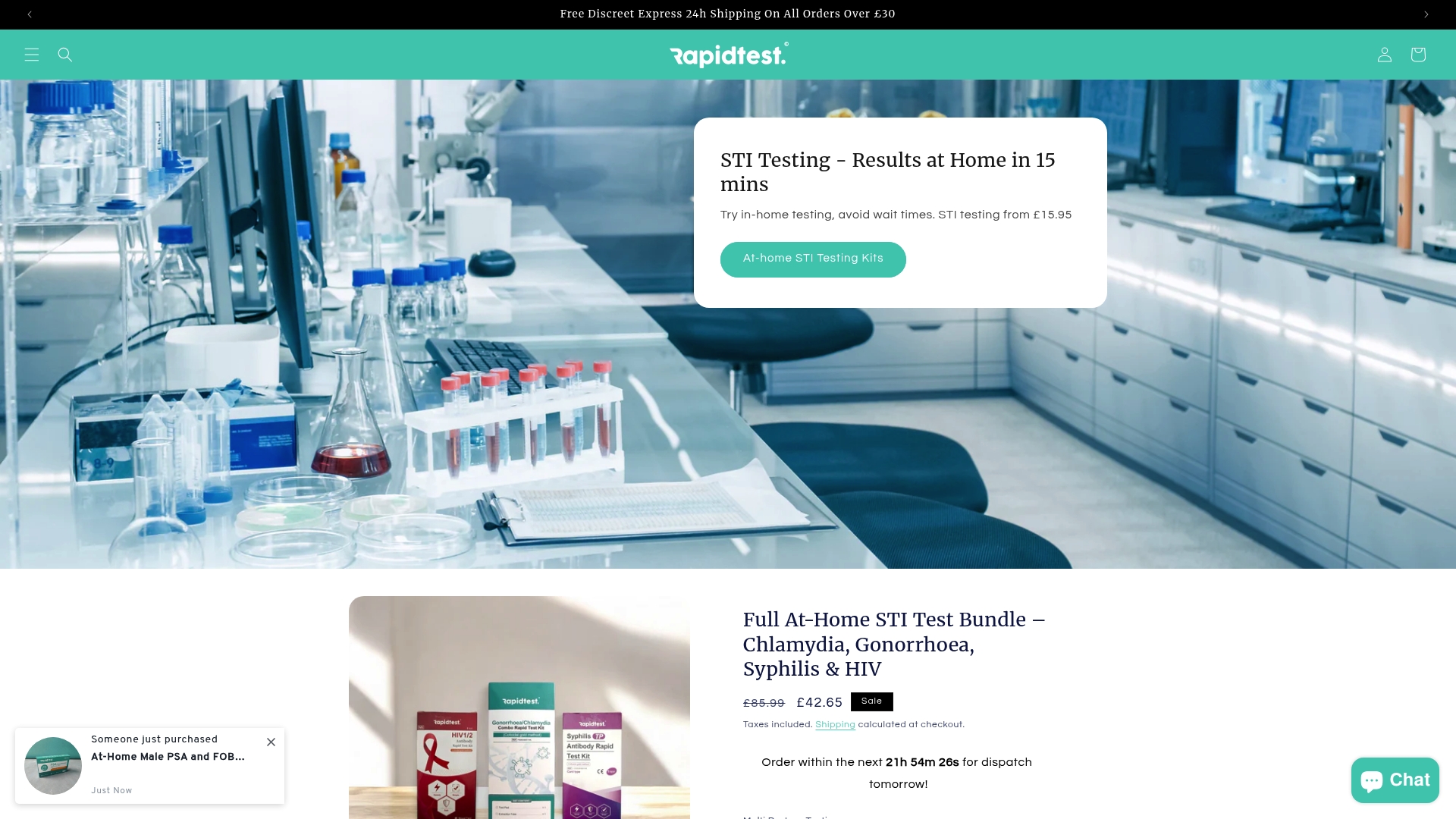
Used well, it’s a screening step, not a diagnosis: a low reading is your cue to arrange a full venous blood panel and a proper conversation with a clinician, the same way it would be with any first test that comes back abnormal. Some at-home test kits are shipped with discreet packaging and may offer refund guarantees, with product ranges that include men’s health screenings such as PSA tests for prostate health. Have a look through the Mens Health Screening collection to see what fits your situation.
This article is general information, not a substitute for advice from a qualified doctor. Consult a qualified healthcare professional about your own circumstances before acting on anything here.
Sources
- Practical guide to assessment and management of testosterone deficiency — BSSM
- Erectile dysfunction — CKS / NICE
- Testosterone test information — Severn Pathology / NHS
- NICE guidance on male-factor fertility problems
- Testosterone levels test — MedlinePlus
FAQ
Does not ejaculating for seven days increase testosterone?
There’s no reliable clinical guidance suggesting that abstaining from ejaculation for a set number of days raises testosterone in any meaningful or lasting way. Testosterone naturally fluctuates day to day regardless of sexual activity, which is why accurate testing depends on timing the sample to the morning rather than on abstinence beforehand.
Which testosterone test is best for erectile dysfunction?
A morning total testosterone test, taken fasting between roughly 8am and 11am, is the standard first test for men with ED. If that result is low or borderline, it’s repeated and expanded with SHBG, LH, FSH and prolactin to build a fuller picture.
What is the first stage of ED?
ED often starts subtly, with erections that are harder to achieve, less firm, or less reliable than before, sometimes alongside a drop in morning erections or sex drive. These early signs are worth mentioning to a doctor rather than waiting, since they can point to vascular, hormonal or psychological causes that are easier to address early.
Why don’t doctors like to test testosterone?
It isn’t that doctors avoid testing testosterone; it’s that a single result rarely settles anything on its own. Levels shift with time of day, food, illness and stress, so guidance calls for a properly timed morning sample and a repeat before anyone acts on a low number, which makes testing more involved than a quick blood draw.