


What is a home ovulation test? Your 2026 guide
A home ovulation test is an over-the-counter urine test that detects the surge in luteinising hormone (LH) signalling imminent ovulation and your peak fertility window. Also known as an ovulation predictor kit (OPK), it gives you a 24 to 36-hour advance warning before ovulation occurs, so you can time intercourse with confidence. Brands like Clearblue and Easy@Home sell these kits with 5 to 7 test sticks, making it easy to test across several days in a row. Clinical accuracy sits between 97 and 99% when used correctly, which makes them one of the most reliable fertility tools you can use at home.
How does a home ovulation test work to detect fertility?
Your body releases a sharp spike of luteinising hormone roughly one to two days before an egg is released from the ovary. This spike is called the LH surge, and it is the biological trigger that causes ovulation to happen. A home ovulation test works by detecting this surge in your urine, in much the same way a pregnancy test detects the hCG hormone.
The test strip contains antibodies that react to LH. When your urine passes over the strip, those antibodies bind to any LH present. If the concentration is high enough to indicate a surge, the test shows a positive result. The whole process takes just a few minutes, and you get your answer at home without any clinical appointment.
Here is what you need to understand about what a positive result actually means:
- A positive OPK result means your LH surge has been detected and ovulation is likely within 24 to 36 hours.
- It does not confirm that an egg has actually been released.
- In conditions like polycystic ovary syndrome (PCOS), LH levels may be chronically elevated or show multiple surges without true ovulation occurring.
- The test measures a hormonal signal, not the physical event of ovulation itself.
This distinction matters. OPKs are excellent predictors, but they are not a guarantee. If you have been diagnosed with PCOS or another hormonal condition, speak to your GP or a fertility specialist about interpreting your results alongside other monitoring methods.
How accurate are home ovulation tests?
Home ovulation test accuracy is genuinely impressive when the kit is used correctly. Studies show 97 to 99% sensitivity for detecting the LH surge, which puts OPKs on a par with many clinical tests. That said, accuracy in practice depends heavily on how and when you use them.
Several factors can reduce reliability:
- Diluted urine. Drinking large amounts of fluid before testing washes out LH concentration. Limiting fluid intake for four hours before you test significantly improves detection.
- Wrong time of day. LH is produced in the early morning but takes a few hours to appear in urine at detectable levels. Testing between 10am and 2pm gives you the best window.
- Reading results too late. Evaporation lines can appear after 10 minutes, creating a faint second line that looks like a positive but is not. Always read results within the time stated on your kit instructions.
- PCOS and hormonal disorders. As noted above, chronically high LH or multiple surges can produce misleading results that require specialist interpretation.
Pro Tip: Test at the same time each day, avoid drinking large amounts of fluid for four hours beforehand, and always read results within the recommended window. These three habits alone will dramatically improve your results.
If you test consistently across a full cycle and never detect a surge, or if you have been timing intercourse around positive results for several months without conceiving, seek a fertility specialist consultation rather than continuing to test alone.
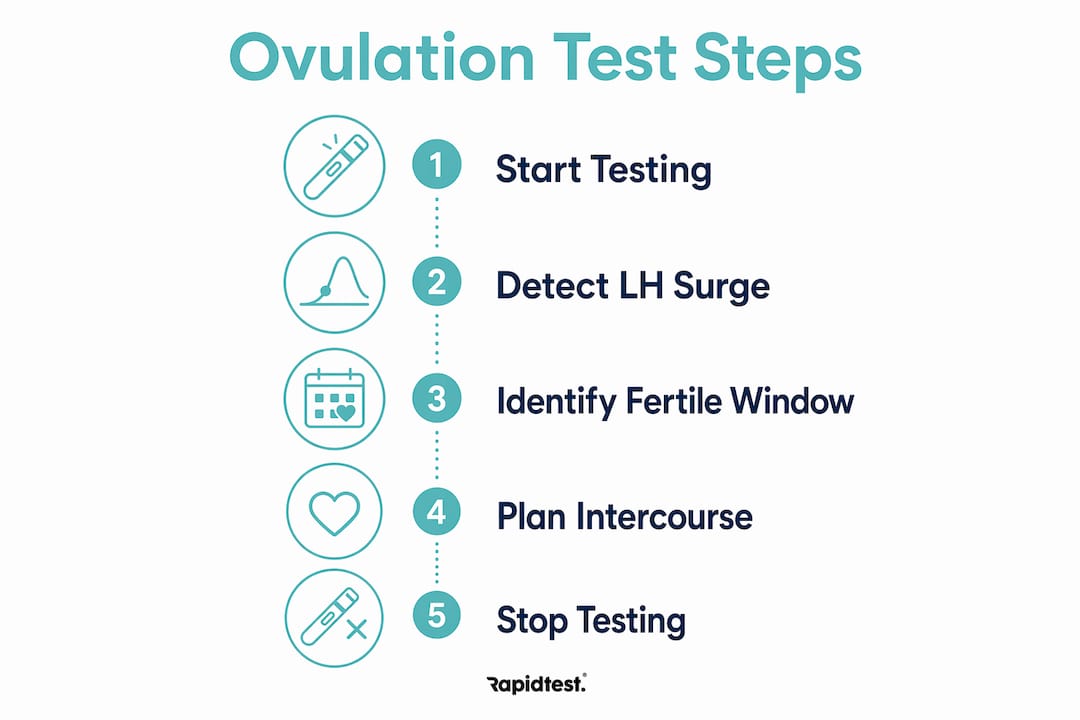
When and how should you use a home ovulation test?
Timing is everything with OPKs. Testing too early or too late in your cycle means you could miss the LH surge entirely. Here is a straightforward approach to getting it right.
Step-by-step home ovulation test instructions:
- Work out your average cycle length. Count from the first day of one period to the first day of the next.
- For a standard 28-day cycle, start testing on day 11. For shorter or longer cycles, begin testing 3 to 5 days before your expected ovulation date.
- Collect a urine sample in a clean, dry cup, or use a midstream test directly in the urine stream, depending on your kit type.
- Dip the strip for the number of seconds specified in your instructions, then lay it flat on a clean surface.
- Wait 3 to 5 minutes before reading the result. Do not read results after 10 minutes.
- Compare the test line to the control line. A test line as dark as or darker than the control line indicates a positive result.
You do not need to test every single day of your cycle. Targeting the 3 to 5-day window before expected ovulation conserves your test strips and keeps the process manageable. Cycle tracking apps like Clue or Flo can help you calculate your personal testing window based on your cycle history.
Pro Tip: If your cycles are irregular, track your shortest cycle over the past six months and start testing earlier than you think you need to. Missing the surge because you started too late is the most common mistake.
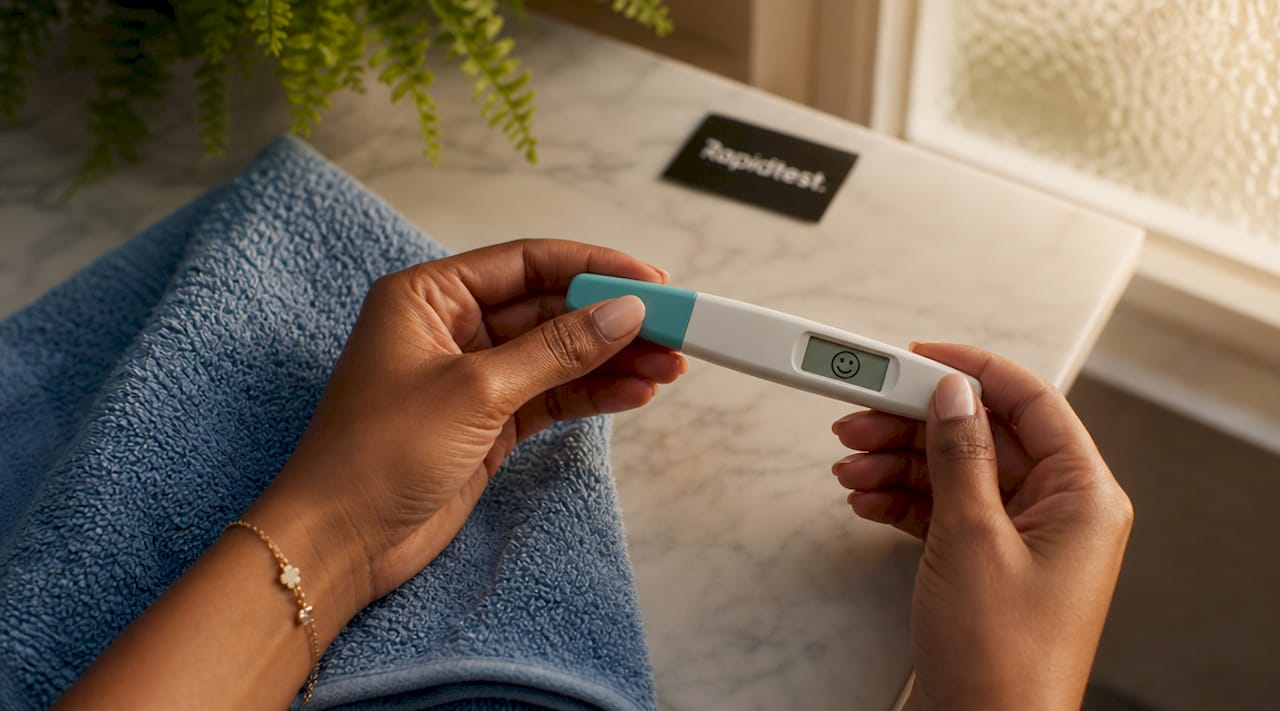
Digital OPKs, such as those in the Clearblue Digital range, display a clear smiley face symbol rather than asking you to compare line intensities. This removes the guesswork entirely, though the underlying accuracy is the same as analogue strips.
What are the different types of home ovulation test kits?
Choosing between kit types comes down to your budget, your confidence reading results, and how many cycles you plan to monitor. Here is a comparison of the main options available in 2026.
| Feature | Analogue test strips | Digital OPKs |
|---|---|---|
| Price per test | Low (often under £1 per strip) | Higher (£15 to £30 per kit) |
| Ease of reading | Requires line comparison | Clear symbol display |
| Clinical accuracy | 97 to 99% | 97 to 99% |
| Tests per kit | 5 to 7 strips typically | 10 to 20 tests |
| App integration | Rarely | Some kits connect to apps |
| Best for | Budget-conscious users | Those who find line-reading stressful |
Digital tests provide psychological comfort by removing the ambiguity of reading faint lines, but they do not increase clinical accuracy over strip tests. If you are comfortable comparing line intensities, analogue strips from brands like Easy@Home offer excellent value and are widely available online and in pharmacies.
A few things worth knowing before you buy:
- Always purchase from a reputable pharmacy or a trusted online retailer to avoid counterfeit or expired kits.
- Check the number of tests included. If your cycle is irregular, you may need more strips than a standard kit provides.
- Some digital kits, such as the Clearblue Connected Ovulation Test System, sync with a smartphone app to track your cycle over time. This is useful if you want a longer-term picture of your fertility patterns.
For a full overview of what is available, Rapidtest’s fertility testing kits page covers LH ovulation tests alongside other at-home fertility options for both men and women.
How to read your results and what to do next
Reading your results correctly is just as important as taking the test at the right time. Here is what each outcome means and what to do about it.
- Positive result. The test line is as dark as or darker than the control line. Your LH surge has been detected. Ovulation is likely within 24 to 36 hours. This is your most fertile window. Plan to have intercourse today and the following day.
- Negative result. The test line is lighter than the control line or absent. Your LH surge has not been detected yet. Continue testing the following day if you are still within your expected window.
- Invalid result. No control line appears. The test has not worked correctly. Discard it and repeat with a fresh strip, following the instructions carefully.
Once you see a positive, you do not need to keep testing that cycle. The surge typically lasts 12 to 24 hours, and the egg is only viable for 12 to 24 hours after release. Timing intercourse on the day of the positive result and the day after gives you the best chance of conception.
OPKs predict fertility but they do not guarantee pregnancy. Conception depends on many factors beyond ovulation timing, including sperm quality, egg quality, and uterine health. If you have been using OPKs accurately for six months or more without conceiving, consult a fertility specialist for a full evaluation. You can also explore at-home fertility testing for couples as a useful starting point before a clinic appointment.
Key takeaways
Home ovulation tests detect the LH surge in urine with 97 to 99% accuracy, giving you a reliable 24 to 36-hour window to time intercourse and maximise your chances of conception.
| Point | Details |
|---|---|
| What OPKs detect | LH surge in urine, predicting ovulation 24 to 36 hours in advance. |
| Accuracy in practice | 97 to 99% when used correctly, with timing and hydration being the biggest variables. |
| Best time to test | Between 10am and 2pm, after limiting fluids for four hours beforehand. |
| When to start testing | Day 11 for a 28-day cycle, or 3 to 5 days before expected ovulation for other cycle lengths. |
| When to seek help | After several months of accurate testing with no surge detected or no pregnancy achieved. |
What I’ve learnt from watching people use OPKs
The most common mistake I see is not the test itself. It is the expectations people bring to it. There is a tendency to treat a positive OPK result as a guarantee, and when pregnancy does not follow, the disappointment hits hard. An OPK tells you your body is preparing to ovulate. That is genuinely useful information. But it is one piece of a larger picture.
The second mistake is inconsistency. People test at random times of day, drink a litre of water beforehand, and then wonder why their results look strange. The instructions are not just formalities. Testing mid-morning with limited prior fluid intake is the difference between a clear result and a confusing one.
What I would encourage you to do is treat OPKs as a tool for building knowledge about your own cycle, not as a pass or fail exam each month. Over two or three cycles, you will start to see your own pattern. That pattern is genuinely useful, whether you are trying to conceive naturally or preparing for a conversation with a fertility specialist.
And if you have been at this for a while without success, please do not let the tests become a source of anxiety. They are a starting point, not the whole story. Combining OPK results with other signs like basal body temperature and cervical mucus changes gives you a much fuller picture. You can also look at home versus clinic testing options to understand when it makes sense to take the next step.
— Jack
Test at home with Rapidtest
If you are ready to start tracking your fertility from home, Rapidtest has you covered. No queues, no appointments, and results in 15 minutes.
Rapidtest’s LH ovulation test kit detects your LH surge with clinical-grade accuracy, giving you the information you need to act at the right time. The kits are straightforward to use, clearly labelled, and designed for people who want reliable answers without the fuss of a clinic visit. Browse the full range of fertility testing kits at Rapidtest, including options for both partners, and take a genuinely proactive step towards understanding your fertility.
FAQ
What does a home ovulation test actually measure?
A home ovulation test measures the level of luteinising hormone (LH) in your urine. A sharp rise in LH, known as the LH surge, signals that ovulation is likely to occur within 24 to 36 hours.
How accurate is a home ovulation test?
Home ovulation tests are 97 to 99% accurate at detecting the LH surge when used correctly. Accuracy drops if you test at the wrong time of day or have consumed large amounts of fluid beforehand.
Can a home ovulation test give a false positive?
Yes. Evaporation lines can appear if you read the result after the recommended time window, typically more than 10 minutes. Conditions like PCOS can also cause elevated LH that triggers a positive result without actual ovulation following.
When should I start using a home ovulation test?
For a standard 28-day cycle, start testing on day 11. If your cycle is irregular, begin testing 3 to 5 days before your estimated ovulation date based on your shortest recent cycle.
Is a home ovulation test the same as a pregnancy test?
No. Both are urine tests, but they detect different hormones. An ovulation test detects LH, while a pregnancy test detects human chorionic gonadotropin (hCG). They cannot be used interchangeably.
Recommended
- At-Home Fertility Testing vs Clinic Testing | Which Is Right for You? – RapidTest
- How to read at-home test results with confidence – RapidTest
- LH Ovulation Test Kit – At-Home Fertility & Ovulation Predictor | RapidTest.co
- How to Test Fertility at Home | At-Home Fertility Tests for Couples – RapidTest