


HIV Self Test Cost in the UK: £15–£30 and Where to Get Free Kits
You can get an HIV self-test free in some parts of the UK, but if you’re not eligible or you’d rather sort it today, a paid instant kit typically costs £15 to £30. Free kits depend on your postcode and usually come with limits, like one every three months. Instant kits give you a result in minutes, but if that result is reactive, you’ll still need NHS confirmatory testing before anything is official. If speed and privacy matter most to you right now, buy one. If you can wait a few days and want it free, check what your local NHS service offers first.
TL;DR:
- Paid home HIV tests typically cost between £15 and £30, with mid-range kits offering faster results and additional features.
- Free NHS self-tests depend on local funding and eligibility, often limited to one kit every three months, but may be expanded during national campaigns.
- Instant self-tests provide results within 15 minutes, while self-sampling kits require mailing a sample to a lab with results returned in a few days.
- Reactive results from any home test always require NHS confirmatory testing before diagnosis or treatment.
- Urgent recent exposure should prompt direct contact with NHS services rather than relying solely on home testing timing.
Table of Contents
- How much does an HIV self-test cost in the UK?
- Getting a free HIV self-test through the NHS
- Self-test or self-sample: which one do you need?
- Ordering, delivery and what happens next
- When should you actually test?
- Cost, speed or peace of mind: what should decide your choice?
- Want results without waiting on postcode eligibility?
- Where to check eligibility and get clinical guidance
- Sources
- FAQ
How much does an HIV self-test cost in the UK?
Here’s the honest breakdown. Entry-level instant self-tests, the kind that give you a result from a finger-prick sample in around 15 minutes, tend to sit at the lower end, roughly £15 to £20. Mid-range retail kits, which often bundle in extras or come from more established testing brands, land closer to £20 to £30. Specialist services or private clinics that combine testing with lab-backed confirmation can charge more, sometimes considerably more, particularly if you’re paying for same-day appointments or a wider screening panel alongside it.
A few things push the price up or down:
- Instant read versus lab processing. A kit you read yourself at home is almost always cheaper than one that gets posted off and processed in a laboratory, purely because you’re not paying for lab time.
- Panel size. A kit testing for HIV alone usually costs less than a combined panel covering chlamydia, gonorrhoea, syphilis or hepatitis alongside it.
- Delivery speed. Next-day or tracked delivery adds a few pounds compared to standard post.
- What’s included. Most retail kits come with discreet outer packaging, clear instructions, a sterile lancet for the finger-prick sample, and some form of customer support if you have questions during the process.
Discretion is standard across the market now, not a premium add-on. Kits arrive in plain packaging with no obvious branding, which matters if you’re testing at a shared address.
Getting a free HIV self-test through the NHS
Free testing exists, but it’s not universal, and that catches people out. Local authorities commission sexual health services area by area, so whether you qualify depends entirely on where you live. NHS HomeTest runs one of the main routes: where a local authority has commissioned it, eligible residents can order a free self-test kit, though services often cap this at one kit every three months. That limit is generally an administrative safeguard rather than a clinical rule, so if you need testing more often, your local sexual-health clinic can usually sort that out directly.
There’s also a wider layer worth knowing about. During national campaigns, the government has temporarily broadened access to free home HIV tests in England, sometimes beyond the usual postcode restrictions. Outside those campaign windows, though, it reverts to local commissioning.
To check what’s actually available to you:
- Search the NHS HomeTest service to see if your local authority has commissioned free kits.
- Check SH.UK or your regional sexual-health service page for local eligibility rules.
- Look at current gov.uk guidance to see if a national campaign is running that might widen access temporarily.
Self-test or self-sample: which one do you need?
These two terms get used almost interchangeably online, and that’s genuinely confusing when you’re trying to work out cost and timing.
A self-test is instant. You take a finger-prick sample, apply it to a device, and read the result yourself at home within about 15 minutes. No posting, no waiting.
A self-sampling kit works differently. You take the sample at home, then post it to a laboratory, and wait for results to come back, usually within a few days, often by text or through a secure online portal.
- Instant self-tests are typically the paid route, because you’re buying speed and privacy in one go.
- Postal self-sampling kits are more commonly the free NHS-funded route, since lab processing fits naturally into commissioned sexual-health services.
- Whichever pathway you choose, a reactive result on either type is never a diagnosis on its own. It needs confirmatory laboratory testing before anything is confirmed.
Pro Tip: Before you order anything, check the product description carefully. Some retail listings blur “self-test” and “self-sample” language, and picking the wrong one for your timeline (say, needing a fast answer but buying a postal kit) causes unnecessary stress.
Ordering, delivery and what happens next
Ordering either route follows a similar shape, though the details differ slightly depending on whether you’re going free or paid.
- Check eligibility first, either through NHS HomeTest, SH.UK, or your local sexual-health service page, if you’re hoping for a free kit.
- Order online. Paid kits are usually processed and dispatched the same or next working day.
- Your kit arrives in discreet, unbranded packaging, whether you’ve gone the free NHS route or bought privately.
- For postal self-sampling kits, you post your sample back using the prepaid packaging provided. NHS-linked services commonly include free return postage as part of the service.
- Results for postal kits typically arrive by text or secure portal within a few days of the lab receiving your sample. Instant kits give you the answer there and then.
If a reactive result comes back, whichever pathway you used, the NHS follow-up is the same: confirmatory blood testing, then a referral into treatment, which is free once confirmed.
When should you actually test?
Timing matters more than most people assume. NHS guidance is clear that some tests detect infection earlier than others, and testing too soon after a specific exposure can produce an unreliable result regardless of how good the kit is. If you’ve had a recent high-risk exposure, particularly within the last few days, don’t just reach for the cheapest or fastest kit on the shelf. Contact NHS 111 or a sexual-health clinic directly, since urgent post-exposure advice and treatment may be time-sensitive in a way no home test can address. And whatever the result says, a reactive reading always needs confirmatory lab testing before you treat it as fact.

Cost, speed or peace of mind: what should decide your choice?
If today’s certainty matters more than saving money, buy an instant kit and get your answer in minutes. If you can wait a few days and you’re in an eligible area, check the free NHS route first; it costs nothing and the confidentiality and follow-up care are exactly the same. Either way, get your timing right before you worry about price.
— Jack
Want results without waiting on postcode eligibility?
If you’ve checked your local NHS options and you’re not covered, or you simply don’t want to wait, Rapidtest gives you a direct route to a private result today. The RapidTest HIV at-home testing kit delivers results in 10 to 15 minutes, straight from a finger-prick sample, with no appointment, no lab return, and no one else involved in the process.
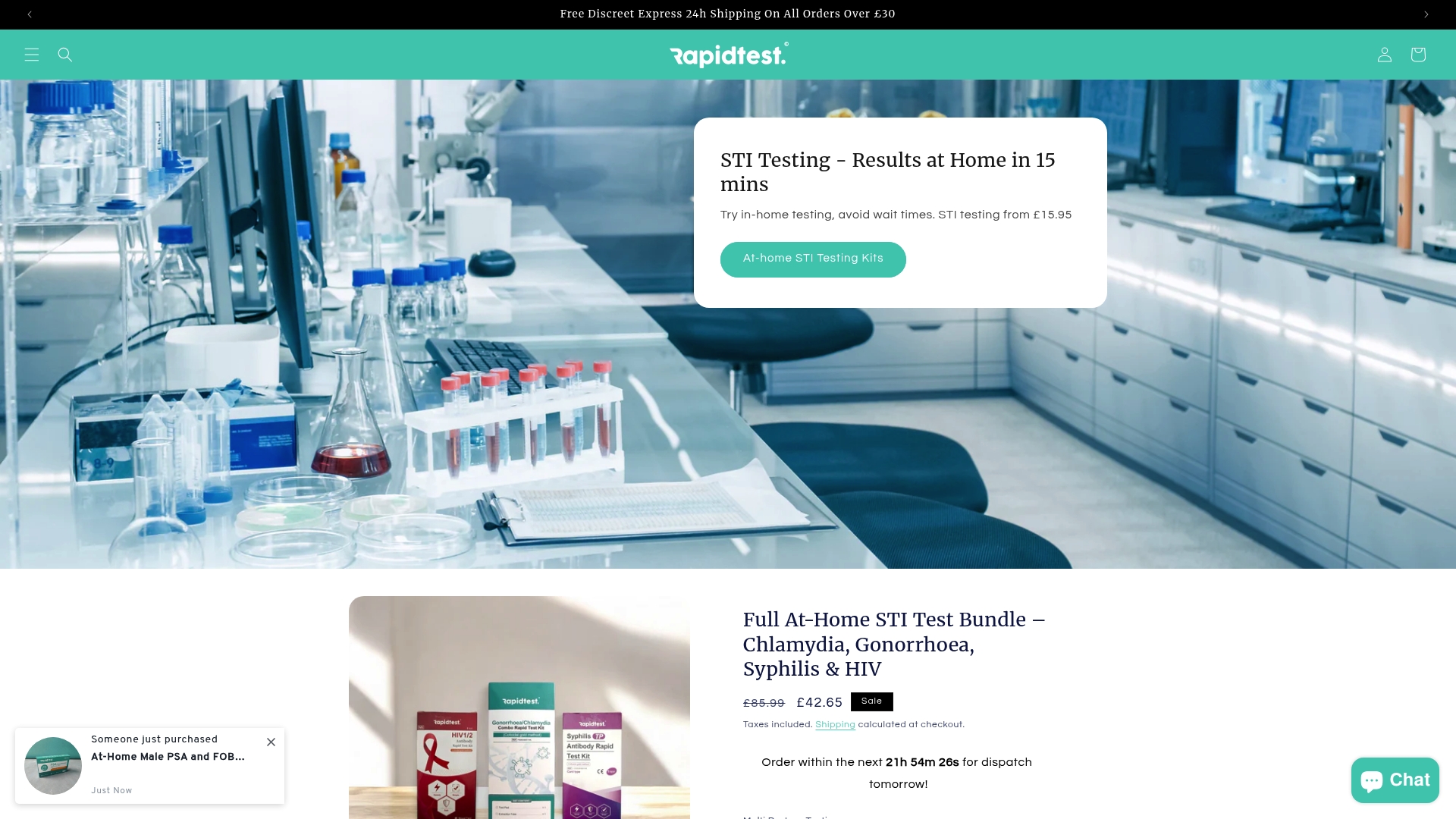
This suits you if you’d rather not gamble on local commissioning rules or wait on a postal lab turnaround, particularly if you’ve got a specific reason to want an answer this week rather than next month. Kits generally ship in discreet packaging with instructions included. Some providers may offer refund guarantees if tests do not work as expected. Browse the full STI and STD test kit range to see what fits your situation, or head straight to the HIV kit page to order.
Where to check eligibility and get clinical guidance
For local availability, start with NHS HomeTest. For national campaign updates, check current gov.uk guidance. For clinical advice, use NHS.uk or find your nearest sexual-health clinic.

This article is general information, not a substitute for advice from a qualified doctor. Consult a qualified healthcare professional about your own circumstances before acting on anything here.
Sources
- NHS HomeTest: HIV self-test
- Government ramps up efforts to end HIV transmissions in England
- NHS: HIV overview and testing guidance
- Let’s Talk About It: Free home STI testing kits (NHS)
FAQ
How much does an HIV test cost in the UK?
Through the NHS, testing is free where a local authority commissions it, including self-test kits ordered via NHS HomeTest. If you buy privately instead, an instant self-test typically costs between £15 and £30 depending on the brand and what’s included.
How much is an HIV self-test?
Retail instant self-tests generally range from around £15 at the lower end to £30 for mid-range options with faster delivery or added extras. Rapidtest’s at-home HIV kit gives you current pricing directly on the product page, along with free UK shipping.
Can I get an HIV test at Tesco or Boots?
Some pharmacies stock HIV self-test kits on their shelves or online stores, though availability varies by branch and isn’t guaranteed at every location. If you’d rather order with certainty of what you’re getting, buying directly from a specialist testing provider or checking NHS eligibility tends to be more reliable.
What’s the difference between a self-test and a self-sampling kit?
A self-test gives you a result at home within minutes using a finger-prick sample you read yourself. A self-sampling kit involves posting your sample to a laboratory, with results typically returned within a few days by text or secure portal.
Is a free NHS HIV self-test available everywhere in the UK?
No. Free kits depend on whether your local authority has commissioned the service, so eligibility is postcode-dependent rather than universal. During national campaigns, the government has temporarily widened access beyond usual local limits.
What happens if my HIV self-test result is reactive?
A reactive result on a home test is never a diagnosis on its own. NHS guidance confirms that confirmatory laboratory testing and clinical follow-up are required, and treatment is provided free through the NHS once a diagnosis is confirmed.