


Fertility testing checklist: your complete 2026 guide
A fertility testing checklist is a structured set of diagnostic steps designed to assess reproductive health and identify the causes of infertility in both partners. Getting this right from the start matters more than most people realise. A stepwise diagnostic approach starting with medical history, semen analysis, hormone panel, and pelvic ultrasound finds a likely cause in about 80% of couples. That means the majority of people get answers without needing complex or expensive investigations. This guide walks you through every stage of a fertility evaluation, from the first blood test to advanced diagnostics, so you know exactly what to expect and when.
1. What does a fertility testing checklist include?
A fertility testing checklist covers the core assessments both partners need before any treatment decision is made. The checklist is not a single test. It is a structured sequence of investigations, starting with the highest-value tests and escalating only when needed. This stepwise approach reduces unnecessary expense and stress while still capturing the most likely causes quickly.
The checklist typically includes hormone blood tests, semen analysis, pelvic ultrasound, and a review of medical and menstrual history. Both partners should be assessed at the same time. Male factors contribute to between 20% and 50% of infertility cases. Testing only one partner first wastes time and risks missing the cause entirely.
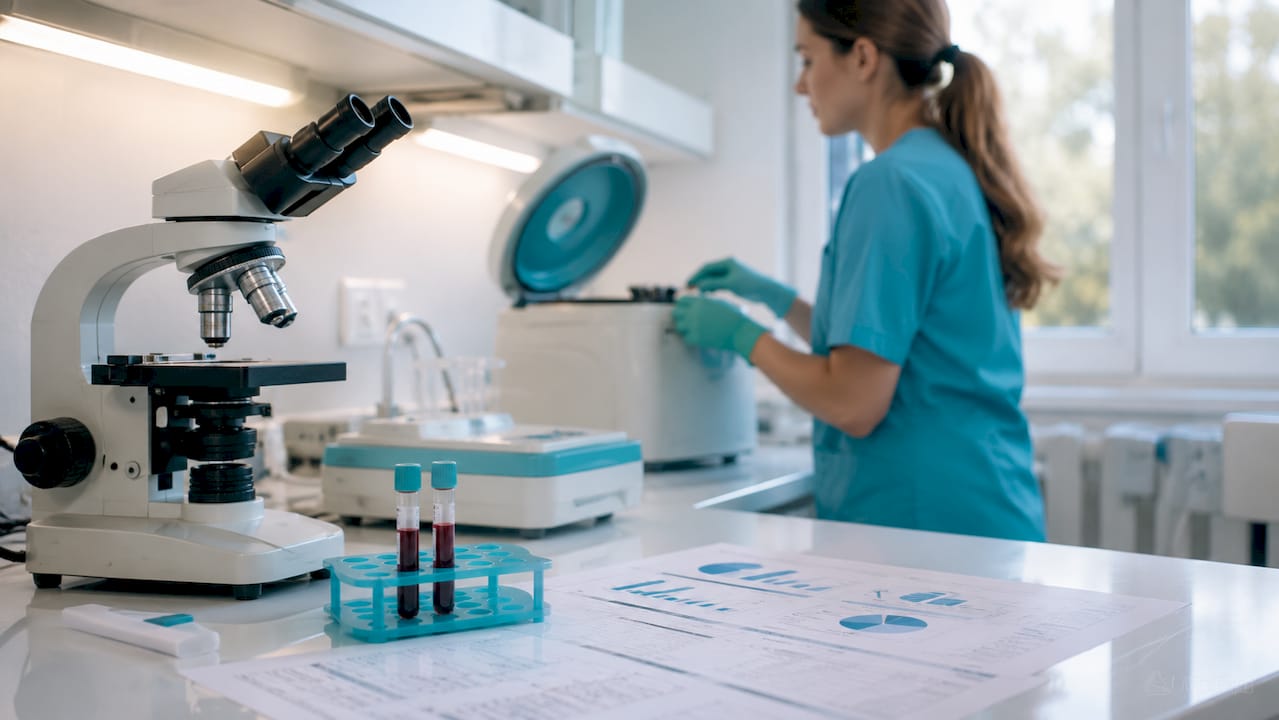
You can find a broader overview of fertility testing approaches on the Rapidtest blog, which covers clinical guidelines and what to expect at each stage.
2. Which initial tests should women have?
Female fertility testing basics begin with a hormone blood panel. These tests measure the key markers that reveal how well the ovaries are functioning and whether ovulation is occurring regularly.
The core blood tests for women include:
- AMH (Anti-Müllerian Hormone): Reflects ovarian reserve. Normal AMH levels fall between 1 and 3.5 ng/mL.
- FSH (Follicle-Stimulating Hormone): Measured on cycle day 3. A result below 10 mIU/mL is considered normal.
- LH (Luteinising Hormone): Assessed alongside FSH to evaluate pituitary function and ovulation signalling.
- Mid-luteal progesterone: A level above 3 ng/mL confirms ovulation, typically measured around day 21 in a 28-day cycle.
- Pelvic ultrasound: Includes an antral follicle count, which gives a visual estimate of ovarian reserve and checks for conditions like polycystic ovary syndrome (PCOS) or fibroids.
These tests together give a clear picture of ovarian reserve, ovulation, and uterine health. No single marker tells the whole story, so the combination matters.
Pro Tip: Book your day 3 blood tests and your mid-luteal progesterone test at the same time when you speak to your GP or clinic. It saves you an extra cycle of waiting.
3. Which initial tests should men have?
Semen analysis is the foundation of male fertility assessment. It evaluates sperm count, motility (how well sperm move), and morphology (the shape of sperm). Standard semen analysis results return within 24–48 hours, making it one of the quickest investigations in the entire checklist.
One result is rarely enough. Semen parameters fluctuate naturally, so a single abnormal result should always be repeated before any diagnosis is confirmed. Illness, stress, and lifestyle factors all affect sperm quality in the short term.
Pro Tip: Semen analysis is sensitive to recent illness or fever, which can depress sperm quality for up to three months. Schedule the test when you have been well for at least a few weeks.
4. What advanced tests might follow initial assessments?
When core tests suggest a problem, or when results do not fully explain why conception has not occurred, the next stage of the fertility evaluation guide involves more targeted investigations.
For women, the two main follow-up tests assess whether the fallopian tubes are open (patent):
| Test | Method | Key detail |
|---|---|---|
| HSG (Hysterosalpingography) | X-ray with contrast dye | Approximately 85–90% sensitivity for tubal obstruction |
| HyCoSy | Ultrasound with contrast | Around 80% concordance with HSG; no radiation |
HyCoSy is generally more comfortable and avoids radiation exposure. HSG remains the more widely available option in NHS and private clinic settings across the UK and Europe.
Laparoscopy is reserved for cases where endometriosis or pelvic adhesions are suspected. It is a surgical procedure and carries more risk, so clinicians recommend it only when non-invasive tests point clearly in that direction.
For men, sperm DNA fragmentation testing and a full hormone panel (including testosterone, FSH, and LH) are the most common advanced investigations. These are typically ordered when semen analysis results are persistently abnormal.
Pro Tip: Ask your clinic whether HyCoSy is available before agreeing to HSG. If both options are offered, HyCoSy is worth considering as a first-line tubal test.
5. How do you interpret fertility test results?
Understanding your results is just as important as getting them. The key markers each have clinical thresholds that guide next steps.
AMH between 1 and 3.5 ng/mL indicates a normal ovarian reserve. FSH below 10 mIU/mL on day 3 suggests the pituitary is not having to work unusually hard to stimulate the ovaries. A mid-luteal progesterone above 3 ng/mL confirms that ovulation occurred that cycle. Results outside these ranges do not automatically mean treatment is needed. They indicate that further investigation or monitoring is warranted.
Age shapes when you should start testing. The general guidance is to try for 12 months before seeking investigation if you are under 35, and 6 months if you are 35 or older. If you have a known condition such as PCOS, endometriosis, irregular cycles, or a history of pelvic infection, earlier testing makes sense regardless of age.
A common misconception is that one abnormal result means infertility. Repeat testing is standard clinical practice, particularly for semen analysis, because natural fluctuations are significant. Treating a single result as definitive leads to unnecessary anxiety and sometimes unnecessary treatment.
6. What practical steps support fertility during testing?
The testing period is not just a waiting game. Several lifestyle factors have a direct and measurable impact on reproductive health for both partners.
- Diet: A diet rich in folate, zinc, and antioxidants supports both egg quality and sperm health. The Mediterranean diet pattern has the strongest evidence base in fertility research.
- Smoking: Smoking reduces ovarian reserve and sperm quality. Stopping is the single most impactful lifestyle change either partner can make.
- Alcohol: Moderate consumption affects hormone levels and sperm parameters. Reducing intake during the testing period gives you cleaner baseline results.
- Exercise: Regular moderate exercise supports hormonal balance. Excessive high-intensity training can suppress ovulation in women.
- Stress: Chronic stress affects the hypothalamic-pituitary axis, which regulates reproductive hormones. Practical stress management, whether through therapy, mindfulness, or simply building rest into your week, is not optional.
Lifestyle changes and fertility are covered in depth on the Rapidtest blog, with evidence-based guidance on what actually moves the needle.
At-home fertility tests complement clinical assessments well. They let you track LH surges for ovulation timing, check sperm count between clinic visits, and monitor HCG levels in early pregnancy. Rapidtest offers at-home fertility tests for both men and women, with results in 15 minutes.
Key takeaways
A stepwise fertility testing checklist, starting with core hormone tests and semen analysis for both partners, identifies the cause of infertility in around 80% of couples without requiring advanced investigations.
| Point | Details |
|---|---|
| Test both partners simultaneously | Male factors account for 20–50% of cases; testing one partner first delays diagnosis. |
| Start with high-value core tests | AMH, FSH, progesterone, and semen analysis resolve most cases without further investigation. |
| Repeat abnormal semen results | Natural fluctuations mean a single poor result is not a diagnosis; always confirm with a repeat. |
| Use age as your timing guide | Start testing after 12 months if under 35, or after 6 months if 35 or older. |
| Lifestyle changes matter now | Stopping smoking, moderating alcohol, and managing stress improve baseline results and outcomes. |
Why I think most couples start fertility testing in the wrong order
The most common mistake I see is couples spending months focused on one partner before anyone thinks to test the other. It is understandable. Women tend to be more aware of their cycle, more connected to the process of conception, and more likely to seek medical advice first. But given that male factors are involved in up to half of all infertility cases, that approach wastes months and causes unnecessary distress.
The second mistake is over-testing too early. Couples sometimes arrive at a clinic having already paid for genetic panels, sperm DNA fragmentation tests, and immune profiling, none of which are first-line investigations. The evidence is clear: a small set of high-value tests resolves the majority of cases. Jumping ahead does not speed things up. It adds cost, confusion, and anxiety without improving outcomes.
What I would tell any couple starting this process is simple. Get the basics done together, at the same time, in the right order. Understand what the results mean before deciding on next steps. And do not let the fear of what you might find stop you from finding out. The earlier you have clear information, the more options you have.
— Jack
Rapidtest fertility kits: results at home, no appointment needed
Waiting for a clinic appointment to get your first fertility results is frustrating, especially when you just want to know where you stand. Rapidtest offers at-home fertility testing kits for both men and women, designed to give you clear results in 15 minutes without queues or awkward conversations.
The Rapidtest fertility testing kits include options for sperm count testing, LH ovulation tracking, and HCG detection. They are clinically relevant, easy to use at home, and a practical first step before or alongside a clinical assessment. Whether you are just starting to think about fertility or already working through a clinic pathway, at-home testing gives you information on your own terms.
FAQ
What is a fertility testing checklist?
A fertility testing checklist is a structured sequence of diagnostic assessments for both partners, starting with hormone blood tests, semen analysis, and pelvic ultrasound, designed to identify the cause of infertility.
When should couples start fertility testing?
Couples under 35 should seek testing after 12 months of trying. Those aged 35 or older should start after 6 months, or sooner if either partner has a known condition such as PCOS, endometriosis, or irregular cycles.
What does a normal AMH level mean?
AMH between 1 and 3.5 ng/mL indicates a normal ovarian reserve. Levels outside this range suggest reduced or elevated reserve and may prompt further investigation.
Does one abnormal semen analysis confirm infertility?
No. Semen parameters fluctuate naturally due to illness, stress, and lifestyle factors. A single abnormal result should always be repeated before any diagnosis or treatment decision is made.
Can at-home fertility tests replace clinic testing?
At-home tests are a useful complement to clinical assessments, particularly for tracking ovulation and checking sperm count between appointments. They do not replace a full clinical fertility evaluation but provide a practical and private starting point.