


Oral vs Blood HIV Tests in the UK: Why Swabs Can Miss Early HIV
Blood-based fourth-generation laboratory testing gives you the earliest, most reliable answer after a possible HIV exposure, while an oral swab offers a faster, less invasive check once you’re past the window period. Both have a place, but they’re not interchangeable. Any reactive result on either test needs confirmation in a lab, and if you test too soon, you may need to test again.
TL;DR:
- If exposure occurred within the past 45 days, choose a laboratory fourth generation blood test because it detects both antigen and antibodies.
- Antibody only rapid tests, including many oral swabs, may need up to 90 days to reliably rule out infection, so repeat an earlier negative afterward.
- Any reactive result from an oral swab or rapid blood test needs confirmation through laboratory blood testing before clinicians can diagnose HIV.
- If you need an answer today after the window period, a fingerprick blood rapid test offers better accuracy than an oral swab.
Table of Contents
- How accuracy differs between oral-fluid and blood-based tests
- Detection windows: when each test can actually pick up infection
- Speed, convenience and comfort: weighing your options
- Types of HIV tests and where you can get one
- What your result actually means, and what happens next
- Which test suits which situation
- Why we still favour blood testing when it counts
- How Rapidtest can help you screen privately at home
- FAQ
- Sources
How accuracy differs between oral-fluid and blood-based tests
Let’s be real: not all HIV tests are built the same, and the difference comes down to two words you’ll see on every test’s packaging, sensitivity and specificity. Sensitivity is how good a test is at correctly spotting an infection when it’s actually there. Specificity is how good it is at correctly saying “no infection” when there genuinely isn’t one. Get either wrong and you’ve got a problem: a false negative that leaves someone untested and untreated, or a false positive that causes needless worry.
Blood carries a higher concentration of antibodies than oral fluid, which is one reason blood-derived samples, such as serum, plasma or dried blood spots, tend to perform more consistently and support a wider range of follow-up tests, including hepatitis and syphilis screening, than an oral-fluid sample can, since many oral tests only check for antibodies rather than antigens too, as the NCBI’s clinical testing overview explains. In lower-prevalence settings, that sensitivity gap becomes more noticeable, and some rapid oral tests have shown higher rates of false positives when the person being tested is statistically less likely to have HIV in the first place.
This is exactly why a clinic never treats a reactive rapid test, oral or blood, as a final answer.
- A reactive oral swab or fingerprick result is a signal to get a laboratory blood test, not a diagnosis on its own.
- A blood sample drawn at a clinic can simultaneously support confirmatory HIV testing and screening for other infections.
- Lower sensitivity in early infection means a negative oral result soon after exposure carries less certainty than a negative blood result.
UK clinical guidance recommends fourth-generation venous blood testing as the first-line option for early detection, precisely because point-of-care tests, including most oral swabs, show lower sensitivity and specificity than laboratory assays.
Detection windows: when each test can actually pick up infection

Timing changes everything with HIV testing. Test too early, before your body has produced enough antigen or antibody to detect, and even the most accurate assay can miss an infection that’s really there.
Fourth-generation laboratory tests look for both the p24 antigen and antibodies, which is what allows them to shorten the window of uncertainty considerably. UK testing guidance puts the window period for a reliable negative on a fourth-generation test at around 45 days after exposure. Antibody-only rapid tests, which cover many oral swabs and some fingerprick kits, rely purely on your body’s antibody response, and that response can take far longer to become detectable.
- Fourth-generation blood tests: a reliable negative is achievable from around 45 days after exposure.
- Antibody-only rapid tests (oral swabs and some fingerprick kits): may need up to 90 days to reliably rule out infection.
- Anyone testing within these windows who get a negative result should plan a repeat test once the window has closed.
If you’re starting PrEP, had a recent high-risk exposure, or you’re experiencing symptoms that could suggest seroconversion (fever, rash, sore throat, swollen glands), these are the cases where sticking to the recommended timings matters most, and where a blood test is the safer first move. Our guide on when to test after unprotected sex walks through the timing in more detail if you’re not sure where you stand.
Speed, convenience and comfort: weighing your options
Once you understand the accuracy trade-offs, the next question is practical: how fast do you need an answer, and how comfortable are you with the sampling method? Self-tests, whether oral swab or fingerprick blood, give you a result in minutes at home. Self-sampling kits, where you collect a sample and post it to a lab, and clinic venous blood draws, both take longer, typically a few days, but they carry the accuracy benefit of full laboratory analysis.
- Many people genuinely prefer an oral swab because there’s no needle and no blood involved, which matters if you’re squeamish or testing for the first time.
- Fingerprick blood tests ask a bit more of you technically. Collecting enough blood into a small tube is a common sticking point, and under-filled samples are one of the most frequent reasons a home test fails to process.
- If immediate results matter more than anything else right now, a fingerprick blood rapid test is the better compromise between speed and accuracy, assuming you understand it still can’t match a lab test within the window period.
Pro Tip: If you need a result today and you’re confident you’re outside the window period, a blood-based fingerprick rapid test gives you a stronger accuracy profile than an oral swab, without sacrificing speed.
Types of HIV tests and where you can get one
There are three main pathways, and they’re worth telling apart clearly before you choose one.
A self-test gives you an immediate result at home, using either an oral swab or a fingerprick blood sample, with no lab involved. Self-sampling means you collect your own sample, usually blood, at home and post it to a laboratory for processing, with results typically returned within a few days. Clinic or venous blood testing means a healthcare professional draws blood from your arm, which then goes to a lab for full analysis, often including fourth-generation testing and additional STI screening in the same visit.
Oral-fluid self-tests are not currently authorised for sale as home kits in the UK. Blood-based self-sampling kits and CE-marked blood self-tests are the tests you’ll actually find available, a position confirmed in archival Public Health England guidance on HIV self-testing in the UK.
- Sexual health clinics offer free testing, usually venous blood, often same-day.
- Charity-run testing services provide community-based options, sometimes including outreach testing.
- Online self-sampling providers post a kit to you and return lab-verified results within days.
- Pharmacies increasingly stock CE-marked blood self-test kits for immediate, private use at home.
What your result actually means, and what happens next
A reactive or preliminary positive result on any rapid test, oral or blood, is not a diagnosis. It’s a prompt to get confirmatory testing. The NHS is clear that reactive results from a clinic or home test always need a confirmatory laboratory blood test before anything is treated as definite.
- A reactive result means the test has picked up a signal consistent with HIV antibodies or antigen; a clinic blood test then confirms or rules this out.
- A negative result taken during the window period isn’t the final word either. If your last exposure was recent, plan to repeat the test once enough time has passed, following the timings covered earlier.
- A confirmed positive result leads to referral to specialist HIV care, where baseline bloods, a broader STI screen, and a discussion of treatment options typically follow fairly quickly.
Which test suits which situation
Matching the test to your circumstances makes the whole decision far simpler.
- Recent exposure (under 45 days) or starting PrEP: go straight for blood-based laboratory testing, fourth-generation where possible, since this is where early detection matters most.
- Outside the window period and wanting private, immediate screening: an at-home rapid test, blood or oral, works well, provided you’re ready to get any reactive result confirmed.
- Need for additional serology, such as syphilis or hepatitis, or a drug-resistance work-up: clinic venous blood testing covers this in one visit.
- Quick decision checklist: how long ago was your exposure, how urgently do you need an answer, do you need other tests alongside HIV, and how much privacy do you want.
Why we still favour blood testing when it counts
The honest, slightly inconvenient truth about HIV testing is that the most comfortable option isn’t always the most reliable one. Oral swabs have earned their popularity because they’re quick and needle-free, but that convenience comes with a real sensitivity trade-off, particularly in the weeks that matter most after a possible exposure.
UK clinical guidance consistently favours blood-based testing for early detection, and we think that’s the right standard to hold ourselves to, even when it’s less exciting than “instant results from a swab.” Our test kits are built to deliver results at home in around 15 minutes, with discreet delivery for anyone who’d rather not have the conversation in a waiting room. None of that replaces a clinic visit if your result is reactive, and we’d always encourage prompt follow-up with a sexual health service when that happens.
— Jack
How Rapidtest can help you screen privately at home
If you’re outside the window period and want a private, quick way to check in on your sexual health, our at-home STI and HIV test kits are built exactly for that. They’re not a substitute for a fourth-generation lab test when you’ve had a very recent exposure, but for routine, ongoing screening, they’re a genuinely convenient option.
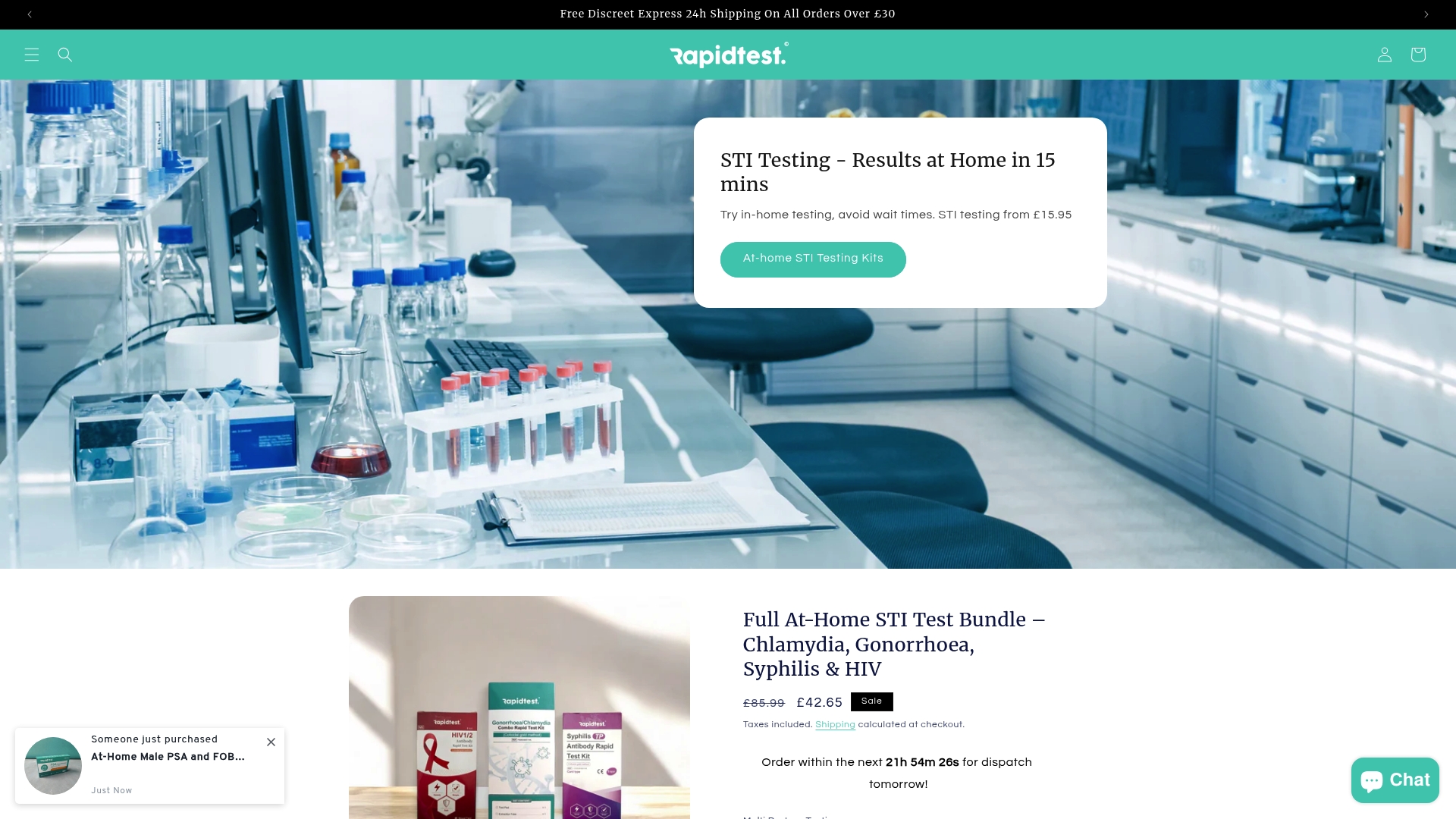
- Results arrive in around 15 minutes, with no clinic visit or lab return needed (this can vary by test provider).
- Packaging is discreet; shipping details vary by provider.
- A reactive result should always be followed up with a confirmatory blood test at a clinic.
Beyond HIV, our range of STI test kits covers chlamydia, gonorrhoea, syphilis and more, so you can screen for several things in one go rather than booking separate appointments. If fertility or men’s health screening is more relevant to you right now, take a look at our fertility insight kits or men’s health screening options too.
FAQ
Is OraQuick as accurate as a blood test?
No. Oral-fluid rapid tests generally show lower sensitivity than blood-based assays, particularly in the earlier stages after infection, because oral fluid contains fewer antibodies than blood. A reactive oral test result always needs confirmation with a laboratory blood test.
What type of HIV test is the most accurate?
Fourth-generation laboratory blood tests, which detect both antigen and antibodies, are the most accurate option for early detection. UK guidance recommends these as first-line testing, with a reliable negative achievable from around 45 days after exposure.
Does HIV show on a normal blood test?
A standard blood test only shows HIV if it specifically includes an HIV antigen or antibody assay; it won’t appear incidentally on a routine blood panel done for other reasons. A dedicated HIV test, ideally fourth-generation, needs to be requested or included as part of a sexual health screen.
Are oral HIV tests accurate?
Oral HIV tests can be accurate outside the early window period, but they’re generally less sensitive than blood-based tests, especially soon after exposure. Any reactive oral test result needs to be confirmed with a clinic blood test before it’s treated as a diagnosis, as the NHS advises.